
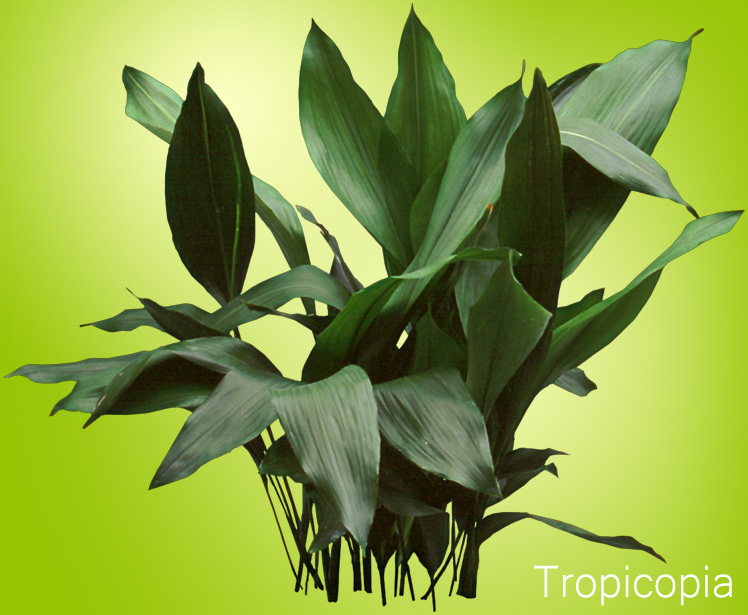


Why New Nepenthes Pitchers Brown at the Top: Transition Stress Explained
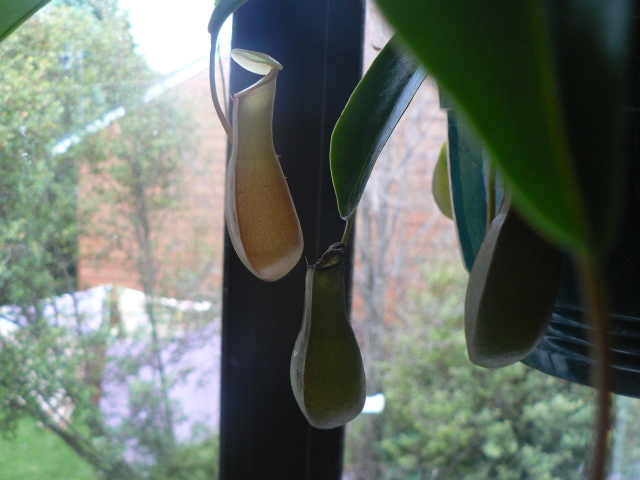
Nepenthes × deRooses alata Identification This plant is Nepenthes × deRooses alata (N. alata × ventricosa × N. alata), a vigorous, widely sold hybrid often labeled simply as Nepenthes alata in garden centers. The Brown

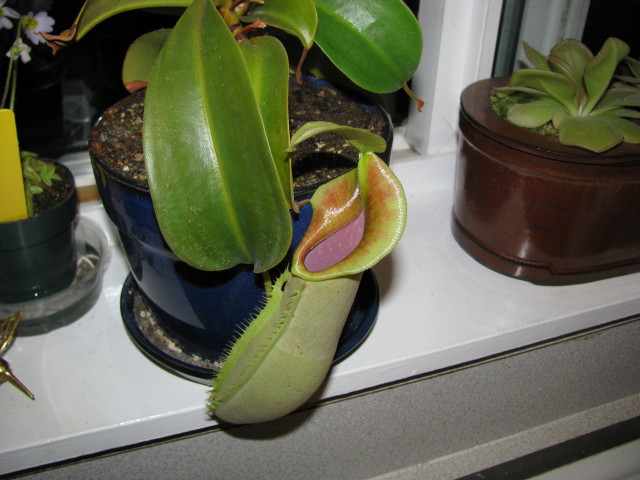
Identifying and Caring for a Mystery Nepenthes Hybrid
Unknown Nepenthes Plant Identification This plant is likely one of the Poi Dogs—unnamed Hawaiian hybrids often sold at markets. Based on the pitcher morphology, it appears to be a Nepenthes spathulata hybrid. These hybr

Is Fafard Majestic Earth Peat Moss Safe for Carnivorous Plants?
Finding reliable peat moss can be challenging, especially when trusted brands arent available locally. Many growers encounter Fafards 3.0 cu. ft. Majestic Earth Peat Moss at Lowes and wonder if its safe for their carnivo
Repotting Brocchinia reducta: Timing and Pot Size for Optimal Growth
Brocchinia reducta, a fascinating carnivorous bromeliad, is known for its slow growth habit. If youre growing one in a 3-inch pot, youre likely wondering when to upsize and how much space it really needs. Growth Rate an
Feeding Freeze-Dried Bloodworms to Carnivorous Plants: What You Need to Know
Many carnivorous plant enthusiasts wonder whether freeze-dried bloodworms—commonly sold as fish food—are a safe and effective supplement for their plants. These bloodworms are actually the freeze-dried larvae of non-biti
Rescuing Sarracenia from Fungal Rot: Radical Rhizome Surgery and Rehabilitation
An Idaho grower has S. leucophylla Tarnok (3 years) and S. alabamensis (since Jan) not growing. New leaves reach 1-2 inches then die. Spring had freezing nights into May; slow start. 8.5 hrs sun, 42 ppm water (flushed bi
Evaluating Global Buckets Self-Watering System for Carnivorous Plant Collections
A grower with a large collection considers the Global Buckets self-watering system (globalbuckets.org) for vacation care. Asks if different soils wick adequately and any concerns for Nepenthes, Drosera, butterworts, Heli
Troubleshooting Fluorescent Light Types, Dew Production, and Cape Sundew Recovery
A grower uses 2 cool white + 2 daylight T12 tubes (40W each) plus a 200W CFL (likely equivalent). Daylight tubes seem brighter. Sundews not making dew, just flowering. One cape sundew repotted after trauma — green leaves
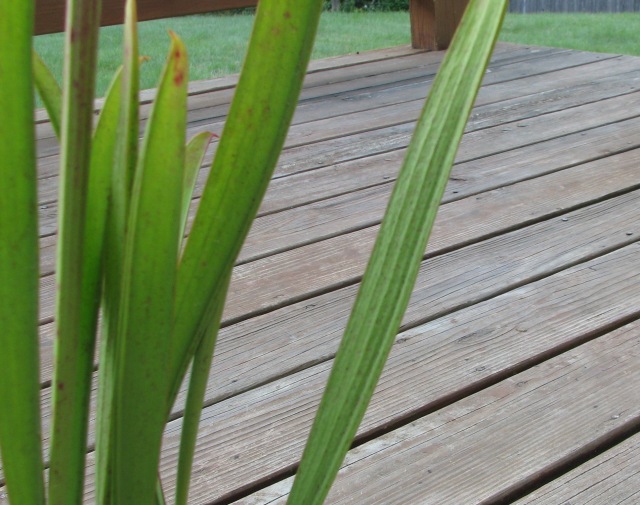
Black Spots on Sarracenia leucophylla Phyllodia: Benign Late-Summer Spotting
A grower sees black dots on S. leucophylla phyllodia and some pitchers (west deck, 6 hrs sun, hot). Asks if fungus or pest. Black dots forming on Benign Condition Common late summer. Doesnt harm plant. Likely minor ins
Winterizing Venus Flytrap in Nebraska (Zone 4): Light During Dormancy Is Essential
A Nebraska grower successfully raised Nepenthes but is new to Venus flytrap dormancy. Zone 4 has weeks of hard freeze. Heard of refrigerator method but concerned about total darkness. Why Dormancy Matters Flytraps may e
Winterizing Sarracenia flava in Nebraska (Zone 4): Mulch, Garage, or Ice Chest Methods
A Nebraska (Zone 4) grower seeks winterizing advice for S. flava (Zone 7 native). Deep freezes last weeks. First time growing temperate plants after Nepenthes. Core Principles Keep just above freezing Prevent drying wi
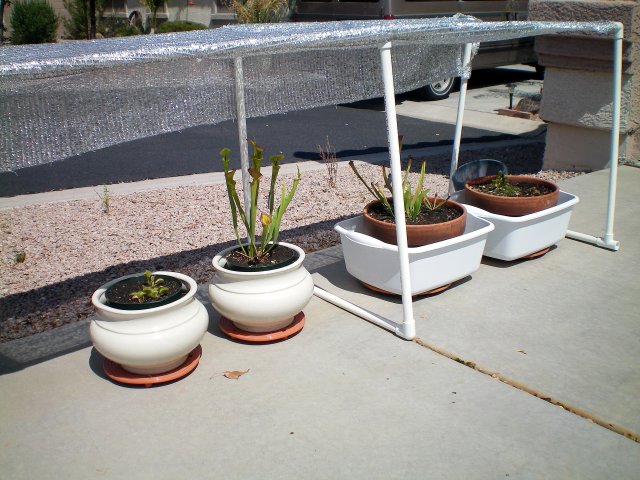
Rescuing Arizona Carnivorous Plants: Terrarium Myths and Proper Outdoor Growing
An Arizona grower has 4 Venus flytraps in a terrarium (west window, daily misting, peat moss, fruit flies) and a Nepenthes on a stand with pothos, half-full pitchers, daily misting. Asks species ID and whats wrong (holes
Pot Depth for Sarracenia and Venus Flytraps: Taller Pots Preferred for Winter Survival
A grower uses 5 diameter × 5 deep (half-size) pots for flytraps (doing well) and asks if too shallow for Sarracenia excellens repotting next year. Assessment Half-pots work but taller is better. Sarracenia tolerates the
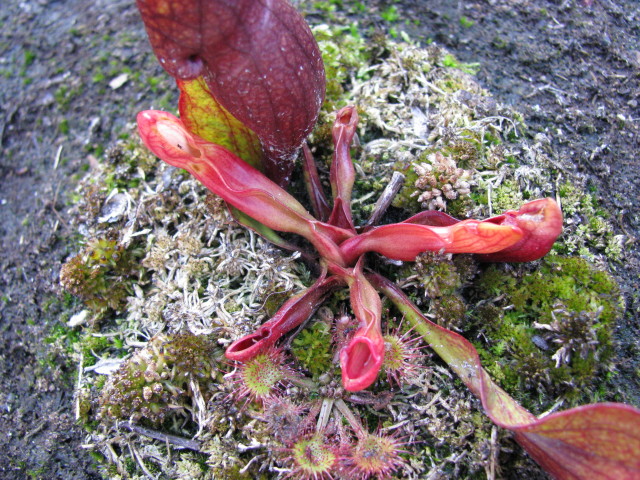
Diagnosing Stunted Purple Pitcher (Sarracenia purpurea) in Mixed Bog
A growers S. purpurea in deep peat/perlite/sand bog (8-9 hrs sun, 50-55 ppm water) produced normal pitchers early season, now stunted/deformed. Other bog plants (Sarracenia, cobra, flytraps, pings, sundews) thrive. Asks
Transitioning Seedling Sarracenia from Terrarium to Open Culture and Water Quality Analysis
A grower has 2-inch seedling Sarracenia (5 pitchers each) in a terrarium for over a year. Asks about uncovering and repotting. Lighting arrangement Terrarium Was Unnecessary Harden to ambient humidity: open cover incre
When to Trim Dead Leaves on Fork-Leaf and Spoon-Leaf Sundews
A grower asks when to cut dead leaves on fork-leaf sundew (when tip black or whole stem black) and how to manage dense spoon-leaf sundew. Flexible Timing Fork-leaf sundew leaves die slowly (like Nepenthes). Cut anytime.
Natural Fire Effects on Dionaea and Sarracenia: Possible Growth Benefits
A grower notes many Dionaea experience fires pre-growth-season and asks if smoke chemicals induce vigorous growth. Plausible Benefit Southeastern U.S. carnivorous plants are adapted to grass fires. Known to benefit Sarr
Sourcing Sphagnum Moss in Austria: Local Alternatives and Mix Flexibility for Nepenthes
An Austrian grower struggles to find long-fiber sphagnum (Amazon shipping costly). Ordered sphagnum from Germany; asks if equivalent and if should order long-fiber specifically. Any Sphagnum Works Chilean or New Zealand
Cape Sundew Science Fair Project: Feasibility of Testing Prey Type Effects on Tentacle Curvature
A 10th grader in Shelton, CT (Zone 6) plans a science fair project with cape sundew, testing if prey type affects tentacle curve angle. Excellent Choice Cape sundew is ideal: fast growth, easy controlled conditions (flu
Early Cold Snap in Illinois: Not a Dormancy Trigger for Temperate Carnivorous Plants
An Illinois grower (Zone 5) had a 35°F night in September. Worried temperate plants in a 3-ft pot (too large to move) will enter early dormancy and wake in mid-winter. Asks how to keep them at 65°F until proper dormancy
Copyright © www.100flowers.win Botanic Garden All Rights Reserved