

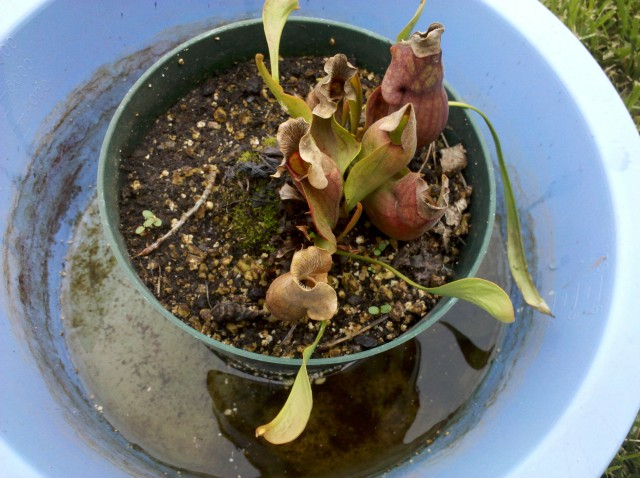
Sarracenia Purpurea Slow Spring Growth After Neglect
Patience and Cleanup After winter neglect, S. purpurea produced skinny, non-functional pitchers. Clip off old and malformed pitchers. Its early summer—good growth should follow. Keep water in pitchers if no rain to aid i


Lance-Leaf Sundew Not Catching Flies: Prey Size and Light Issues
Common Reasons for No Dew/Capture Flies too large—D. adelae catches fruit flies, mosquitoes, gnats. Low light: both flytraps and sundew need full sun equivalent. High light: D. adelae burns in full sun; prefers partial/
Dewy Pine Flower Stalk Accidentally Cut: Recovery Time
Side Buds Form in Weeks After accidentally cutting a dewy pine (Drosophyllum) flower stalk, expect at least two weeks for a side bud to form. Smaller plants are less predictable. An older plant cut recently formed side b
Nepenthes Ventricosa Turning Yellow in Bright Warm Conditions
Normal Color Shift N. ventricosa in a cold frame greenhouse (80s°F day, 60s°F night) turns yellowish. This is normal in bright, warm conditions, especially for this species. If pitchers form well, its fine. If excessive,
New Nepenthes Owner Guide: Deformed Pitchers, No Fluid, Feeding
First Steps for a New Plant Keep in partial sun, water every few days with mineral-free water (no standing water). Maintain stable temps/humidity. Identify species via tag or vendor. Dont feed yet—plant catches insects w
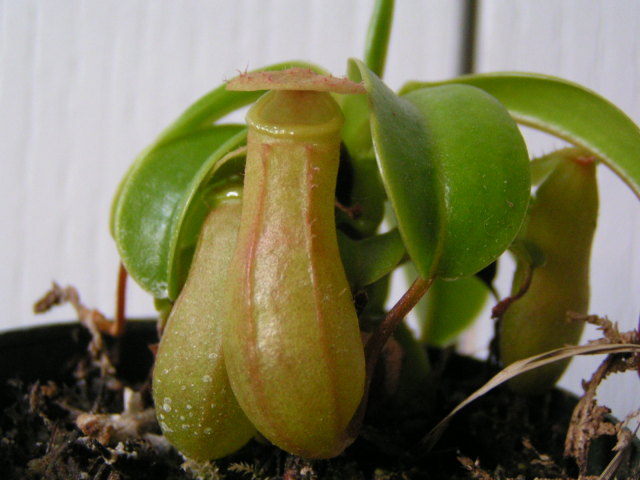
Identifying a Mystery Nepenthes: Likely Ventricosa or Hybrid
Waxy Pitcher Suggests Ventricosa A TLC (lost-tag) plant shows waxy pitcher appearance typical of N. ventricosa or a ventricosa hybrid. Many TLC plants were sold as mystery plants. Hybrids are harder to ID than species du
Nepenthes Humidity Requirements: Nursery Conditions vs. Home
No Special Humidity Needed The nursery doesnt track humidity stats; they grow plants to tolerate fluctuating home humidity (35–50%). Plants are selected for adaptability. Your N. Bill Bailey, ventricosa × sibuyanensis, a
Nepenthes Highland Alata Not Pitchering: Acclimation Period
Patience Required A newly purchased highland N. alata has a tendril but no pitcher after several weeks. Many factors affect pitchering (light, water, soil), but with only general info, the most likely cause is acclimatio
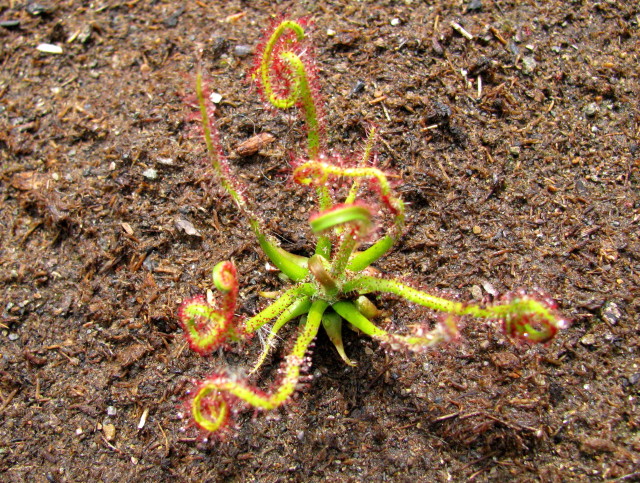
Aphid Damage on Drosera Filiformis 'Florida Giant'
Classic Signs: Twisted, Curled New Leaves Two D. filiformis Florida Giant in a bog garden show twisted, curled leaves with fat appearance, but produce dew and catch bugs. This is classic aphid damage—aphids attack young
Broken Sarracenia Pitcher Tip: No Repair, Just Wait
Damage Is Permanent An emerging S. Readii pitcher tip broke off. Cannot be repaired. Wait for new pitchers (mid-summer for this variety). Leave damaged leaf until new growth appears, then trim.
Distinguishing Drosera Capensis 'Broad Leaf' vs. 'Giant' Forms
Subtle Differences, Often Overlapping The broad leaf and giant forms of D. capensis are very similar. Broad leaf has wider petioles; giant has longer petioles and leaf straps. However, individual variation within a culti
Growing Drosera Capensis Outdoors in Summer
Yes, with Proper Acclimation D. capensis can go outside in summer. Best spot: morning sun, afternoon shade. They like sun but prefer cooler temps. Expect some leaf burn initially until new adapted leaves grow. Its a Zone
Sprinkler Water Unsuitable for In-Ground Bog Gardens
Mineral-Rich Irrigation Kills Carnivores Desert irrigation water (runoff from mountains, ditches) is hard and may contain fertilizer—both toxic to carnivorous plants. If sprinklers hit the bog, relocate it. For large bog
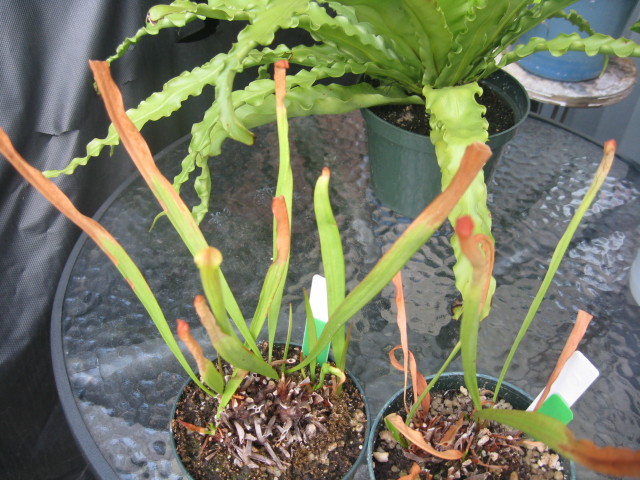
Sarracenia Rubra Brown Top Die-Back: Time to Repot
Anoxic Soil from Peat Breakdown In New Orleans, S. rubra pitchers brown from top down, killing plants. Sprays made it worse. Cause: peat moss broken down, anoxic, killing roots. Repot into larger pots with fresh 50/50 pe
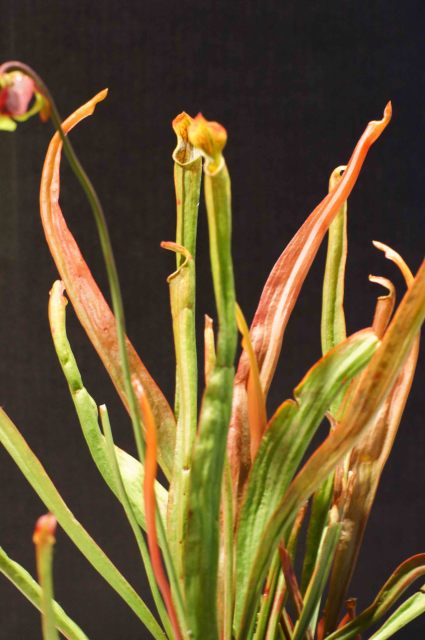
Deformed Sarracenia Rubra Pitchers: Pests or Seasonal Growth?
Two Possibilities S. rubra (likely rubra alabamensis) in Bavaria shows wavy, floppy new pitchers. Could be thrips/aphids (treat with insecticide) or normal early-season growth—many S. rubra forms produce odd leaves in co
Nepenthes Ventricosa Not Pitchering: Light, Water, and Repotting Factors
Troubleshooting a Three-Year-Old Plant A N. ventricosa outdoors under a Japanese maple (filtered/dappled light) and indoors in a south window produced no pitchers for a year. Tendrils blacken. Repotted recently in recomm
Brown Spots on Heliamphora Pitchers: Natural Aging or Low Humidity
Not Pests or Disease Brown spots on Heliamphora pitchers are normal aging or a sign of too-dry conditions. Increase humidity and let old pitchers die naturally. For detailed Heliamphora care, see Grow Carnivorous Plants
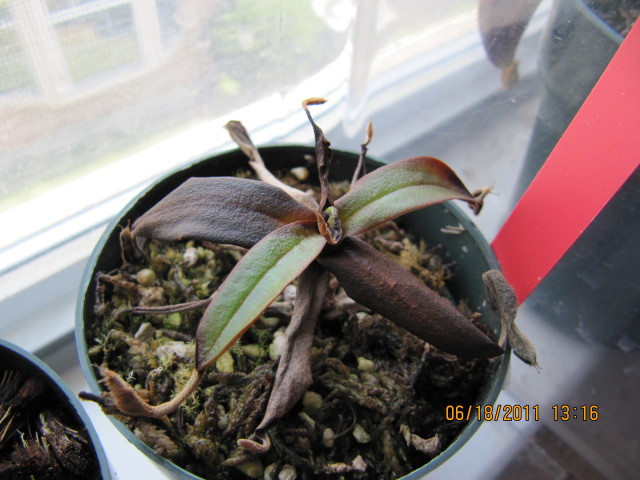
Diagnosing Dying Nepenthes Mikei: Root Health Check
Blackening Leaves Indicate Root Problems A Nepenthes mikei in Dallas (78°F summer, 65–68°F winter, east window, terrarium, distilled water, daily mist) turned black at growing point. Other highlanders show similar issues
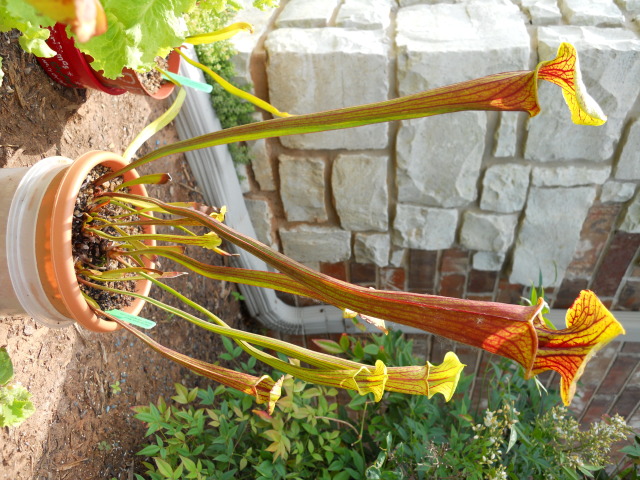
Identifying a Red-Tube Sarracenia Flava Clone (AG3)
Lucky Find: Premium Clone A Sarracenia flava purchased as a regular variety looks different from website photos. Its actually the red-tube clone AG3, previously sold at double the price. The grower has a premium specimen
Self-Pollination Guide for Sundews and Cephalotus
Which Species Set Seed Alone? Byblis liniflora: Yes D. filiformis Florida Giant: May need cross-pollination D. × hybrida: Sterile, no seeds D. rotundifolia: Yes D. tracyi: Yes D. regia: Needs cross-pollination Cephalotu
Copyright © www.100flowers.win Botanic Garden All Rights Reserved