


Sarracenia Re-flowering in Fall: To Cut or Not to Cut?
S. flava and S. purpurea send up second flower stalks in fall in Michigan. Jeff Dallas says its a judgment call: healthy plants can spare the energy. Fall flowers rarely set seed due to insufficient development time. Enj

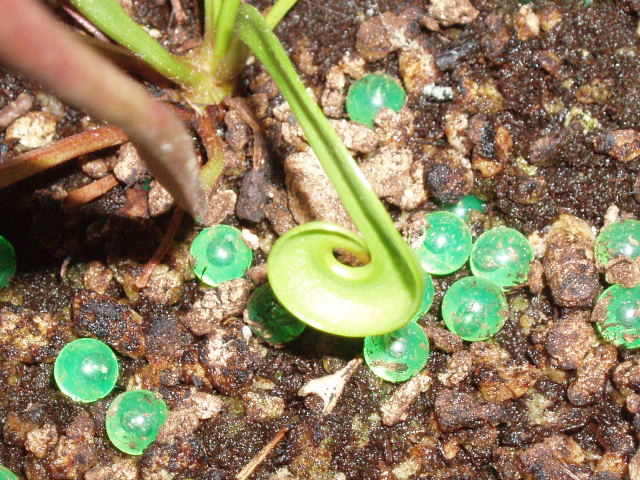
Curly Pitchers on Sarracenia 'Dana's Delight': Light Deficiency, Not Doom
After moving from Colorado (9-12 hours full sun) to Arkansas (pocketed sun on a deck), a Danas Delight produces small, early-opening, rams-horn curled pitchers. Jeff Dallas identifies this as a light-deficiency response
When to Cut Drosera capensis Flower Stalks for Seed Harvest
To collect viable Drosera capensis seeds, wait until seed pods turn brown, dry, and crack open. The stalk will also be brown. Then cut the stalk and tap pods over white paper to release seeds. Cutting while green yields
Nepenthes Cuttings: Patience When Roots Lag Behind Pitcher Formation
After 2 months in a propagation chamber (4 T12 bulbs, 6 inches above perlite, 16-hour light, 80-90°F), Nepenthes cuttings show new growth and tiny pitchers but no roots. Jeff Dallas explains roots often appear simultaneo
Darlingtonia Collapse After Open House Purchase: Sudden Condition Change
A Darlingtonia bought at an open house turns copper-colored and dies within days after being moved indoors out of sun and watered with cool water. Jeff Dallas suggests the abrupt shift from full-sun greenhouse conditions
Troubleshooting Slow-Growing N. jamban: Superthrive May Be the Culprit
An N. jamban in a highland terrarium (80°F day/55-60°F night, 60-80% humidity, 15-hour photoperiod) grows slowly with small, deformed leaves despite pitchering. The grower uses monthly Superthrive foliar spray. Jeff Dall
Nepenthes × Dyeriana Care: Lowland Hybrid Thrives in Well-Drained Mix
A grower asks if N. × Dyeriana (a lowland hybrid) needs a special well-drained mix versus standard peaty soil. Jeff Dallas confirms: well-drained, airy media benefit all Nepenthes by improving root oxygenation—potted pla
Restoring Dew on Drosera madagascariensis: Light Intensity Is Key
A Drosera madagascariensis loses its sticky dew after two weeks in an east window (2 hours morning sun). New leaves emerge but remain dewless. Christopher explains: dew production is light-driven, not humidity-dependent.
Drosera dichotoma Acclimation and Winter Dormancy Expectations
A new Drosera dichotoma owner worries about adaptation before winter. Jeff Dallas assures: aside from a brief post-shipping adjustment, these plants are resilient. Grown in open greenhouses with fluctuating humidity, the
Best Nepenthes for Windowsill Growing: Skip the Finicky Species
A grower considers N. maxima, N. aristolochioides, N. jamban, and N. jaquelineae for a west/south windowsill. Jeff Dallas warns all are slow, difficult windowsill subjects. Instead, he recommends vigorous, adaptable hybr
Saving a Sunburned Drosera adelae: Radical Pruning and Recovery
A Drosera adelae, moved from a low-light bathroom to full outdoor sun in Southern California, suffers severe leaf burn—brown, wilted leaves with only central green areas remaining. Jeff Dallas prescribes aggressive actio
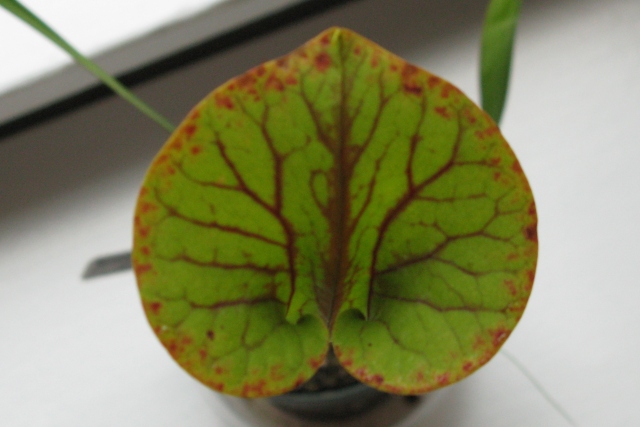
Sarracenia flava Rust Spots: Fungal Nectar Feeding, Not Disease
Two S. flava plants develop rust-colored spots on the outer lid surface in late summer. Grown indoors with eastern exposure, the grower is concerned. Jeff Dallas reassures: this is a common late-season occurrence. A harm
Sarracenia 'Dana's Delight' Brown Spots: Bug Digestion or Dormancy Prep?
In USDA zone 4, a Sarracenia Danas Delight develops brown spots on pitchers in August after cool, wet weather. The grower wonders if its early dormancy or decline. Jeff Dallas explains that late-season brown spots are ty
Cross-Pollinating Drosera: Can Giant Staghorn and Cape Sundew Hybridize?
A grower asks if Drosera binata multifida extrema (giant staghorn sundew) can cross-pollinate with Drosera capensis (cape sundew). Jeff Dallas explains that D. binata types generally require cross-pollination to set seed
Choosing the Right Soil for Nepenthes: Coconut Fiber vs. Sphagnum Moss
A grower in Las Vegas considers using Eco-earth coconut fiber bricks (soaked in 300 ppm tap water) as a cheaper alternative to bulk peat moss for Nepenthes. Jeff Dallas advises against fine coir (ground coconut fiber) du
Troubleshooting a Declining Ventricosa Hybrid: Basal Shoots and Vine Dieback
A Nepenthes ventricosa hybrid with two growing points shows asymmetric health: one vine thrives while the other blackens at the tip, produces smaller leaves, and fails to pitcher. The grower suspects root rot but notes c
Optimal Light Distance for Nepenthes Under CFL Bulbs
Growing Nepenthes under artificial lighting requires balancing light intensity with plant safety. A grower recently switched to two 55-watt CFL bulbs (300-watt equivalents) running approximately 10 hours each night. The
Complete Drosera capensis Care Guide
Light 6–8 hrs morning/evening sun, or 12k+ lumens cool white fluorescent 14–16 hrs, 8 above. Adjust for red tentacles/dew. Soil 1:1 sphagnum peat : silica sand or perlite. No fertilizers, no other soils. Water Distille
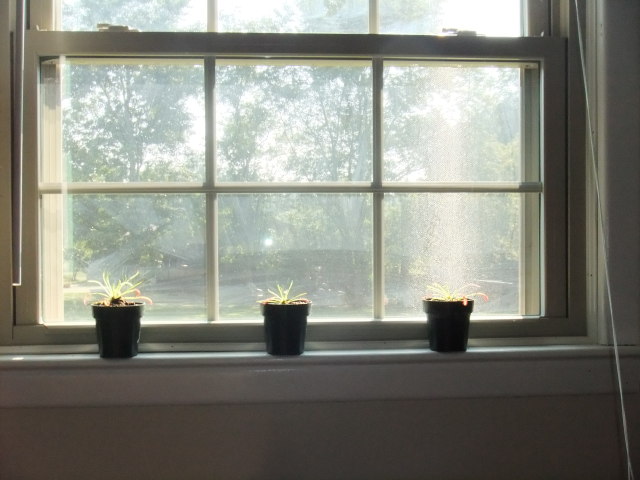
Drosera capensis Dew Loss After Terrarium Removal
Growers D. capensis lost dew after terrarium removal. Morning photo shown. Asked about bloom time. Cause Transition shock from terrarium → open air. Needs time to adapt. Care Good window (photo shows adequate light).
Moving Carnivorous Plants Outdoors: Which Species?
Grower moving collection outdoors: 3 VFT, D. aliciae (10+), S. flava, S. purpurea, P. Tina, N. sanguinea. Full sun, rain water, daily mist. Considering S. psittacina or D. capensis. Outdoor Suitability Temperate (outdo
Copyright © www.100flowers.win Botanic Garden All Rights Reserved