

Storing and Stratifying Darlingtonia californica Seeds
Storage Paper envelope → ziplock bag → refrigerator. Stratification (Required) Sprinkle seeds on paper towel. Moisten with distilled/RO water. Fold towel, place in ziplock. Refrigerate 4–5 weeks (not freezer). Then sow

Venus Flytrap Severe Leaf Burn: Recovery Outlook and Prevention
Prognosis No new growth for a month, increasing blackening = bleak. Sudden exposure causes dehydration via leaves despite wet soil. If Only Sun Burn (Not Humidity Shock) Leaves are dead; plant must use bulb reserves. Ne
Distinguishing Venus Flytrap Cultivars: 'Low Giant' vs 'Big Vigorous'
Reality Check All VFTs are one species with minor variations. Genetic expression varies widely—one plant can show sawtooth, piranha, typical traits simultaneously. Cultivar names are often just branding. Expert Input Sp
Slow-Growing Nepenthes Hybrid: Patience with Slow-Genera Genetics
Genetic Reality Hybrid is ⅔ slow-growing species (macfarlanei, aristolochioides). Macrophylla and villosa are slowest (new leaf every 2–3 months). Temperature Compromise Slight speed-up possible with 80°F max days, 50s°
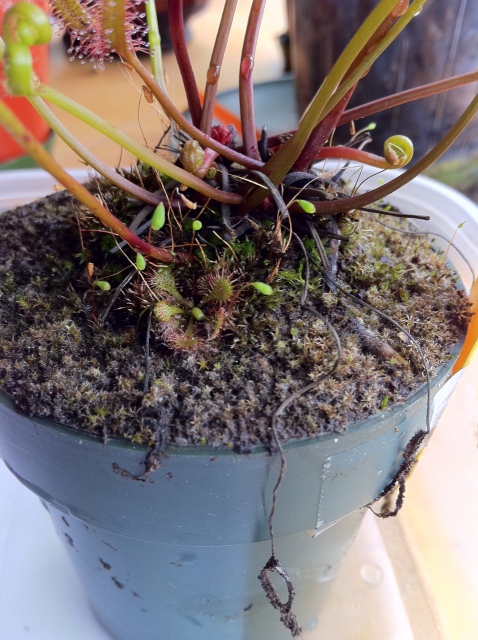
Hitchhiker Drosera spatulata in D. binata Pot: Management Options
ID Volunteer is D. spatulata (tropical)—wont tolerate frost. Options D. binata goes dormant regardless; triggered by short days. Remove spatulata to own pot. Leave binata outside (with winter prep), let spatulata die.
Neem Oil Burn on Pinguicula moranensis: Recovery and Prevention
Cause Chemical burn from Neem—either leaves werent hardened (terrarium-grown) or concentration too high. Neem is usually safe on butterworts. Recovery Keep all current leaves for photosynthesis. As new leaves open, tri
Cephalotus Winter Rest: Lower Light Intensity, Not Distance
Better Approach Dont raise light (reduces intensity). Instead, lower wattage to 40W to cut heat while keeping intensity. Reduce photoperiod to 10–12 hours. Alternative Sunny south window works well—natural cool temps an
Nepenthes ampullaria Old Leaf Dieback: Normal Aging
Lifespan Leaves live 2–6 months. Yellowing, brown spots, red patches = normal aging. Clip when dry. Health Indicator New growth = healthy plant. Good growing! Jacob Farin
Nepenthes bicalcarata Stalled Growth: Warmth, Light, and Humidity Stability
Critical Factors Temperature: needs 70–85°F constantly. Night drops below 70°F stall lowlanders. Light: increase intensity. East/south windows or 40W T-12 shoplights 12–16 hrs/day. Humidity: avoid HVAC vents. Cluster pl
Carnivorous Plants Flooded for Days: Short-Term Harmless, Fix Drainage
Natural Context Periodic flooding occurs in nature. 3 days submerged is fine short-term. Fix the Setup Bowl needs drainage holes. Repot with rocks around holes to prevent clogging. Good growing! Jacob Farin
Nepenthes rafflesiana Red Leaf Spots: Mold or Light Response?
Two Possibilities Rub-off spots: Mold on nectar. Increase air flow and light to discourage. Fixed coloration: Natural red pigment from high light. Normal for many species (e.g., N. sanguinea, N. truncata). Christopher
Can Nepenthes Get Too Much Light in a South Window?
Factors Species tolerance and temperature. Cooler temps allow more light. In fall/winter, windows are cooler, so higher light is safe. Monitoring Watch for leaf burn (large brown patches). In south windows, burn rarely
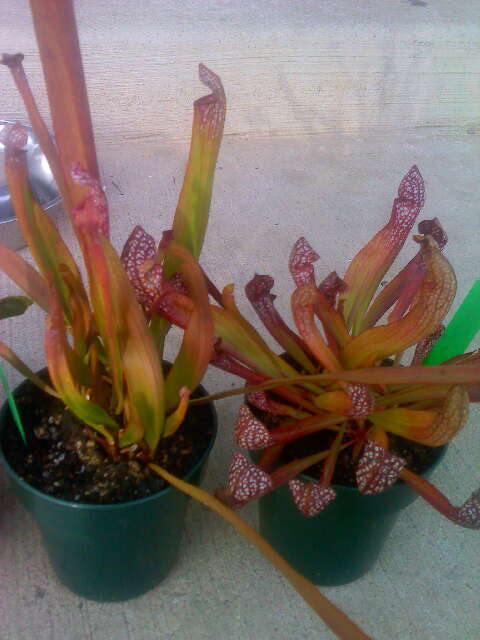
Fall Browning on Venus Flytraps and Sarracenia: Normal Dormancy
Whats Happening Cooling weather triggers dormancy. Leaf browning = normal, like deciduous trees. Some Sarracenia (e.g., S. flava) drop leaves; others (hybrids) retain them. Action Prepare for winter dormancy now. Method
Troubleshooting Nepenthes rajah Leaf Reversion and Discoloration
A grower in Northern Colorado reports that a young Nepenthes rajah produced a mature peltate leaf but then reverted to smaller, immature leaves with a brownish tinge on the newest bud. The plant grows under fluorescent l
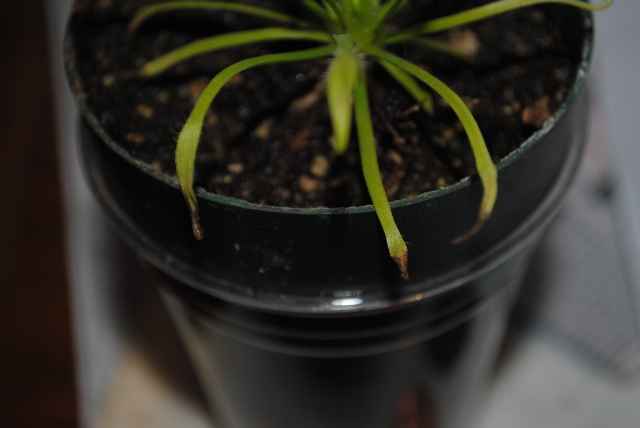
Drosera capensis Black Leaf Tips: Aging, Transition, or Root Damage?
Normal Aging Lower leaves naturally blacken at tips after 1–2 months. Older leaves curl less. Trim when unsightly. Transition Stress New environment causes temporary tip burn on existing leaves. New growth adapts. Root
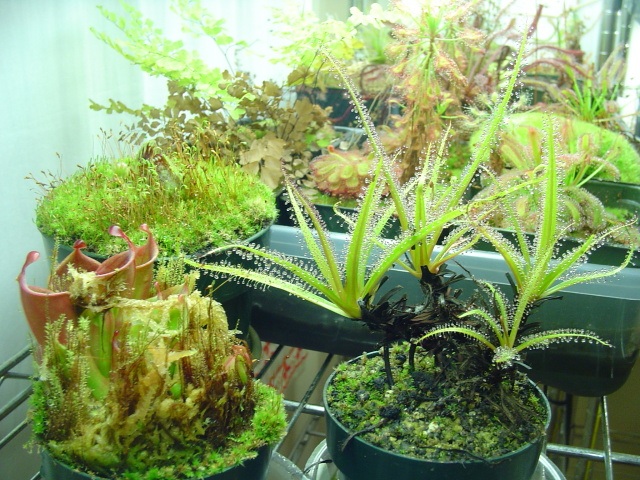
Repotting Drosera regia and Heliamphora heterodoxa × minor
D. regia Media Standard 50/50 peat/perlite works if top-watering in cool conditions. Otherwise, use 1:2 peat:perlite. Heliamphora Repot anytime if soil/pot need refreshing. Shipping cup was for transit only—not a humidi
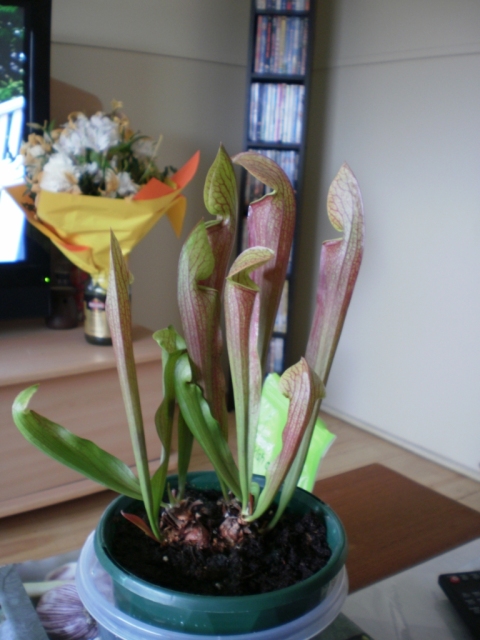
"European Wasp Eater" Is Actually a North American Sarracenia Hybrid
Identity Marketing name aside, its a Sarracenia hybrid—all Sarracenia are native to US/Canada. They produce wasp-attracting nectar. Care Too extensive for this format. Read care sheets at cobraplant.com/caresheets. Goo
Feeding Indoor Carnivorous Plants: Bugs Are Fertilizer, Not Fuel
Perspective Sunlight and water are primary; insects are just fertilizer. Plants catch plenty on their own. If You Feed Use small insects that fit leaves/pitchers. Large prey rots and causes problems. Fertilizer Alter
Nepenthes Not Pitchering: Fertilizer, Media, and Copper Warning
Likely Issues Over-fertilizing (2×/month 20-20-20 + Superthrive). Insect prey is optimal nitrogen source. Vermiculite in media is mineral-laden—harmful long-term. Switch to peat/bark/perlite. Check for copper-based spra
Venus Flytrap Leaf Edge Blackening in Fall: Normal Dormancy Preparation
Cause Shortening days trigger dormancy. Long summer leaves blacken and wither as growth slows. Central crown staying green = healthy. Confirmation Grower in York, PA sees same pattern in September. Plants are healthy, j
Copyright © www.100flowers.win Botanic Garden All Rights Reserved