
Treating Aphids on Drosera capensis: Safe Methods
A growers cape sundew has aphids – leaves dewless, drying. Needs safe pesticide. Safe Options Neem oil or pyrethrin-based sprays. Ortho systemic pesticides (safe for carnivorous plants). Avoid soap-based or copper-based

Growing Venus Flytraps from Seed: Light, Medium, and Naming
A grower plans to sow Low Giant flytrap seeds on pure peat moss in a saucer of water, in full sun. Key Corrections Pure peat is okay but risks algae/rot if constantly soggy. Cover with ventilation, keep out of direct su
Root Loss During Nepenthes rajah Repotting: Recovery Outlook
A grower repotted N. rajah, dunking to remove old soil. Over half the roots fell off without pulling. New mix: 1/3 pumice, 1/3 orchid bark, 1/3 sphagnum, live sphagnum top. Asks if it will survive and how to help. Outloo
Garden Hose "RO" Filters Are Not True Reverse Osmosis
A grower considers a garden-hose-connected filter from pwgazette.com for 78 ppm tap water. Analysis The site offers only carbon filters (dont remove minerals) or softener cartridges (swap calcium/magnesium for sodium – w
Why a Culligan RV Filter Won't Purify Water for Carnivorous Plants
A grower asks if a Culligan RV-800 KDF filter (sediment/large particle) will make tap water safe for carnivorous plants. Answer No. It only removes sediment, not dissolved minerals (TDS). Only reverse osmosis (RO), disti
Choosing a Nepenthes Soil Mix: Pre-Made vs. DIY
A grower with multiple Nepenthes (sanguinea, mikei, villosa, rajah) struggles to pick a soil mix. Some too wet, some too coarse. Asks for the best mix and how to use live sphagnum. Recommendation Sarracenia Northwests pr
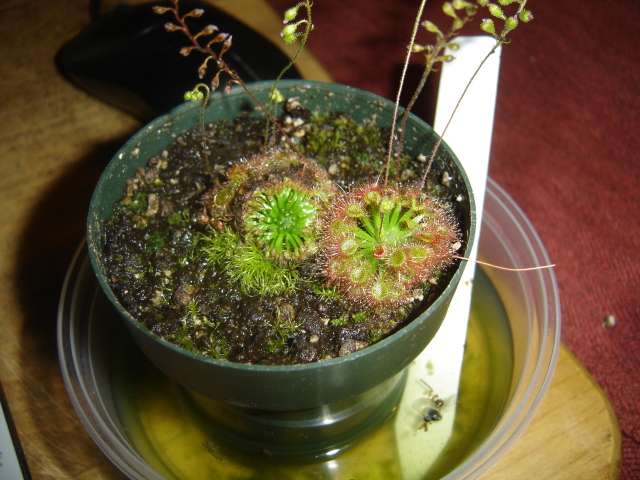
Identifying a Pygmy Sundew: Drosera nitidula × pucherella
A grower asks for ID of a sundew thought to be D. aliciae. Identification Best guess: Drosera nitidula × pucherella, a pygmy sundew. A D. aliciae gemma may have dropped and grown alongside. Strong sun will bring out red
Nepenthes Pitchers Not Opening: Likely Judith Finn, Not sanguinea
A growers Nepenthes (sold as sanguinea) produces pitchers that brown at the lid tips before opening. Grown in humidity tray, distilled water, watered when slightly damp. Diagnosis Plant looks healthy; may just need time.
Identifying a Mystery Pinguicula: primuliflora or caerulea?
A grower bought an unnamed Pinguicula from a retail store (photo via TinyPic). Identification Most likely P. primuliflora – leaves match, but its been in very low light. Could also be P. caerulea. Differentiate at flower
Moving Sarracenia flava During the Growing Season
A grower asks if moving a yellow trumpet pitcher plant around the yard within a year is harmful. Answer During winter dormancy, moving doesnt matter. In summer, pick a spot and leave it. If relocation is needed for bette
Rescued Nepenthes Soil Mixes: Flexibility Over Perfection
A grower rescued N. sanguinea (Orange) and Judith Finn from a nursery, repotted from 50/50 pumice/peat to 2:1 perlite/peat. Asks which mix is better and if Judith Finn is natural or man-made. Soil Philosophy I dont think
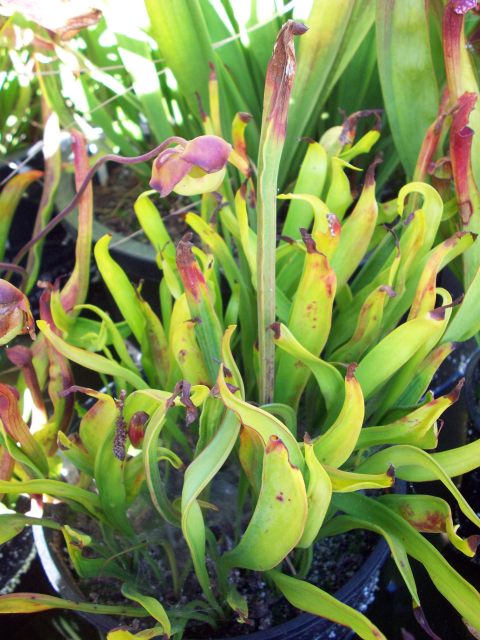
Diagnosing Hard Water Damage in Sarracenia flava and the Importance of Water Testing
A Los Angeles growers S. flava (from Sarracenia Northwest) stopped producing normal pitchers after two years. A second flava did the same. Uses 1:1 peat/perlite, DI water from a store (carbon → RO → carbon). Water never
Growing Heliamphora Without a Terrarium: Stable Shelf Conditions
A grower has a Heliamphora heterodoxa × nutans gift, growing with highland Nepenthes and Cephalotus under 4×40W T8 fluorescents (8 inches), 80°F day/70°F night, 45–80% humidity (ultrasonic humidifier). Asks if a terrariu
Growing Sphagnum Moss in a Hot Summer Bog Garden
A grower ordered sphagnum for a bog garden but faces 30°C+ (86°F+) summer temperatures. Advice Sphagnum will survive if kept very wet and given a bit of extra shade. It prefers some shade. By autumn, it will be fine. (Ne
Nepenthes 'Miranda' Stops Pitchering Outdoors in Pennsylvania
A Zone 5 grower put highland N. miranda and ventricosa outside under a tree (filtered sun), watering every other day. After two weeks, leaves smaller, no pitchers. One ventricosa pitcher browned. Analysis Low humidity l
Propagating Nepenthes from Basal Shoots: Vine Cuttings, Not Division
A growers N. ventrata has basal shoots and asks if they can be divided. Basal Shoots Are New Vines, Not Separate Plants To propagate, take 8–12 inch vine cuttings, remove lower leaves, and root in water or moist Nepenthe
Fungus Gnats and Carpet Moss in Venus Flytrap Pots
A grower sees tiny flying insects emerging from flytrap soil (traps dont catch them) and moss growing on the soil surface. Fungus Gnats Tiny insects are likely fungus gnats. Larvae eat fungi/organic matter, rarely harm p
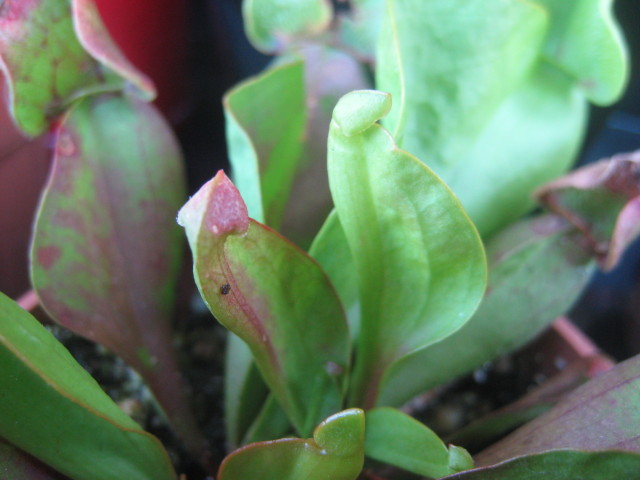
Sarracenia purpurea Producing Small Slender Pitchers: Normal or Problem?
A growers S. purpurea produces normal tubby pitchers plus small, slender ones continuously. Light: 13–14 hours full sun in SoCal. Soil: original death cube mix. Water: distilled, sitting in standing water, flushed every
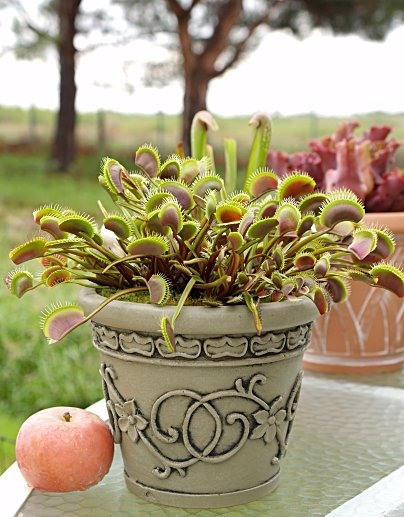
Growing Multiple Venus Flytraps Together in One Pot
A grower asks if a standard, red, and cupped trap flytrap can share a 4-inch pot. Benefits of Group Planting Deeper soil for long roots (8–10 inches on mature plants). Larger soil mass buffers temperature, preventing r
LED vs. CFL for Nepenthes Lighting: Lumen Output Matters
A grower in the Bronx uses two 100W-equivalent CFLs for N. truncata, miranda, ventricosa. Asks if 100W-equivalent LEDs can replace CFLs to save electricity. Key Factor: Lumens Carnivorous plants need high light. The 100W
Copyright © www.100flowers.win Botanic Garden All Rights Reserved