

Rescuing Carnivorous Plants from Low Light: Identification and Rehabilitation
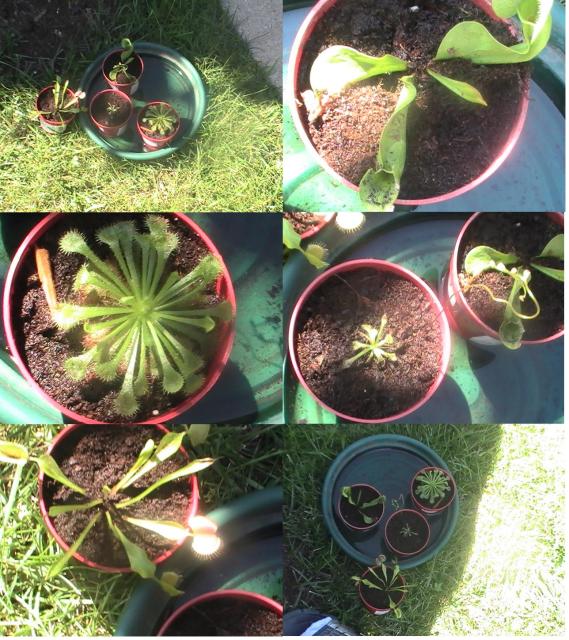
A grower in central Indiana has a Venus flytrap, sundew, and pitcher plant with multiple issues: traps not working, sundew leaves not curling, pitcher plant with holes and ants stealing prey. All grown in peat moss and


Treating Sarracenia Root Rot: Identifying Dead Roots
A grower unpotted a Sarracenia alata with root rot and asks which roots to trim. There are white/red/pink healthy roots, light brown roots with white tips, and black roots. Root Assessment Black roots – dead, remove the
Slow-Growing Pinguicula 'Titan': Feeding and Soil Tips
A growers P. x Titan stays under an inch, grows slowly, and cycles 3–4 leaves. Its in peat/sphagnum in an African violet pot under CFL light, recently moved to a windowsill. Assessment The plant looks healthy. Titan is
Pinguicula 'Aphrodite' Dormancy and Artificial Light
A grower asks if Pinguicula Aphrodite skips dormancy when kept wet, warm, and under long photoperiods, and if artificial light can prevent dormancy. Experience Aphrodite often remains active if kept moist and warm. In a
Pinguicula primuliflora Flowering and Seed Production
A grower asks if the primrose butterwort (Pinguicula primuliflora) produces seeds and whether to remove the flower. Seed Production P. primuliflora produces seeds only when cross-pollinated. In greenhouses, butterflies a
Drosera binata 'Multifida' Requires Cross-Pollination for Seeds
A question about whether the multifork sundew (Drosera binata Multifida) can self-pollinate. Answer D. binata Multifida flowers need cross-pollination from a different plant to produce seeds. They do not self-pollinate l
Reviving a Declining Drosera multifida 'Extrema'
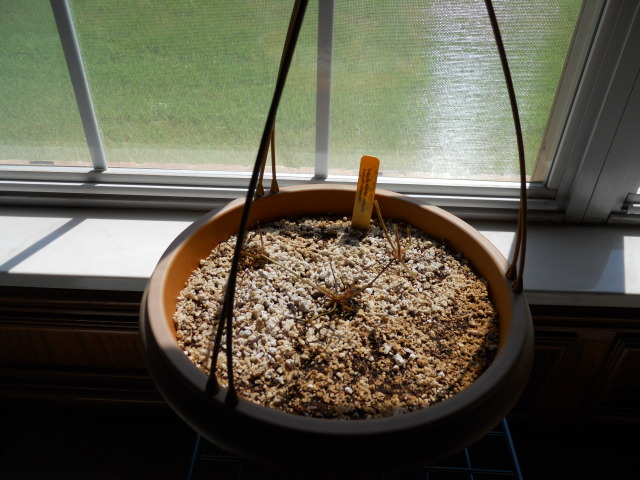
A grower in Oklahoma moved a Drosera multifida Extrema from a sunny window to full outdoor sun, where it declined over two months. After research, it was moved to an east window with 3–3.5 hours of sun. The plant looks
Venus Flytrap Leaf Burn vs. Fungus: Diagnosis and Care
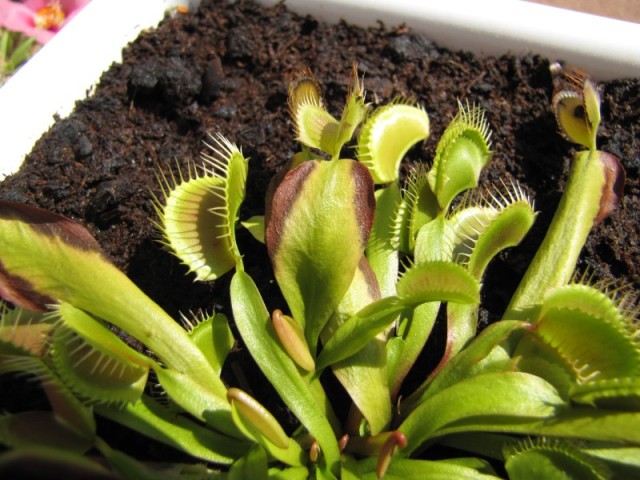
A grower in Hungary sees brown areas on flytrap leaves and was told its an internal fungus requiring fungicide. The plants grow outdoors in full sun, sitting in a water tray. Not Fungus – Its Leaf Burn The brown patches
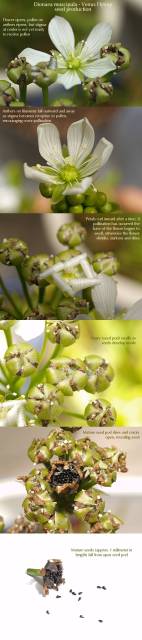
Hand-Pollinating Venus Flytraps for Maximum Seed Yield
To harvest Venus flytrap seeds, hand-pollinate with a fine brush. Pollen matures as flowers open; stigma becomes receptive 1+ days later. Pollinate older flowers with fresh pollen, then pollinate those flowers a day or t
Fungus Gnats in Nepenthes Soil: Identification and Treatment
A grower in Pennsylvania (Zone 6) discovers tiny bugs in the water while flushing a Nepenthes Red Dragon. The soil (Sarracenia Northwest Nepenthes mix) is draining poorly. The bugs are likely fungus gnats and their larva
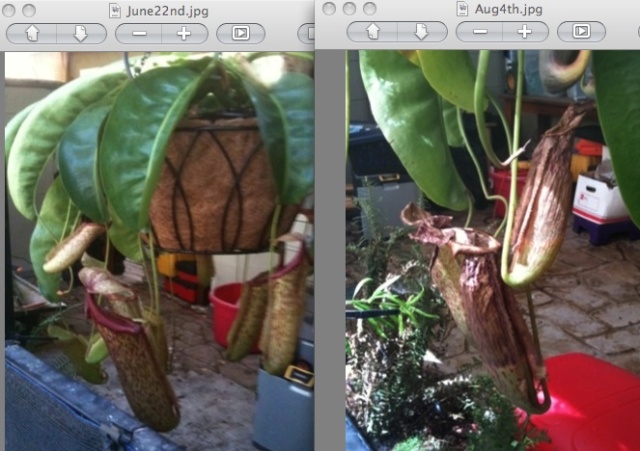
Nepenthes × miranda Acclimation: Old Pitchers Die, New Ones Form
A recently acquired N. × miranda shows drying old pitchers and yellowing lower leaves, but new pitchers and healthy leaves emerge. Jeff Dallas explains: old pitchers from the humid Florida greenhouse naturally die off. T
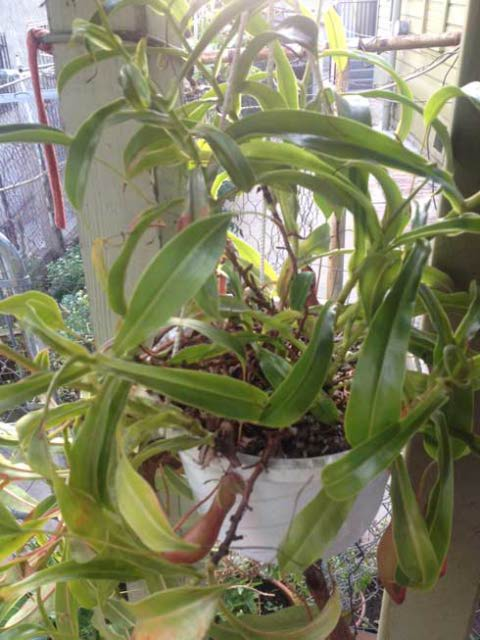
Nepenthes Pitchers Turning Black: Focus on Leaves, Increase Light
A kitchen-hanging Nepenthes has blackening pitcher tops despite daily rainwater misting. Jeff Dallas advises: pitchers naturally die—cut them off at the tendril. Healthy leaves mean a healthy plant. The plant needs 3-4 h
Venus Flytrap Black Spots and Death: Wet Soil and Fungus Are the Killers
A veteran grower loses all seven Venus flytraps to spreading black spots despite 50/50 peat/perlite, distilled water, and full sun. Steve (expert) diagnoses two issues: 1) Constantly waterlogged soil promotes fungal rot;
Harvesting Cephalotus Seeds: Timing and Yield
After successful pollination, Cephalotus seeds develop in 1-2 weeks as fuzzy seeds on the flower head. Collect when pods dry. Expect 10-15 seeds per flower, sometimes fewer. Good Growing! Jeff DallasSarracenia Northwest
Rescuing a Light-Burned Nepenthes truncata Seedling
A cat knocks a grow light onto a small N. truncata, blistering and wilting older leaves. The crown and newest leaf appear intact. Jeff Dallas advises: if the growing point is undamaged, the plant will recover. Remove sev
Algae in Carnivorous Plant Ponds: Physical Removal, Not Chemicals
Algae in a pond with flytraps and Sarracenia cannot be treated with algaecides—theyll kill the plants. Algae is harmless; remove manually. For larger ponds, add circulation (encourages Daphnia) or water hyacinths (absorb
Transplanting Darlingtonia: Timing, Media, and Root Care
For zone 7 North Carolina, late winter/early spring is ideal for transplanting Darlingtonia into a bog. Use live sphagnum moss to buffer conditions. Minimize root disturbance—keep some old soil. Apply Superthrive to aid
Reviving a Declining Drosera adelae: Cut All Leaves for a Fresh Start
A D. adelae from Lowes loses dew after repotting, grows new leaves that droop and brown at tips. Humidity dome helps temporarily. Jeff Dallas prescribes cutting ALL leaves to soil level—cube-grown leaves never recover. N
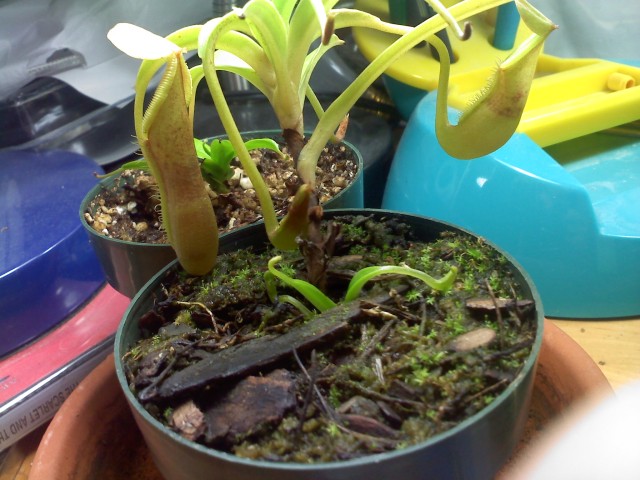
Basal Shoots on Nepenthes singalana: Sign of Health, Not Danger
An N. singalana produces new plantlets at the base. Jeff Dallas confirms this is normal, healthy growth—many Nepenthes produce basal shoots. They are not separate plants and cannot be divided; they share the same root sy
Bog Gardening in USDA Zone 4: Winter Protection for Non-Native Species
A zone 4 grower plans a bog garden with native Sarracenia and Drosera rotundifolia, but wonders if southern species (flytraps, other sundews) can survive with heavy mulching. Jeff Dallas confirms most Sarracenia, Venus f
Copyright © www.100flowers.win Botanic Garden All Rights Reserved