

Large Wasp-Like Insect on Silver Maple: Clearwing Borer
A 2.5–3 inch wasp-like insect with long tail on silver maple, plus bore holes in dead trunk, is a clearwing borer (likely maple callus borer, Synanthedon acerni). These are day-flying moths that mimic wasps; they dont st

Swimmers in Avocado Water Jar: Harmless Microorganisms
Tiny organisms swimming in avocado pit water are likely nematodes or protozoa—common in stagnant water. They dont harm the plant. Simple Fix Change the water completely. Rinse the jar and roots gently. Refill with clea
Old Rhododendron Decline: Prune Dead, Water Deeply
Random branch death on a 25-year-old rhododendron after extreme heat/drought is likely drought stress, not disease. The plant never thrived, possibly due to competition from euonymus (now pruned). Action Deep soak now;
Ants and Dead Branches on Curly Willow: Scale Insects Are the Real Problem
Ants swarming a curly willow with dieback are farming honeydew from willow scale insects—not the primary pests. Scale suck sap, weaken branches, secrete honeydew; ants protect them. Solution Control scale with soil-app
White Substance on Oleander Branch Tips: Fungus or Aphids
White coating on oleander branch tips (1–4 inches) could be powdery mildew or aphid colonies. Large stink bugs are incidental. Ortho spray may have harmed beneficials. Steps Examine with hand lens: powdery = fungus; cl
Tomato Seedling Spots: Need Photo and Seed Source
Brownish spots/streaks on tomato seedlings—worse on early-planted ones—could be bacterial spot, early blight, or even physiological (cold injury). Microscope blisters need clarification. Info Needed Close-up photo of l
Black Soot on Lemon Leaves: Sooty Mold from Insects
Black, soot-like coating on lemon leaves is sooty mold—a fungus growing on honeydew from sap-feeding insects (scale, aphids, whiteflies). Fix Find the insect: check leaf undersides, stems. Take samples to nursery for I
Eugenia Hedge Dieback: Watering Technique Matters
Random death in a uniform Eugenia hedge usually comes from improper watering—either too much (root rot: brown/black leaves, slow decline) or too little (yellow leaves, fast death). Correct Watering Water the root zone
Powdery Mildew on Japanese Red Maple: Fungicide and Cultural Control
Gray/white deposits on upper branch surfaces and leaf edges = powdery mildew. Its a superficial fungus that reduces photosynthesis and aesthetics but rarely kills. Control Spray fungicide at first sign: triadimefon (Ba
Red Spots on Schefflera: Likely Injury, Not Disease
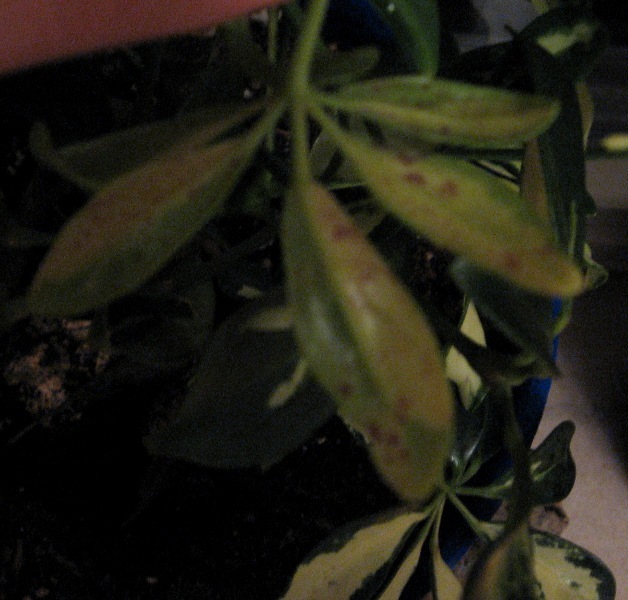
Tiny red spots on schefflera leaves that dont wash off, arent raised, and spread slowly are probably physical injury (cold water splash, chemical drift, light change)—not insects or disease. The plant is a schefflera (um
Buddha's Hand Citrus Leaf Drop and Orchid Reblooming
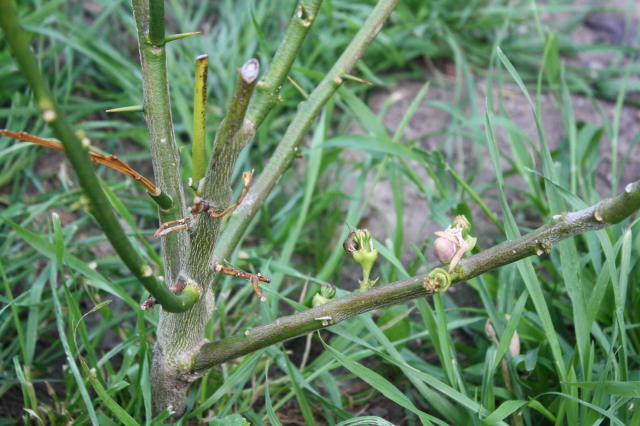
Citrus: Leaf drop indicates past stress (dry, cold, root issue). New leaves and fruit mean recovery. Keep soil evenly moist, avoid trunk injury, wait 1–2 months before pruning dead wood (scratch bark—green = alive). Mot
Walnut-Sized Galls on Pin Oak Branches: Twig Galls, Not Tree Killers
Walnut-sized woody balls on pin oak twigs are horned or gouty oak galls (caused by cynipid wasps). Unlike leaf galls, heavy twig gall infestations can weaken or kill branches, but rarely the whole tree. Management Prun
Brown Bumps on Pin Oak Leaves: Harmless Leaf Galls
Quarter- to half-inch brown bumps on pin oak leaves, with brown undersides, are leaf galls caused by tiny gall wasps. They are cosmetic only—no harm to tree health. Key Points Galls are plant tissue grown in response t
Cat Used Dieffenbachia as Litter Box: Flush Soil to Save Plant
Cat urine in a dieffenbachia pot introduces salts and ammonia that burn roots. Yellowing leaves are the result. Remedy Flush pot thoroughly 3–4 times: run water through until it drains freely, wait, repeat. Or replace
Green Knobs on Fallen Leaves: Phylloxera Galls, Not Harmful
Small green galls on leaf stems (petioles) that contain tiny larvae and liquid are phylloxera galls—caused by aphid-like insects. Common on cottonwood, pecan, hickory. They dont significantly harm tree health. Managemen
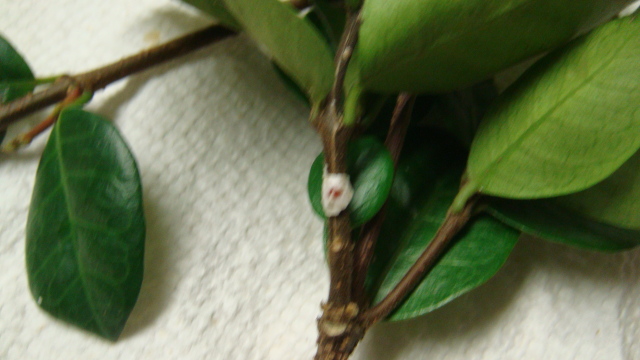
White Cocoon on Plant: Scale Insect, Not a Cocoon
The white cocoon is a scale insect—specifically a wax scale. They suck plant sap and are protected under a waxy cover. If few, scrape off. If many, use systemic soil drench (Bayer Advanced) or consult nursery for spray o
Mushrooms and Orange 'Carrot' Fungus in Yard: Stinkhorns, Not Toxic to Touch
Sudden white mushrooms turning black with mold, plus a soft orange carrot-shaped growth, are likely elegant stinkhorn (Phallus ravenelii) in early stage. They smell foul (rotting flesh) when mature. The orange carrot is
Leaf Spots on Dwarf Pear: Need Photos and Pattern Details
Dark brown/black spots on dwarf pear leaves for two years could be fungal (Fabraea leaf spot), bacterial (fire blight), or even spray injury. Many microbes cause similar spots. Helpful Details Do spots enlarge or stay
Saddleback Caterpillars on Crepe Myrtle: ID and Organic Control
Green caterpillars with a brown saddle-like spot circled in white, and spiky horns at both ends, are saddleback caterpillars. Their spines sting—wear gloves. Control Hand-pick if numbers are low (gloves!). For larger i
Sticky Leaves and Brown Nodules on Jade Plant: Scale and Honeydew
Sticky leaves + 1–1.5 mm brown bumps that scrape off = scale insects. The stickiness is honeydew; black sooty mold may follow. The nearby cyclamen had the same issue—likely the same infestation source. Treatment Scrape
Copyright © www.100flowers.win Botanic Garden All Rights Reserved