
Aphids on Aspen: Honeydew, Sooty Mold, and Organic Management
Sticky Waxy Coating = Aphid Honeydew The “sticky waxy substance” covering your aspen leaves and trunks is honeydew excreted by aphids. It’s unsightly and, over time, can weaken branches by promoting sooty mold and reduci

Chanticleer Pear Decline: Overwatering and Fertilizer Fixes
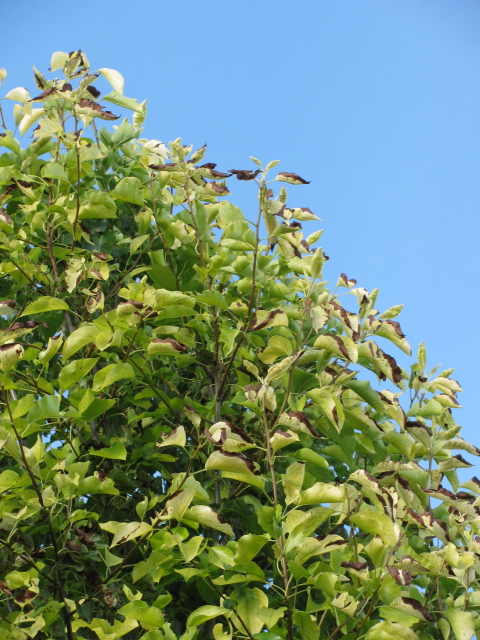
Classic Signs of Waterlogged Roots Cracking bark, blackened leaf tips, and yellowing on your 5-year-old Chanticleer pear scream “too much water.” The recent rototilling next door may have further damaged roots or altered
Mealybugs on Potted Mulberry: Identification and Control
Cottony Patches + Leaf Bumps = Mealybugs The white cottony patches on leaf undersides and corresponding bumps on top are classic mealybug (a type of scale insect) damage. The bumps are the plant’s reaction to the insects
Live Oak Decline After Pond Construction: Water Table Impact?
Timing Suggests a Connection A mature live oak that began browning after a pond was built around it—surrounded on three sides by water—may be suffering from a drastic change in soil moisture and aeration. Even though the
Reviving a Struggling Meyer Lemon: Pests, Water, and Organic Options
Why Your Lemons Stay Small A 2-year-old Meyer lemon that flowers but doesn’t size fruit is likely stressed by inconsistent watering and a pest complex (green worms, spider mites). Watering Regimen In a pot, water deeply
Marigold Flower Browning: Spider Mite Alert
Spider Mites Love Marigolds Sudden browning and drying of marigold flowers—despite moist soil—is a classic sign of spider mite infestation. These microscopic 8-legged pests thrive in hot, dry conditions and suck chloroph
Ants on Sunflowers: They’re Farming the Real Pests
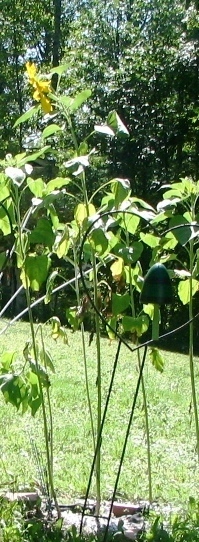
Ants Are a Symptom, Not the Cause Ants climbing your sunflowers aren’t eating the plant—they’re harvesting honeydew from aphids, mealybugs, or other sap-feeders. The brown, triangular insects you found on the leaf midrib
Sticky Residue on Stephanotis: Honeydew and Sooty Mold
The White Sticky Stuff Is Insect Excrement The clear, varnish-like coating on your stephanotis leaves is honeydew—the sugary waste of sap-feeding insects (aphids, mealybugs, scale) on the same plant or one above it. Why
Euonymus Sectional Dieback: Prune Dead Wood, Watch for Secondary Fungi
What the Black Dust Under the Bark Means After you pruned out the dying section of your euonymus and found black, dusty material under the peeling bark, rest assured: that fungus is a saprophyte feeding on dead tissue, n
Locust Leaf Drop and Sooty Mold on Understory Plants
Two Linked Problems Premature yellowing and leaf drop on your locust, plus a black coating on dahlias and hydrangeas below, share a common source: insect honeydew. Diagnose the Black Coating Rub a wet finger on the black
Chinese Pistache Sudden Decline: Water Stress or Hidden Damage?
Systematic Detective Work A 4-year-old Chinese pistache turning brown and dropping leaves in summer could be suffering from several non-insect causes. The blackish flies you see are likely secondary. Checklist for Homeow
African Sumac Sudden Decline: Get an On-Site Expert Evaluation
Symptoms Suggest a Complex Problem Wilting, sticky new shoots, overnight leaf death, and sap oozing at branch junctions on multiple African sumacs—with no visible insects—point to a vascular or root issue that’s difficul
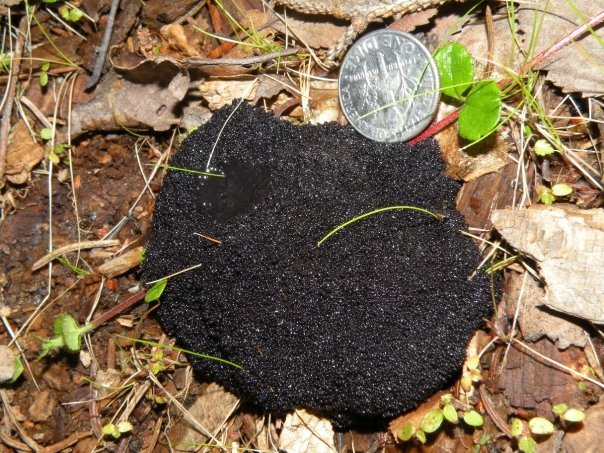
Mystery Black Globes in Alaska: Slime Mold ID Requires Microscopy
Not a Typical Physarum The delicate, oily black globes that liquefied on touch, found away from grass or mulch in Anchorage, don’t match the common Physarum slime molds seen on lawns. Accurate identification requires mic
Gummosis on Ornamental Plum: Insect Wounds and Sap Flow
Jelly-Like Globs Are a Defense Response The gelatinous globs dripping from your ornamental plum branches are plant sap (gummosis) produced in response to injury—most often an insect puncture. The sap seals the wound and
Bamboo in Containers: Yellow Leaves Mean Thirst
Bamboo Is a Grass—Water It Like One When newly potted bamboo leaves curl and turn yellow, the diagnosis is simple: not enough water. In summer, a containerized bamboo may need watering twice a day to keep the root zone e
Chemical Control for Fungus Gnats on Meyer Lemon: Ortho Home Defense Max
A Ready-to-Use Soil Drench If sticky traps and potato slices haven’t cleared a stubborn fungus gnat infestation, a targeted soil treatment can break the cycle. Ortho Home Defense Max (0.05% bifenthrin) is labeled for ind
Oak Burls: Harmless Oddities Prized by Woodworkers
What Those Bulging Growths Are The 12-inch round swellings on your oak trunk—and the new ones appearing nearby—are burls: abnormal, tumor-like growths of woody tissue. Their exact cause is often unknown; some are linked
Gummosis on Plumcot: Borer Damage and Tree Care
What the Gum Tells You The honey-colored, golf-ball-sized globs oozing from your plumcot branches are gummosis—the tree’s resinous response to wounding. The most common wounders are wood-boring insects that tunnel into t
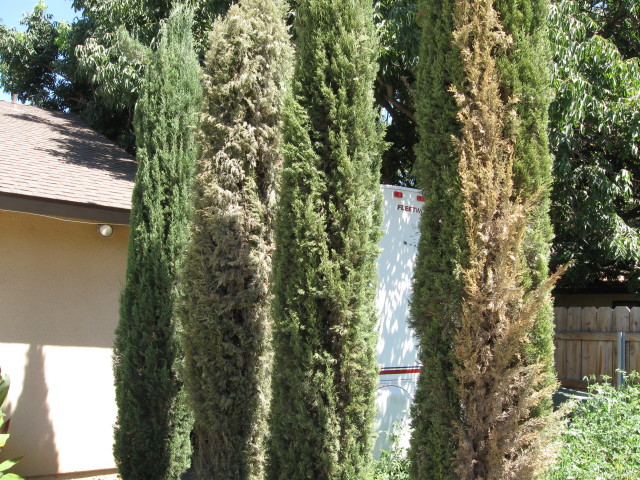
Cypress Canker on Italian Cypress: Identification and Management
Not a Beetle—It’s a Fungal Canker When only a few trees in a row show dying branches while others stay healthy, the cause is usually cypress canker (a spore-borne fungus), not insects. The fungus enters through natural o
Drooping Branches on Mature Italian Cypress: Water and Fertilizer Fix
Why the Limbs Are Bowing Italian cypress branches that droop toward the ground are almost always a response to overwatering, over-fertilizing, or both. Excessive growth from abundant water and nitrogen produces weak, hea
Copyright © www.100flowers.win Botanic Garden All Rights Reserved