
Choosing Safe Sand for Carnivorous Plant Soil Mixes
Aaron asks which Quikrete sand (play sand vs. all-purpose) is safe for carnivorous plants. Jeff Dallas recommends play sand: Play sand is well washed, and the company makes the assumption kids could be playing in it, so

Nepenthes Bicalcarata: Hot, Humid Requirements Limit Windowsill Growing
Ishan wants to grow Nepenthes bicalcarata with 5 hours of southwest window sun and frequent misting. Jeff Dallas explains this species lives up to the stereotype of wanting hot, humid conditions. Unless youre in a warmer
Terra Cotta Pot Drainage: Alternatives to Sphagnum Moss
Weylin asks what to use for plugging large terra cotta pot drainage holes besides sphagnum moss. Jeff Dallas confirms paper towel works fine: Youre just looking for something that will keep soil media from coming out. Sp
Pond Placement for Carnivorous Plants: Water Quality Considerations
Coach Mac asks about placing Venus flytraps and sundews along his established fish pond edge. Jeff Dallas notes carnivorous plants often thrive in established ponds with plants, but water hardness is critical. In general
Watering Drosophyllum: Moisture Meters and Visual Cues
John seeks a watering schedule for his new dewy pine, considering moisture meters. Jeff Dallas suggests meters work well since Drosophyllum prefers houseplant-like moisture. Terra cotta pots darken when damp—another good
Allowing Sarracenia Flowers on Recently Divided Plants: Species-Dependent Risk
Jon has three mature Sarracenia rhizomes with unknown division timing, all flowering. He wants to cross-pollinate but worries about growth impact. Jeff Dallas explains it varies by species: S. rubra varieties recover qui
Slow Nepenthes Pitcher Development: Light Cycles and Misting Issues
Brandons Nepenthes sanguinea has slowed pitcher production despite south-facing window plus compact fluorescent lighting. Jeff Dallas identifies two factors: seasonal day length response and excessive misting. First, ev
Dividing Sarracenia with Flower Buds: Remove Blooms for Better Recovery
Holly asks if dividing pitcher plants with visible flower buds will still allow flowering after repotting. Jeff Dallas strongly recommends removing flower buds during division: Blooming takes lots of energy away from the
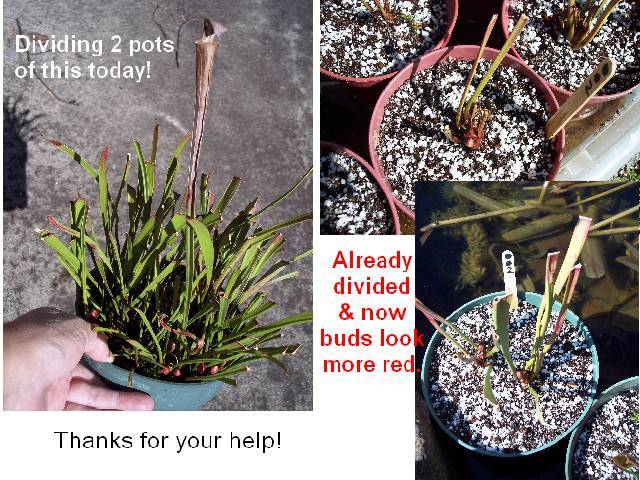
Identifying Sarracenia: Tarnok vs. Flava by Flower Buds and Pitcher Traits
Holly from North Carolina needs help distinguishing Sarracenia leucophylla Tarnok from S. flava during division. Jeff Dallas leans toward Tarnok based on growth habit: Tarnok tends to get full and weedy like your plant o
Insufficient Light for Cape Sundew: 1 Hour Isn't Enough
Albertos Cape sundew receives only 1 hour of direct sunlight daily in El Paso, Texas. Jeff Dallas explains this is inadequate: With only 1 hour of sun a day, a Cape Sundew probably wont be sticky enough to capture insect
Fungal Growth on Drosera Spatulata: Identification and Treatment
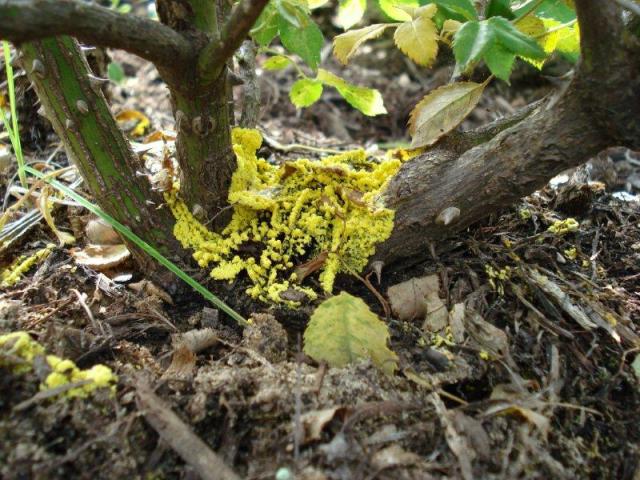
Oliver from the Southern Hemisphere reports whitish fungal mass on soil near his flowering Drosera spatulata. The plant shows good dew production and health otherwise. Christopher recommends avoiding soap-based fungicide
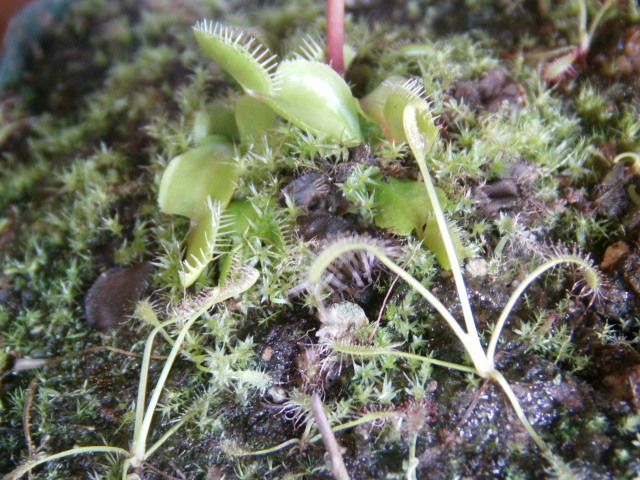
Separating Volunteer Cape Sundews from Venus Flytrap
Tom discovered 7 baby Cape sundews growing with his newly purchased Venus flytrap in a 3-inch pot. Jeff Dallas advises separation for two reasons: space constraints and different dormancy requirements. Venus flytraps are
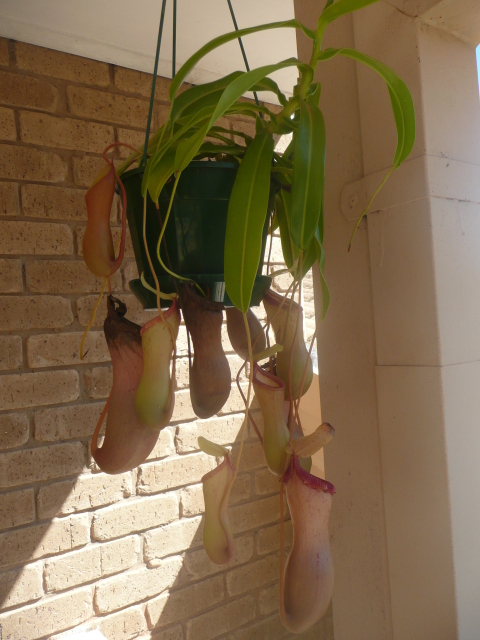
Pitcher Pruning for Nepenthes: When and How to Trim
Leigh from Australia asks about pruning brown pitchers on Nepenthes as autumn approaches. Jeff Dallas explains pitchers typically last 1.5 months, varying by species. When they start to brown, we usually cut them off whe
Growing Drosophyllum Lusitanicum: From Seedlings to Outdoor Acclimation
Anna from Portland, Oregon has Drosophyllum lusitanicum (dewy pine) seedlings under fluorescent lights in terra cotta pots. At 2 inches tall with 4-5 dewy leaves each, she asks about outdoor transition timing, acclimatio
Ultrasonic Foggers and Salt: Risks for Carnivorous Plants
Ean purchased an ultrasonic fogger for his small greenhouse housing Nepenthes, Cephalotus, and Heliamphora. After discovering the device required a pinch of salt in distilled water to function, he questioned whether this
Repotting Mature Nepenthes Ventricosa: Burying Woody Stems
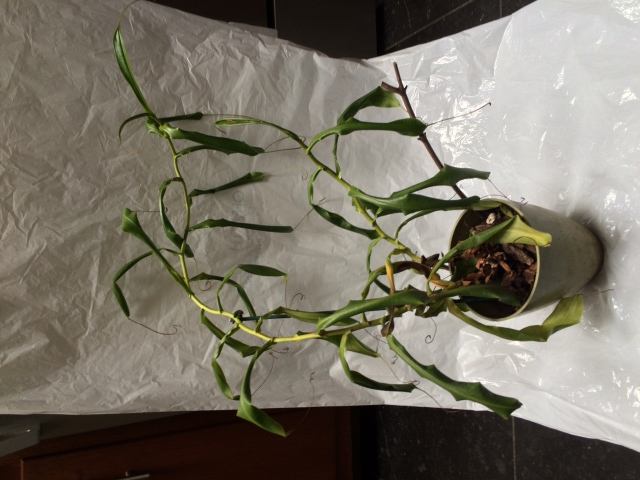
Jasons Nepenthes ventricosa has thrived for years in a 4-inch pot under fluorescent lights, showing good color but slow pitcher development and drooping lids. The plants woody stem protrudes 2-2.5 inches above the soil w
Why Your Sundew Isn't Producing Dew After Increasing Sunlight
Many carnivorous plant growers expect immediate results when adjusting growing conditions, but sundews operate on a different timeline. A reader named Alberto increased his sundews sunlight from 1 hour to 4 hours daily,
Venus Flytraps Dying En Masse: Fertilized Peat/Perlite Is the Killer
Venus Flytraps Dying En Masse: Fertilized Peat/Perlite Is the Killer All flytraps dying with black spots, but Sarracenia fine? Classic fertilizer toxicity. Miracle-Gro or similar brands in peat/perlite kill flytraps fast
Uncovering Venus Flytraps & Sarracenia in Massachusetts Spring
Uncovering Venus Flytraps & Sarracenia in Massachusetts Spring Night lows 30–40°F? Uncover now. Cover only if low 20s or teens forecast. Our nursery uncovers at 30s; plants handle light frost. Watch weather—tarp overnig
Sarracenia Pitcher Lifespan: One Season (Two for Purpurea/Psittacina)
Sarracenia Pitcher Lifespan: One Season (Two for Purpurea/Psittacina) Most Sarracenia pitchers last one growing season (spring–fall). S. purpurea and S. psittacina pitchers live ~1 year. Hybrids with these species inheri
Copyright © www.100flowers.win Botanic Garden All Rights Reserved