
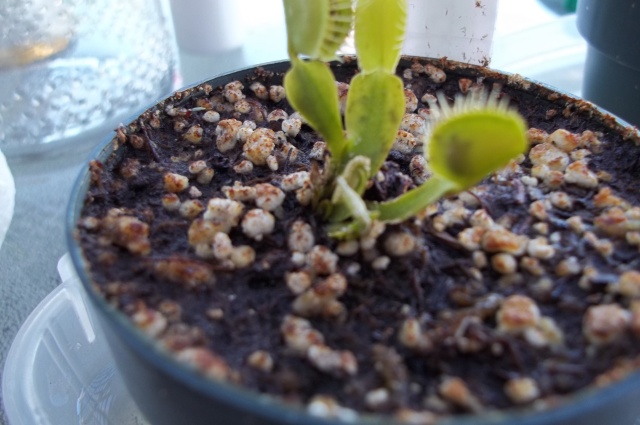
White Crust on Venus Flytrap Traps: Likely Perlite Dust
Harmless Mineral Residue Hard white crust on new trap backs of rescued flytraps in 1:1 peat/perlite. Likely perlite dust—brittle, forms after rain. Wipe with damp cloth or spray off. Not harmful. If persists after cleani


Outdoor Bog Garden in Seattle: Soil Mix and Darlingtonia Tips
Zone 7–8 Ideal for North American Species Seattle (zone 7–8) suits Sarracenia, Venus flytraps, Cape sundews. Standard peat/perlite works. Darlingtonia needs extra aeration (orchid bark, more perlite) and cool nights—cons
Sarracenia Oreophila Pitcher Flattened by Rain: Normal, Use Support
No Lasting Damage Heavy rain knocked S. oreophila pitcher flat. Several species naturally fall sideways with age/weather. Plant is fine. Use wire cage/dowels to support in wind/rain. Slow grower—one pitcher at a time is
Nepenthes Truncata Yellowing: Too Much Light, Needs Fertilizer
Adjust Light and Feed N. truncata in SW window (8–9h sun) yellowing, one uninflated pitcher blackening. SW exposure may be too bright indoors—dapple light with other plants. Fertilize with orchid fertilizer at ¼ tsp/gal
Cat Ate First Sarracenia Pitchers: No Harm, Best Pitchers Come Later
Rhizome Safe, Plant Fine Cat bit off first pitchers of S. Judith Hindle, leucophylla Tarnok, and exornata. Pitchers are just leaves; rhizome unharmed. These varieties produce best pitchers late season (unlike early S. fl
Purple Pitcher Plant Leaf Damage: Katydids or Grasshoppers
Chewing Pests, Not Aphids New red leaves of S. purpurea eaten from top down in Georgia. Aphids suck sap, causing deformity. Chewing damage = grasshoppers, katydids, caterpillars. Katydids leap from grass, snack, leave. U
Dewy Pine Base Burn: Don't Cut Back, Acclimate Slowly
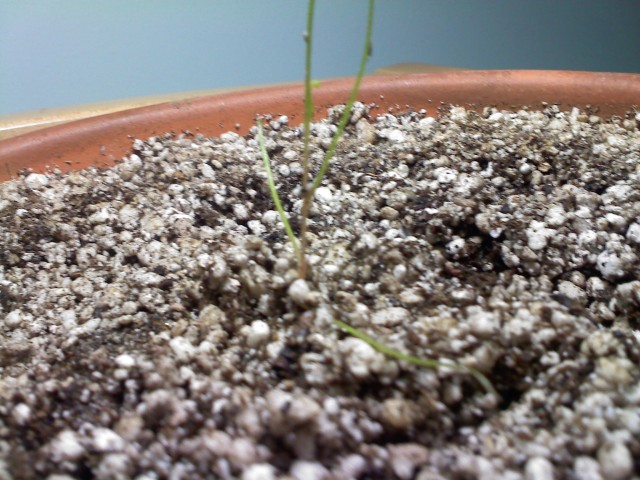
Stake and Wait Dont cut back burned Drosophyllum—they dont respond like sundews. Photo shows minimal burn; likely just needed acclimation. Keep soil damp, start with morning sun/shade after 1 PM, then full sun after a we
Venus Flytrap Slow Growth: Dormancy, Water, and Planting Strategy
Key Issues Flower stalks stall leaf growth; removing them helps. Fridge dormancy lacks photosynthetic light—better: cool, sunny spot with reduced watering. In shared bog, plant flytraps on a mound above water level, or
Drosera Rotundifolia in Bog Garden: Dormancy and Water Level Issues
Species-Specific Needs D. rotundifolia prefers near-waterlogged conditions; Venus flytraps like water just at root tips. In a shared bog, plant flytraps on a mound above water level. Some D. rotundifolia subspecies die b
Tap Water 8–66 ppm TDS: Safe for Carnivorous Plants?
Yes, Within Safe Range Water hardness 8–66 ppm in Camas, WA is fine. In summer when TDS rises, top-water occasionally to leach minerals, especially for Venus flytraps.
Dewy Pine Flowering Care: No Special Watering Needed
Maintain Normal Routine No need to keep Drosophyllum drier during bloom. Water heavily when top soil feels dry, wait until it dries again. In heat, leave a little water in tray but not permanently. They wilt fast when bo
Cephalotus Die-Back: Can It Regrow from Roots?
Check Root Health If top growth died, clip it off. White rootstock = good chance of regrowth. Brown/mushy = dead. Unpot to inspect rhizome/roots.
Algae on Drosera Rotundifolia Seedlings: Fungus Risk and Outdoor Fix
Algae Indicates Fungus-Friendly Conditions Algae on D. rotundifolia seedlings in 50/50 peat/perlite under 16h fluorescent light suggests poor drainage/aeration, low light, stagnant air, or excess nutrients. Algae itself
Cooling Highland Nepenthes and Heliamphora Indoors Above 90°F
AC Upgrade or Swamp Cooler If room AC cant keep temps below 90°F, upgrade to a higher-capacity unit. Swamp coolers drop temps ~20°F but need low humidity and daily refilling. Alternatively, entrust plants to a friend—acc
Managing Thousands of Drosera Seedlings: Transplanting Strategy
Wait for Size, Then Separate With 2000+ seedlings in 12×8 trays, wait until theyre larger to transplant—easier root separation, less damage. Some species (e.g., D. indica) dont transplant well. Use cell-plug trays with f
Choosing an RO System for Hard Well Water: Hydro-Logic Merlin Review
Nursery-Tested System The Hydro-Logic Stealth Merlin Garden Pro RO system (used at Sarracenia Northwest) works well for high-volume production. It removes 95%+ chlorine. For line pressure <40 psi, add a booster pump for
Floppy Sarracenia Pitchers: Not Enough Light
Two Hours Morning Sun Is Insufficient Sarracenia in a greenhouse with only 2 hours morning sun (then shade) produce weak, wavy, floppy pitchers. They need 6+ hours full sun (like tomatoes). Inconsistent watering also cau
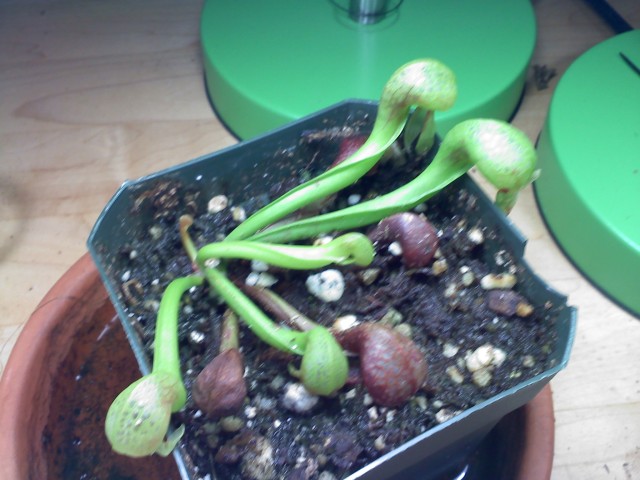
Darlingtonia Flowering Age: Years Away for Small Plants
Size Matters More Than Age A Darlingtonia ~5–7 years old (likely a stolon offshoot) is only a few inches tall. They need ~1 foot height to bloom—expect 2–3 more years.
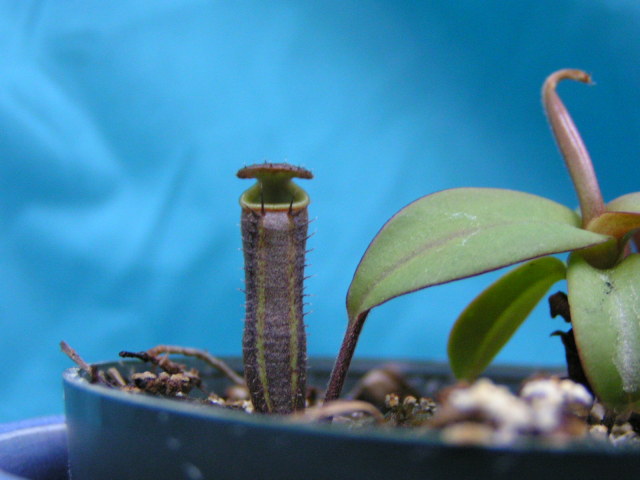
Identifying a TLC Nepenthes: Likely N. tentaculata
Best Guess from Photo A mystery TLC plant with pitchers resembles Nepenthes tentaculata. May need to wait for maturity to confirm. Many TLC plants were sold without tags.
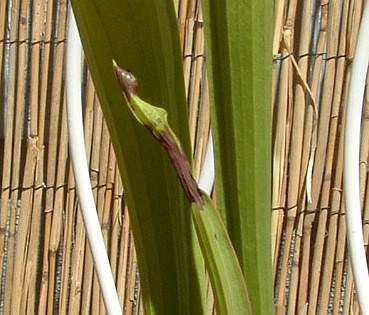
Sarracenia Flava New Pitcher Brown Spot: Slug Damage or Fungus?
Inspect for Pests and Rot A rapidly spreading brown spot on a new S. flava pitcher in Colorado (full sun, 25ppm water, 50/50 peat/perlite) suggests slug/snail bite early in development or botrytis. Dig around rhizome: ch
Copyright © www.100flowers.win Botanic Garden All Rights Reserved