
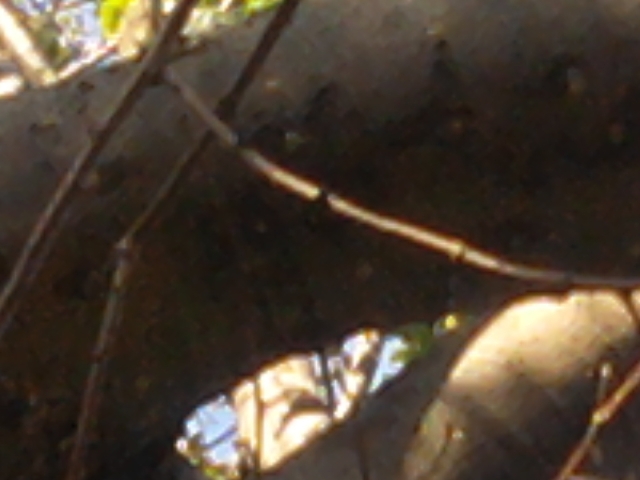
Hackberry with Oozing Spots: Possible Bacterial Wetwood (Slime Flux)
Round oozing spots on a drought-stressed hackberry surrounded by concrete suggest bacterial wetwood (slime flux). This condition occurs in hot, dry weather and causes foul-smelling ooze. Reference Detailed bulletin: Sli


Inchworms and Frass on Petunias: Quick Control with Bonide Caterpillar Killer
Black spots on petunias are caterpillar droppings (frass). Inchworms (caterpillars) eat flowers and leaves. Control Options Bacillus thuringiensis (Bt)—slow, needs multiple sprays. Bonide Caterpillar Killer—contact kill
Autumn Blaze Maples Not Turning Red: Temperature, Moisture, and Branch Vigor
Three-year-old Autumn Blaze maples in south MS not coloring well and having leafless branches may be due to: Insufficient cool fall temperatures for pigment development. Soil moisture extremes (too wet/dry). Dead branch
Weeping Mulberry Leaf Spots and Yellowing: Likely Minor, Check Roots
Small brown spots on leaves of a 3-year-old weeping mulberry are usually not serious. Yellowing on top may indicate root/soil stress. Management Rake and destroy fallen leaves in winter to reduce overwintering pests. En
Crape Myrtle Leaf Scorch in Extreme Drought: Deep Watering Is Critical
Brown leaf edges with green centers on young crape myrtles in Dallas during 100°F+ drought is heat/water stress, not disease. Sprinkler 5 min daily is insufficient. Correct Watering Increase sprinkler to 15 min every 2
Puckered Grapevine Leaves: Herbicide Drift, Virus, or Mites?
Severely puckered leaves on a potted 10-year-old grapevine (recently from Italy) can stem from: Herbicide drift—accidental exposure causes distortion; new growth may normalize. Virus diseases—persistent, no cure. Erioph
Maple Anthracnose: Brown Veinal Discoloration—Cultural and Chemical Control
Brown areas along leaf veins that crumble and die, often in symmetrical patterns, are classic maple anthracnose (caused by Discula spp.). Cool, wet springs favor it. Symptoms Brown discoloration along veins, progressing
Unknown Bugs on Flowering Tobacco: Need Photo for Identification
Two types of bugs (orange-red stationary, tiny white mobile) on flowering tobacco cannot be identified without a clear, close-up photo. What to Provide In-focus photo of each insect (review on computer before sending).
Neighbor’s Aspen Leaves Not Causing Garden Diseases—Focus on Soil and Cultural Practices
Aspen leaf pathogens don’t infect tomatoes, beans, or cucumbers. Your garden problems are unrelated to the neighbor’s tree. Tomato Issues Yellowing from bottom up: likely Verticillium or Fusarium wilt (soil-borne). Chec
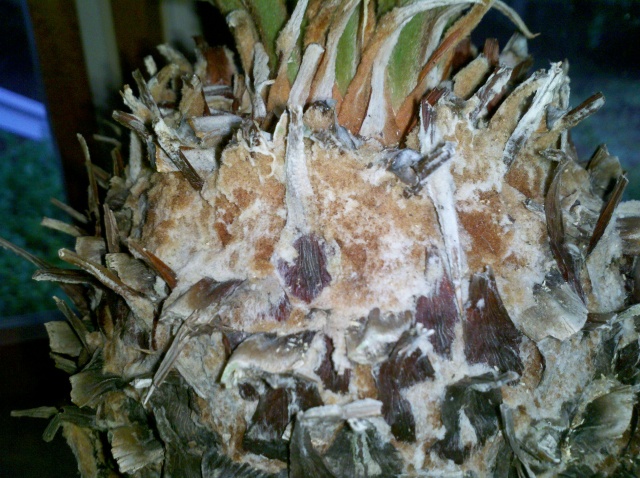
Sago Palm Tan Spongy Growth: Likely Environmental Exudate, Not Disease
The tan spongy growth on the trunk below the leaves is not a recognized disease or insect. It’s likely a plant exudate responding to environmental change (repotting, light, humidity). Action Monitor periodically for ch
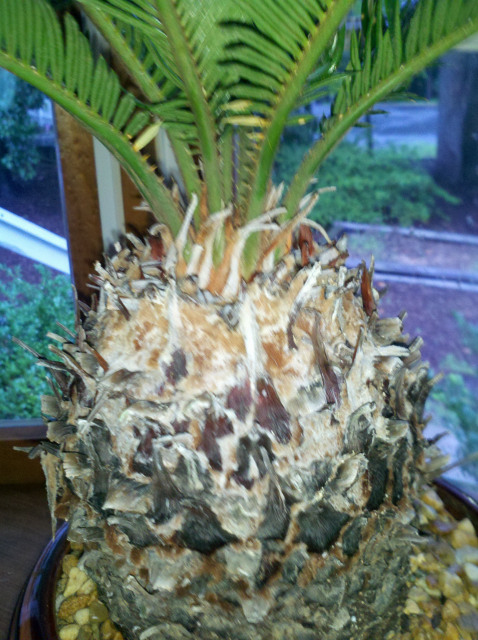
Sago Palm Repotting: Glued Stones, Spongy Growth, and Light Needs
Glued Decorative Stones Stones glued to the base are for aesthetics/support. Removing them risks root damage. If not strongly glued, careful removal is okay. Spongy Trunk Growth The tan spongy material is likely a plant
Maple Trunk Fungus: Decay Fungus Fruiting Body—Natural Cycle, No Spray Needed
The white growth in the maple’s knot hole is the fruiting body (mushroom) of a wood-decay fungus. The fungus lives in dead heartwood, not living tissue, so it doesn’t kill the tree directly. Key Points Fungus spreads vi
Maple Trunk Cavity with White Fungus: Internal Decay—Manage, Don’t Treat
The white fungus in the 3-inch knot hole is the fruiting body of a decay fungus rotting the heartwood. This is a terminal condition, but the tree may live many years with good care. What Not to Do Do not fill cavity wit
Systemic Insecticide for Scale on Yellow Poplar: Bayer Advanced Tree & Shrub
To control scale insects systemically, apply Bayer Advanced Garden Tree and Shrub Insect Control (contains imidacloprid) as a soil drench. Mix with water per label directions. Apply to soil under the tree. Results are n
Dogwood Maintenance: Pruning, Fertilizing, and Disease Control Guide
Pruning Dead branches: any time. Live branches: dormant season (fall–spring). Cut ¼ inch from trunk (preserves branch collar). For large limbs, first cut 1 ft out, then final cut at collar. No wound paint—it slows heali
Crape Myrtle Limb Dieback: Environmental Stress, Not Disease
Recurrent limb dieback in Tuscarora crape myrtles during severe drought/heat (over 95°F) is typical of environmental stress, not a pathogen. Pathogens are inactive at such temperatures. Verify Watering Depth Dig down wit
Sooty Mold on Pecan Leaves: Caused by Insects, Not a Primary Disease
The black “soot” on your pecan leaves is sooty mold, a fungus growing on honeydew excreted by sap-feeding insects (aphids, scale, whiteflies). It’s unsightly but not directly pathogenic. What to Do Identify and control
First-Year Lilac Leaf Curl: Root-Bound Planting and Wet Soil Concerns
Leaf curl on a one-year-old lilac in very wet soil (monsoon season) with no pests suggests root-binding from the container or waterlogged roots. Root-Bound Correction If the root ball wasn’t loosened at planting, roots m
Single Quaking Aspen Declining: Check for Root Pests or Cytospora Canker
One aspen in a group showing dry branches and leaves could have root-feeding pests (look for tunnels, digging) or Cytospora canker, a common fatal disease. Diagnostic Steps Inspect base of affected tree for animal damag
African Sumac Decline in Extreme Heat: Nutrient Deficiency and Watering Advice
In Lake Havasu City’s intense heat, your African sumac turning orange suggests nutrient deficiency and/or insufficient water. Quick Remedies Apply Epsom salts (magnesium sulfate) as a soil drench—provides minor nutrient
Copyright © www.100flowers.win Botanic Garden All Rights Reserved