
Whitefly on Gumbo Limbo: Protect Butterflies with Yellow Sticky Traps, Vacuuming, Timing Sprays
Challenge Whitefly treatment harms beneficials (butterflies on nearby desert senna). Lower-Impact Methods Yellow sticky cards/traps: Attract whiteflies; monitor/replace. Better in greenhouses but helps. Vacuuming: Cool

Yoshino Cherry White Patches on Branches: Fungus—Atomic Grow Suggested, But Proper ID Needed First
Symptom White patches on branches, leaf drop, branch death on mature Yoshino cherry in West TN. Response Atomic Grow (biostimulant) recommended to boost health. Pressure wash white patches first. However, accurate fungal
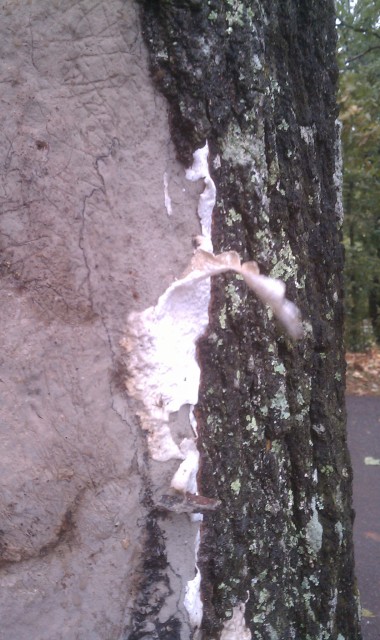
Oak with bark loss and white film Two Likely Fatal Diseases Hypoxylon canker: Bark falls off, revealing gray/black fungus. Tree near death. TX Forest Service | OK Fact Sheet Armillaria root rot: Roots rot, fungus invad
Reality Check Aspens (Populus tremuloides) are prone to many diseases (cankers, leaf spots, borers). No product makes them immune. Real Defenses Genetic resistance (choose resistant clones). Site selection: well-drained
Boston Ivy Furry Leaves, Brown Tips: Overwatering → Root Rot—Cut Back Water
Diagnosis Furry leaves + brown tips = overwatering/root rot. Boston ivy thrives on neglect; this plant likely gets more water than others. Fix Reduce watering significantly. Let soil dry between waterings.
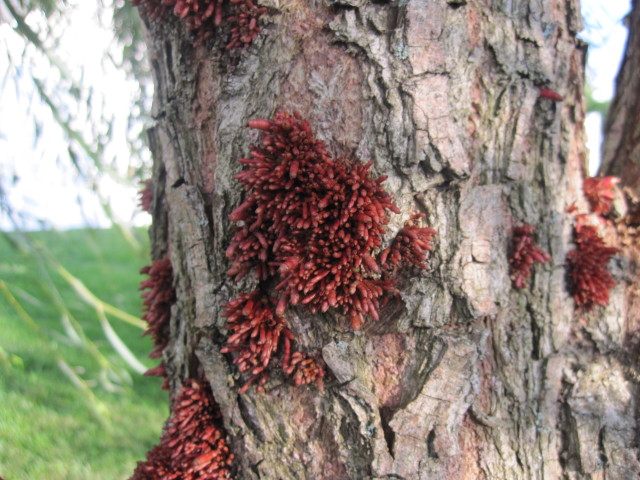
Weeping Willow Red Spiky Patches: Adventitious (Air) Roots, Not Borers—Harmless, Dry Up
Weeping willow with red spiky trunk patches Identification Red spikey patches = adventitious (air) roots, triggered by high humidity/rain. Harmless, dry and shrivel. Not borers. Verification Search air roots willow imag
Blue-Gray Growth on Tree Trunks: Lichens—Harmless, Indicate Light, Not Cause of Fruit Tree Decline
Identification Blue-gray crusty growth on pines, apples, crabapples, pears = lichens (fungus + alga). Diverse colors/shapes. Key Facts Not parasites—use bark for support only. Need light → grow on open/exposed branches.
Pine Bark Beetles in Alabama: Prevention via Tree Vigor—Contact Extension for Local Advice
Beetle Behavior Tiny bark beetles (1–3 mm holes) attack stressed pines, not healthy ones. They home in on stressed trees. Prevention Maintain vigor: proper water, fertilizer, avoid damage. Old trunk sprays limited by sp
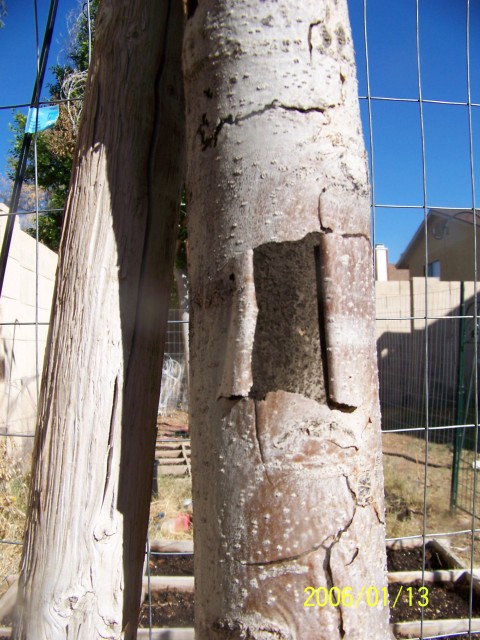
Arizona Ash Bark Peeling with Black Powder: Terminal Decline Likely—Consider Replacement
Arizona ash with bark loss and black fungal growth Diagnosis Bark cracking/peeling + black sooty fungus underneath + leaf drop + one trunk dead = advanced decline, likely fatal. Fungus is secondary on dead wood. Cause h
Oak Trunk Rows of Small Holes: Sapsucker Woodpecker—Minimal Impact, Monitor Canopy
Identification 1/4-inch holes in neat rows on main trunk = yellow-bellied sapsucker (woodpecker). Feeds on sap and attracted insects. Impact Usually minimal. Monitor each spring: full leaf-out = healthy. Increasing dead
Arborvitae 'Green Giant' Interior Browning: Likely Shading, But Get Extension Diagnosis
Common Cause Inner needles brown from shading as canopy densifies—normal. But 3 adjacent trees showing top-down browning warrants check. Free Expert Help County Extension office (courthouse) — horticulture agent can vis
Hard Brown Scale on Large Jade Plant: Indoor-Safe Systemic Spikes or Horticultural Oil
Options for Indoor Use Bayer Insect Control Fertilizer Spikes (systemic): effective on soft scale; uncertain on hard scale. Check label. Horticultural oil (e.g., Bonide All Seasons): smothers hard & soft scale. Non-toxi
Two Pests Identified Black twig borer (Xylosandrus compactus): attacks pencil-size twigs, introduces ambrosia fungus. Peaks June–Sept. Control: Prune 3–4 below infested twigs, destroy debris. Mulch, avoid over-fertilizi
Lemon Fruit Small with Dry Dark Indent: Environmental, Not Disease—Need More Info
Missing Details To diagnose: indoor/outdoor? tree size/age? other lemons nearby? previous crops? Photo of fruit (scanner works). Likely Environmental Symptoms suggest water stress, nutrient imbalance, or temperature fluc
White Oak Suckering and Gall Wasps: Normal Self-Pruning, Galls Cosmetic—Imidacloprid Ineffective
Suckering (Water Sprouts) Open-grown oaks sprout on sun-exposed trunks. Lower sprouts die as canopy shades them—normal self-pruning. No action needed. Gall Wasps (Gouty/Horned Oak Gall) Woody galls on twigs, 2+ year cyc
River Birch Surface Roots Near Building: Do Not Cut—Add Sand, Prune Limbs Instead
Root Nature River birch (Betula nigra) has fibrous, non-destructive roots. No documented structural damage. Surface Root Management Do NOT cut roots—harms tree. Cover with ≤2 inches of sand only (clay smothers roots). P
Weeping Mulberry Leaf Spot: Fungus Overwinters on Fallen Leaves—Rake, Fungicide, Check Neighbors
Disease Cycle Fungus survives on fallen leaves → spring rain splashes spores to new leaves → spots → more spores → fall reactivation. Cultural Control Rake and DESTROY (dont compost) all fallen leaves. Final thorough cl
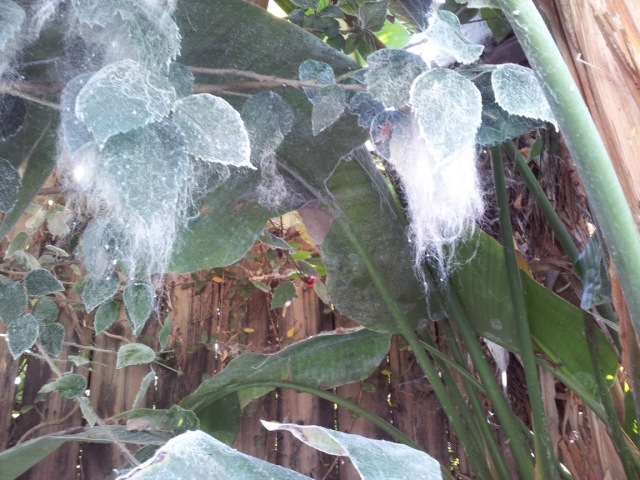
White Cottony Growth on Shrub: Giant Whitefly Wax, Not Fungus—Oil Sprays and Nursery Advice
Cottony whitefly wax on leaves Identification White cotton candy strands + spirals + tiny flying insects = giant whitefly (Aleurodicus dugesii). Wax filaments are their protective coating. Control Light summer horticul
Leaf Miners on Fruit Trees: Homemade Oil Sprays Work—Test First, Reapply Weekly
Homemade Spray Advice Test on few leaves; wait 3 days for burn. Oil-based recipes better than soap for leaf miners. Nicotine extracts also effective. Reapply weekly; homemade sprays lack stickers. Scout new growth for f
Foam on Tree Trunk After Rain: Natural Soapy Exudate from Bark Compounds
Mechanism Rainwater penetrates bark, dissolves trees natural growth compounds (saponins, etc.), flows down between bark and wood, foams where it exits at base. Harmless, temporary.
Copyright © www.100flowers.win Botanic Garden All Rights Reserved