
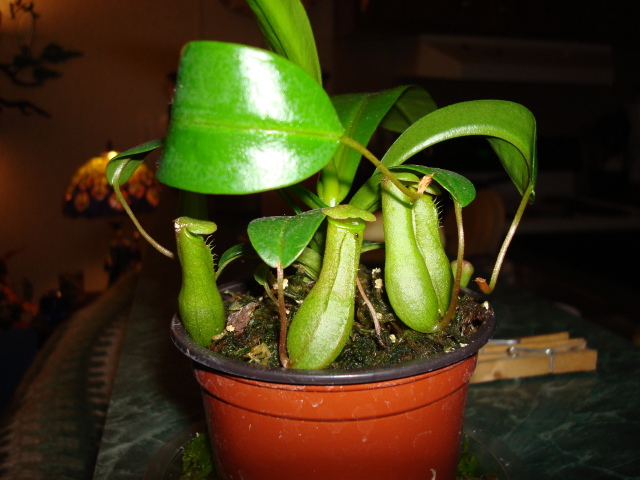
Identifying a Young Nepenthes: Likely Nepenthes ventricosa
A grower bought a green, thriving Nepenthes from a local nursery with no ID. Tentative ID Appears to be Nepenthes ventricosa. Confirmation: as it matures, wings disappear and pitchers turn rosy red. Next Steps Consult th

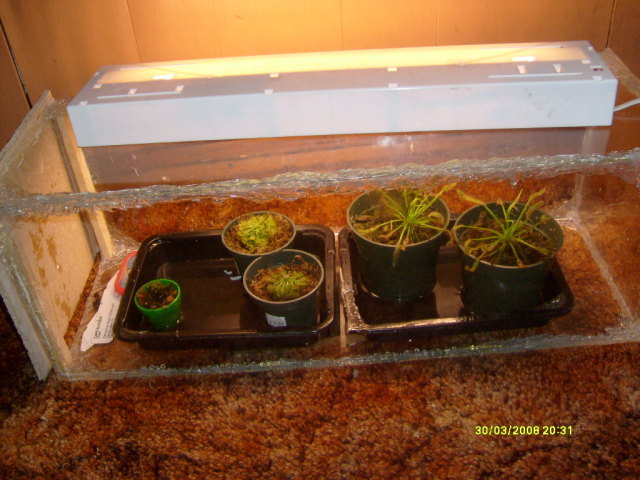
Fixing Dewless Cape and Spoonleaf Sundews: Upgrade Your Lighting
A grower had zero dew on Cape and spoonleaf sundews under a single 15W fluorescent tube in a tank. Problem: Grossly Insufficient Light Upgrade to a two-tube 40W shop light fixture. Place on top of the tank as before. Ve

Pygmy Sundew Flower Stalks, Clumping, and Winter Behavior
A San Diego grower asked about mucilage on D. nitidula × ericksoniae flower stalks, clumping habit, and whether outdoor plants go dormant in cold or summer drought. Flower Stalk Mucilage Likely defensive, not carnivorous
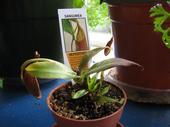
Rescuing an Overwatered Nepenthes sanguinea: Drainage and Stability
A N. sanguinea declined after two months: large leaves browned, only two small basal shoots remained. The grower had varied light and kept it constantly moist. Diagnosis: Waterlogging Nepenthes hate sitting in water. Con
Overwintering Young Temperate Carnivorous Plants: Cold Basement vs. Lighted Warm Room
A grower with young greenhouse-grown flytraps and Sarracenia (too late to acclimate outdoors) compared two indoor options: (1) fluorescent lights, 12h, 70s°F day/60s°F night, or (2) unheated north-facing basement window,
Selecting Carnivorous Plants for Fly Control in California: Water Quality and Pet Safety
A homeowner in Ontario, CA (former dairy land, lots of flies) wanted carnivorous plants in planters using reclaimed water, plus indoor plants, and asked about cat safety. Water Warning Reclaimed water is toxic to carnivo
Correcting Soil for Cape and Spoonleaf Sundews: Replace Potting Soil with Peat/Perlite Mix
A grower bought Cape and spoonleaf sundews from a garden center; they were potted in regular potting soil in the center with correct soil around the edges. Immediate Action Repot into 1:1 peat moss : perlite. Never use
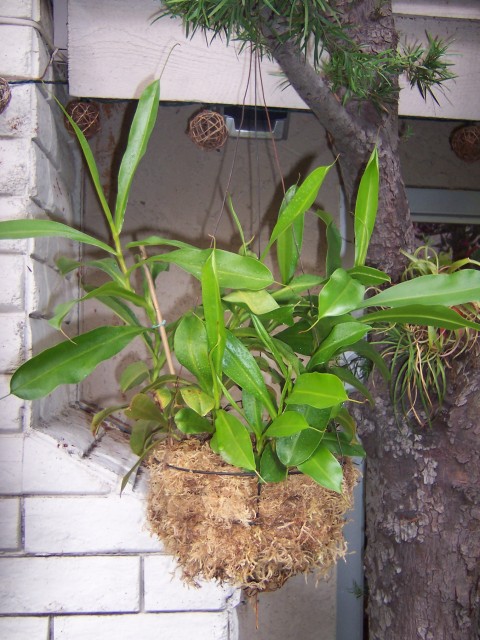
Why Your Nepenthes ventrata Isn't Producing Pitchers: Light and Fertilizer Factors
A healthy N. ventrata in a hanging basket outdoors had 8-inch leaves but no pitchers for months. Diagnosis Insufficient light. The growers previous experience: plants in a bright north window never pitchered; moving to b
Rooting and Acclimating Nepenthes maxima Cuttings: From High Humidity to Open Air
A grower successfully rooted a large N. maxima cutting (4 leaves, 3 months, inch-long roots) in a vertical 10-gallon aquarium with high humidity and asked about transitioning, fertilizing, and whether to cut the growing
Cape Sundew Care: Stem Management, Lighting, and Common Mistakes
A grower in NJ detailed a year of Drosera capensis issues: woody stem, dew loss, light distance experiments, stem burial causing rot, and aggressive root scraping. They also asked about VFT and Sarracenia care. Cape Sund
Pruning and Repotting Large Nepenthes: Best Practices
A grower with a leggy, vining Nepenthes in a 12-inch pot asked about pruning and the best soil mix. Pruning Nepenthes are vines; you can cut back vines to encourage branching from the base or nodes. Cuttings can be root
Companion Planting Carnivorous Plants: Which Species Can Share a Pot?
A grower wanted to create a mixed carnivorous plant arrangement in a relatively small pot. General Rules Use a large pot; give each plant a couple inches of space. Group by habitat requirements: temperate with temperate
Managing Winter Dormancy for Carnivorous Plants in South Florida's Mild Winters
A Florida grower with Venus flytraps, Cape sundews, and white-top pitcher plants asked whether to refrigerate them or leave them outside during variable 50s–70s°F weather. Outdoor Dormancy Is Possible Florida winters oft
What Does 'Adult Pitcher' Mean in Nepenthes?
A grower asked whether adult pitcher refers to a size class or a developmental stage. Definition An adult pitcher is one that has finished growing: the lid is fully open and the peristome has folded down. At this point t
Overwintering Venus Flytrap and Pinguicula primuliflora in a Cool Sunroom
A grower in Virginia kept a Venus flytrap and P. primuliflora in an unheated sunroom (night 30s°F, day 45–50°F) after failing to acclimate them outdoors in fall. Assessment Conditions are nearly ideal for dormancy. Growt
Identifying and Treating Stubborn Orange Mold on Sundews
A Drosera adelae developed orange/brown wart-like structures with white bases on the soil and plant base. Sulfur and neem oil didnt help. The grower in Indiana had no bright windows in winter. Identification This matches
Growing Sarracenia leucophylla in Southern California: Soil, Water, Light, and Dormancy
A grower in Southern California asked how to plant and care for a Sarracenia leucophylla in a 4-inch pot. Essential Requirements Soil: 1:1 sphagnum peat moss : perlite (no fertilizers). Use bale peat, not bagged (often
Finding and Identifying Sarracenia rosea (Burke's Purple Pitcher Plant)
A grower sought Sarracenia purpurea ssp. venosa var. burkii, noting confusion over its name and availability. Taxonomy This plant is a distinct subspecies/species. Botanists debate whether to call it S. purpurea venosa v
Why Your Drosera aliciae Isn't Producing Dew: Light and Temperature Factors
A Drosera aliciae in a terrarium under high-output fluorescent lights (16–18 hours, 5–8 inches away) grew red leaves but produced no dew. Light Is Adequate Red new growth indicates sufficient light for photosynthesis (de
Optimizing Care for Nepenthes alata Hybrid: Soil, Watering, and Pruning
A grower repotted a nursery-bought N. alata into a large pot with a water-retentive mix (LSFM, peat, sand), placed it in a west window, watered every 1–2 days, misted twice daily, and asked about pruning and tap water. K
Copyright © www.100flowers.win Botanic Garden All Rights Reserved