


A grower built a large plywood planter (8'×12"×12") lined with plastic, filled with 2:1 peat:sand, and placed it in a greenhouse with 5 hours of direct sun. A tan, crusty "cottage cheese" substance appeared on the soil surface, and Venus flytraps began blackening from the trap tips downward. Neem oil didn't help.
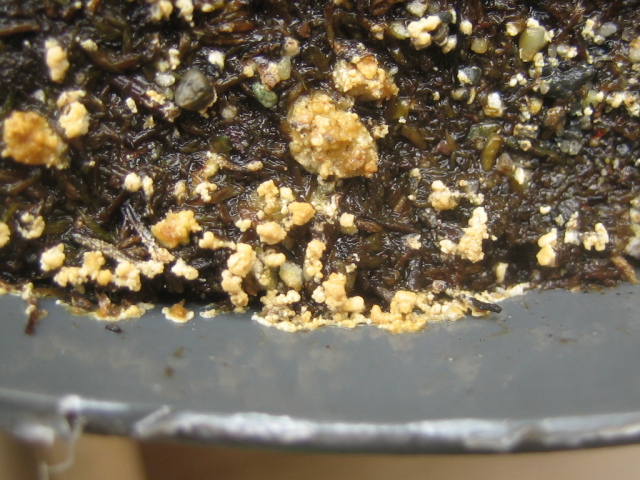
Jeff Dallas identified the crust as mineral deposits from evaporation—common even with RO water, as organics in peat can precipitate. The real problem? The undrained planter.
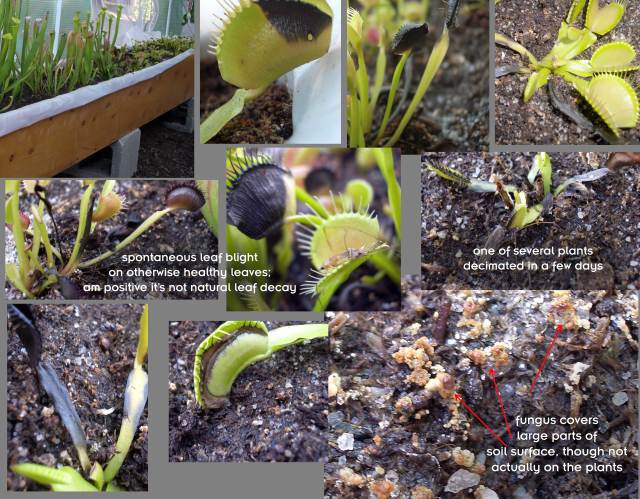
Jeff advised drilling drain holes, flushing with RO water, and improving airflow. The grower followed up: after drilling holes, replacing RO filters, and flooding twice daily, plants recovered. Mineral deposits vanished. VFTs rebounded with new growth.
Good Growing!
Jeff Dallas
Sarracenia Northwest
https://www.cobraplant.com
Thick White Fungus Around Ferns and Roses: Nuisance or Threat?
Black Honeycomb Fungus in Flower Bed: Slime Mold or Something Worse?
Controlling Mold After Scale Insect Treatment on Nepenthes: Flushing, Fungicides, and Prevention
Why Mold Is Worse Indoors Than in Natural Bogs for VFT Seeds
Dealing with Mold on Houseplant Soil: Causes and Simple Solutions
Fungus Gnats on Indoor Impatiens: Cultural Control
Mold on Multiple Garden Plants: Cultural Fixes First
Reddish-Purple Powder on Multiple Plants: Sooty Mold from Insects
Southern Blight in Vegetable Gardens: White Rubbery Soil Fungus
Evaluating Growing Conditions for Venus Flytrap, Sarracenia, and Drosera adelae in Alabama
Copyright © www.100flowers.win Botanic Garden All Rights Reserved