
Cold-Damaged Peace Lily: Prune Black Leaves, Boost Humidity
Diagnosis Black leaves after overnight exposure = cold injury. Peace lilies (Spathiphyllum) are tropical; temps below 55°F cause tissue collapse. Only 7 green leaves remain—plant is severely stressed but alive. Immediat

Powdery Mildew on Philodendron: Sulfur or Baking Soda Treatment
Confirmation White, cotton-like spots on leaves and stems = classic powdery mildew. Common on philodendron in high humidity, low light, poor airflow. Treatment Options MethodMixFrequencyNotes Wettable sulfurPer label f
Gall Rust on Pine: Identification, Pruning, and When to Call a Forester
Diagnosis: Gall Rust Black, hard, 6×3 inch growths on trunk/limbs with needle death on affected branches = gall rust. Two species: Fusiform rust (Cronartium quercuum f.sp. fusiforme): On loblolly/shortleaf pine. Galls s
Black Streaks & Green Fuzz on Douglas Fir Firewood: Stain Fungi, Not a Threat
Identification Black streaks in wood grain + bright greenish-white surface fuzz = stain fungi, not decay fungi. Two common types: Black stain root disease (Leptographium wageneri): Narrow bands following growth rings in
Algae vs. Powdery Mildew on Bonsai: Sulfur Treats Both
Likely Algae, Not Mildew Light green fuzz on bonsai bark/leaves that rubs off is typically algae—common in humid, low-light conditions. True powdery mildew is white, powdery, and on leaves, not bark. Unified Treatment:
Hibiscus Shrivel After Heavy Pruning: Root Rot or Nematodes?
Diagnosis: Root System Failure Sudden shriveling of new blooms and leaves on multiple hibiscus after severe pruning indicates the roots cannot supply water fast enough. Three main causes: CauseDiagnostic CluesConfirmati
Money Tree (Pachira) Winter Leaf Drop in Minnesota: Normal or Problem?
Understanding the Plant Pachira aquatica (money tree) is a tropical wetland tree that grows 60 ft tall in nature. In pots, its often sold as a braided bonsai. Key traits: Deciduous in cool/dry conditions: Drops leaves i
White Patches on Lemon Leaf in Chameleon Enclosure: Safe Treatment
Likely Minor Issue Single leaf with white patches and brown specks where green is missing suggests localized feeding—possibly a few spider mites or a small scale infestation. Not systemic. Chameleon-Safe Protocol Remov
Advanced Guide: Confirming Fusarium oxysporum f.sp. opuntiarum on Cactus
Published Record The only documented cactus f.sp. is F. oxysporum f.sp. opuntiarum on golden barrel cactus (Echinocactus grusonii) in Italy (Plant Disease 88(1), 2004). Other references exist in French/Portuguese. Exper
Finding the Forma Specialis of Fusarium oxysporum on Cactus
What f.sp. Means Forma specialis (f.sp.) is a taxonomic rank below species, defined by host specificity. Fusarium oxysporum f.sp. opuntiarum infects Opuntia (prickly pear); f.sp. cubense infects banana, etc. How to Iden
Cleaning Sooty Mold from Homegrown Citrus: Safe, Effective Methods
What It Is Black coating on oranges/grapefruit is sooty mold—fungi growing on honeydew excreted by sap-sucking insects (whiteflies, aphids, scale). The mold doesnt penetrate peel or affect flesh; its purely cosmetic. Cl
Reviving a Stagnant Potted Lemon Tree: Repot, Feed, and Light
Why It Went to Sleep A 6-inch pot is far too small for an 18-inch lemon tree. Roots are circling, nutrients exhausted, and indoor winter conditions (low light, 20–30% humidity) induced semi-dormancy. Step-by-Step Recove
How Plants "Feel" Damage: Biochemical Defense Without a Nervous System
No Brain, But a Sophisticated Alarm System Plants lack nerves and consciousness, but they possess an intricate biochemical signaling network. When herbivores chew or pathogens breach cell walls, damaged membranes release
Greenish Growth on Cherry and Lilac: Lichens Signaling Tree Stress
Identification: Its Lichens The green-silvery, flower-like or crusty growth on bark is lichens—a fungus-algae partnership. They photosynthesize (algae) and gather minerals (fungus). They are not pathogens. Why They Indi
Lichens on Trees in Wet Climates: Harmless Indicators, Not Killers
What Youre Seeing The light green moss/fungus covering branches in western Washington is almost certainly lichens—symbiotic organisms (fungus + algae). They dont parasitize trees; they use bark as a substrate. Why Theyr
Indoor Lemon Tree: Multiple Stressors Require Integrated Approach
Symptom Breakdown Brown/rust patches on stems: Could be scale insects, sunburn through window glass, or nutrient deficiency. Leaf drop + yellowing: Classic underwatering or root-bound stress. Tiny green bugs + webbing:
Fuzzy White Deposits on Palm: Scale, Mealybugs, or Powdery Mildew?
Distinguishing the Possibilities FeatureScale InsectsMealybugsPowdery Mildew AppearanceSmall bumps; waxy cover; hard to scrapeWhite, cottony; soft; smear easilyPowdery film; wipes off; on both surfaces LocationStems, le
Honeysuckle Chlorosis in High Desert: pH, Not Iron, Is the Key
Why Iron Supplements Failed Western high-desert soils are typically alkaline (pH 7.5–8.5). At these pH levels, iron becomes chemically unavailable regardless of how much you add. The yellowing (chlorosis) with brown spot
Scale Insects on Holly: Systemic Treatment vs. Horticultural Oil
Accurate Identification Your description—oval bodies with radiating fingers under 1 mm on both leaf surfaces—matches armored scale (likely Fiorinia or Lepidosaphes species). The fingers are waxy filaments. These insects
Mysterious Worms in Houseplant Pots: Identification and Control
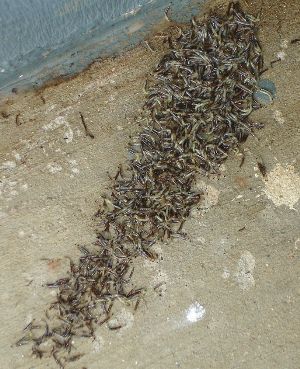
What They Likely Are Thin, brownish worms (<1 inch) crawling from pots onto floors are usually: Fungus gnat larvae: Translucent with black heads; feed on soil fungi and roots. Pot worms (enchytraeids): Small, white to t
Copyright © www.100flowers.win Botanic Garden All Rights Reserved