
Weeping Willow Lower Branch Dieback: Normal Shading
Why Weeping Willows Shed Lower Branches A 6-year-old weeping willow (Salix babylonica) in wetlands breaking off lower branches while showing new shoots above is exhibiting normal “self-pruning.” Shaded, interior, or vine

Green-Gray Crust on Woody Plants: Lichens, Not Disease
Lichens on Roses, Shrubs, Peach Trees = Harmless A “green grey curly disease” with moss on multiple woody plants near Ocala Forest is almost certainly lichens + moss—epiphytes indicating clean air and adequate moisture,
Indoor Citrus & Avocado Seasonal Leaf Drop: Normal or Not?
Citrus Sheds Leaves Before Bloom; Avocado Is Deciduous An indoor orange tree curling old leaves while new growth looks fine, and an avocado dropping all leaves with brown, stiff foliage, are both exhibiting normal season
Transplant Shock in Oversized White Pines: Root Stimulation?
When White Pines Are Too Large to Transplant Successfully Planting white pines (Pinus strobus) that are “too big to transplant” leads to thinning within a year because the root ball cannot support the canopy. Severing ma
Scale on Krauter Vesuvius Plum: Systemic Control & Ant Connection
Managing Scale on Flowering Plum with Ants Krauter Vesuvius (purple-leaf plum) covered in scale at flowering time needs systemic treatment. The ants are farming scale for honeydew—they’re a symptom, not the cause. Immed
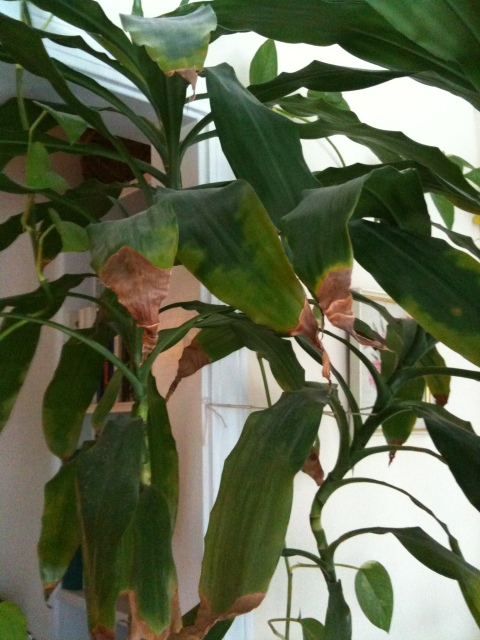
Dracaena 'Corn Plant' Yellow/Brown Tips: Light, Humidity, Water
Acclimating a New Corn Plant to Indoor Life A 4-week-old Dracaena fragrans Massangeana with yellow/brown tips, one fading lower leaf, moist soil, low light, and cool temps is experiencing classic acclimation stress—not o
Sticky Film on Jade Plant: Scale Insects Confirmed
Honeydew on Jade = Scale Insects. Here’s the Fix. A brown, oval, immobile bump on jade stems exuding clear sticky honeydew is a scale insect. The original query confirmed it. No sooty mold yet—caught early. Treatment Pr
Miniature Orange Tree Spider Mites & Bay Laurel Scale
Two Common Citrus Pests: Mites on Orange, Scale on Bay Spider Mites on Dwarf Orange Tiny webbing at leaf bases + curled, falling new leaves = spider mites. Mites suck chlorophyll → stippling, bronzing, leaf drop. Contro
Rosemary Leaf Spot: Fungal Culprits and Organic Fixes
White-Centered Leaf Spots on Rosemary = Likely Fungal Rosemary (Salvia rosmarinus) with bright white spot centers surrounded by dark margins suggests Cercospora, Alternaria, or Septoria leaf spot. Favored by wet foliage,
Yucca Stem Rot: Emergency Surgery to Save the Roots
Stopping Basal Stem Rot in a Container Yucca A yucca with a 3-foot horizontal stem that rotted from the tip back, emitting a strong decomposition odor, has bacterial/fungal stem rot advancing toward the crown. The mushy,
Indoor Lime Tree Scale & Pollination: Bath, Oil, and Bees
Managing Scale and Getting Fruit on Container Citrus An 8-year-old, 2-foot potted lime with recurring brown scale, spiderweb-like debris (likely mealybugs or scale honeydew + dust), and first-time flowers needs two thing
Brown Scaly Bumps on Schefflera: Scale Insect Infestation
Identifying and Eradicating Scale on Umbrella Tree Brown, rough, immobile bumps on schefflera leaves, stems, and branches—plus sticky, shiny honeydew—are classic scale insects. The “scales” are adult females protecting e
Black Trunk on Young Sugar Maple: Normal Bark Maturation
Why Sugar Maple Bark Turns Dark from the Ground Up A young sugar maple (Acer saccharum) in Georgia with blackening bark spreading upward is undergoing normal periderm development. As the tree transitions from juvenile sm
Dormant & Volck Oil Spray: Timing, Conditions, and Mixing
Proper Application of Horticultural Dormant Oils Dormant oils (including Volck oil) smother overwintering insect eggs and some fungal spores on deciduous trees and shrubs. Success depends on timing, coverage, and weather
Entomosporium Leaf Spot on Photinia and Indian Hawthorn
Managing the Classic Rose-Family Fungal Disease Red tip photinia (Photinia fraseri) and Indian hawthorn (Rhaphiolepis indica) showing spotted, dropping leaves have Entomosporium leaf spot (Entomosporium maculatum). This
Jade Plant Stem Rot: Southern Blight or Crown Rot?
White Mold on Jade Stems = Fungal Crown Rot A jade plant (Crassula ovata) with white mold on stems, falling over while tops stay green, has advanced crown rot—likely Sclerotium rolfsii (Southern blight) or Phytophthora/P
Controlling Aphids on a Long-Time Umbrella Plant
Aphid Basics Aphids reproduce rapidly (no males needed) and cluster on new growth. They suck sap, causing curled leaves, and excrete honeydew that leads to sooty mold. Your 10-year-old umbrella plant (Schefflera) suddenl
Pin Oak Bleeding Sap: Bacterial Wetwood or Decay?
Sap Flow from Mature Pin Oak: Risks and Reality An 18-foot circumference pin oak (Quercus palustris) bleeding sap at the base is a serious sign. Sap flux (slime flux) usually indicates bacterial wetwood or advanced decay
Dieffenbachia Leaf Curling: Water, Pests, or Virus?
Troubleshooting Inward-Curling Leaves on Dumb Cane Dieffenbachia leaves curling inward can stem from several causes. The most common are irregular watering (especially overwatering), sap-sucking insects, low humidity, nu
Meyer Lemon Turned Grapefruit? Rootstock Takeover Explained
When Citrus Rootstock Overgrows the Scion A Meyer lemon that now produces grapefruit-like fruit with tart, lemony flavor has almost certainly lost its scion (the grafted Meyer variety) to the rootstock. Citrus are grafte
Copyright © www.100flowers.win Botanic Garden All Rights Reserved