

Planting Tulips During Drought: Timing and Storage Tips
If youre planning to plant tulips this fall but worry about current drought conditions, rest assured—dry weather wont harm the bulbs. The key is proper timing: tulips perform best when planted in mid-October, once nightt

Leyland Cypress Watering: Soaker Hose Loop at the Drip Line
Most absorbing roots are 5-15 feet from trunk. Run soaker hose loop 10 feet out—~60 feet per tree. Hoses deliver 1 gal/ft/hr. Use timer for 1 hour weekly during drought/heat. Targets the root zone efficiently.
Bird Nest Raids on Outdoor Cushions: Diversionary Nesting Materials
Birds stealing cushion stuffing for nests? Provide alternative materials in a suet cage (suet removed): 6-inch yarn pieces, dryer lint, cut dryer sheets, dried grass, pet hair. Place near cushions in spring. Birds take t
Bald Cypress Knee Removal: Safe Root Pruning Below Soil Line
Cypress knees in non-swampy soil can be removed: excavate around knee, cut cleanly ≥1 inch below soil surface with sharp pruning saw, backfill. Unlike broadleaf trees, cypress wont resprout from root cuts. Eliminates tri
Georgia Jet Sweet Potato Harvest: Pre-Frost Timing and Curing
Harvest Georgia Jet sweet potatoes just before first predicted frost. Lift gently with spading fork. Cure in warm, dry spot for 1 week—this toughens skin (suberization). Store in dark, dry place until cooking.
Twig Girdler Beetles: The Cause of Green Leaf-Bearing Limb Drop
Short green-leafed limbs falling from oaks, pecans, hickories = twig girdler beetles. Females emerge in August, chew V-grooves on twig tips, lay eggs beyond the girdle. Wind snaps girdled twigs. Larvae overwinter in fall
Late-Season Bermudagrass Aeration: Soil Temperature Cutoff
Bermudagrass root growth stops when soil temps drop below 70°F—making aeration ineffective. In northeast Atlanta, this occurs ~September 30. Fescue aerates well now (roots grow at 50-65°F). Check local soil temps before
River Birch Pruning Timing: Dormant Season Only to Avoid Sap Bleeding
Prune river birch after leaf drop through January. Later cuts bleed sap excessively. No fertilization needed—landscape trees get sufficient nutrients from nearby lawn fertilizer.
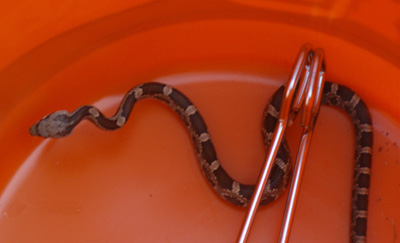
Gray Rat Snake Indoors: Harmless Climber, No Effective Repellents
Juvenile gray rat snake (Elaphe obsoleta)—also called chicken snake, oak runner, black snake. Slender, long, excellent climbers with flexible jaws. No repellents work well. Best prevention: keep a walking stick at garden
Blackberry Pruning: Removing Spent Floricanes for Cane Renewal
Blackberries have floricanes (fruit-bearing, die after harvest) and primocanes (next years floricanes). Brown canes = spent floricanes. Remove them now, apply ¼ cup 10-10-10 per plant. Fertilize again with ½ lb 10-10-10
Proper Vegetable Harvesting: Clip, Don't Pull
Ripe vegetables naturally loosen from the plant, but pulling risks breaking stems or uprooting young plants. Safest method: clip stem ½ inch above fruit with knife or scissors. More details at harvest guidelines resource
Failed Hydroseeded Bermudagrass: Renovation by Soil Condition and Seeding
Three-year-old failed hydroseeding: if soil isnt rock-hard clay, dethatch/slit-seed and sow bermudagrass at 1-2 lbs/1000 sq ft. If hard clay, till in 2 inches of screened, organic-rich topsoil first. Princess 77 is excel
Vegetable Planting Near Termite Bait Stations: Safe with Precautions
Termite bait insecticide stays in stations unless eaten by termites—its not water-soluble and doesnt leach. Only risk: vegetable vines covering stations so technicians cant find them. Contact bait manufacturer for defini
Sunburned Bromeliads: Shade Recovery and Pup Propagation
Full sun tags mislead—your bromeliads are sunburned, possibly fatally. Remove dead leaves, move to bright shade (no direct sun). Regrowth may come from pups at the base. Separate and pot pups when 6 inches tall. Bromelia
Onion Aphids on Chives: The Irony of a "Repellent" Host
Chives attract onion aphids (dark gray) in early summer—ironic since chives are often recommended as aphid repellents. Population explodes on all alliums. Control with insecticidal soap or regular water blasts. Beneficia
Planting Kwansan Cherry Before Vacation: Graywater and Mulch Strategy
Plant your birthday Kwansan cherry now. Loosen 10-ft diameter area to 10 inches deep (amend only if solid red clay). Plant in center, apply 20 gallons graywater (bath water) slowly at base. Mulch 2 inches with pine bark
Mosquito Pan Traps: Why Passive Water Traps Fail
Leaving water pans to trap mosquito eggs sounds clever but fails: females lay multiple clutches in diverse sites (even tablespoons in cans or leaves). Youd need to eliminate ALL standing water after every rain. A few mis
Reptile Droppings in Remodeling: Snake or Lizard Scat Identification
Black droppings with white tips (75/25 ratio) indicate snake or lizard—both have a cloaca combining digestive and urinary waste. The white is uric acid crystals. Remodeling will eventually seal their entry points. Not a
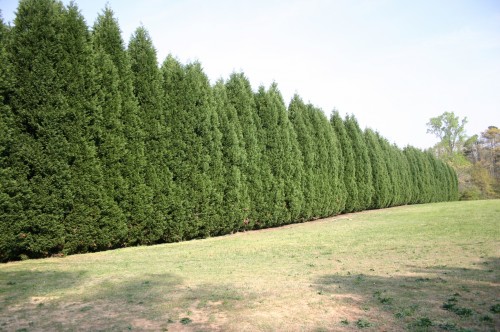
Road Noise Buffering: Mass Blocks Sound, Plants Don't
Physics dictates: sound reduction requires MASS (solid walls, earth berms). Dense plantings only psychologically mask noise. For your shady site, plant a mixed evergreen screen: Bright n Tight Carolina cherrylaurel, Cana
Atlanta Vegetable Growing Season: Three Harvests Per Year
Atlanta averages 260 frost-free days (190 in Blairsville to 290 in Thomasville). Plan three harvests: cool-season crops (lettuce, carrots) in spring; warm-season (tomatoes, corn, melons) in summer; fall crops (onions, tu
Copyright © www.100flowers.win Botanic Garden All Rights Reserved