

Fusiform Rust and Normal Needle Drop on Pine: Non-Lethal Conditions
Fusiform Rust and Normal Needle Drop on Pine: Non-Lethal Conditions A bulge on a pine trunk with yellow sap is a Fusiform rust gall—a fungus that alternates between pine and oak. It does not kill the tree; large pines ou

Phyllosticta Leaf Spot on Japanese Maple: Cosmetic Late-Season Fungus
Phyllosticta Leaf Spot on Japanese Maple: Cosmetic Late-Season Fungus Circular tan spots with purple-red borders and black fruiting bodies in rings on Japanese maple leaves are Phyllosticta leaf spot. Infection occurs la
Powdery Mildew on Baby Apple Sapling: Fungicide Options
Powdery Mildew on Baby Apple Sapling: Fungicide Options White fuzz on leaves of a young apple sapling in a rainy East Coast summer is powdery mildew (Podosphaera leucotricha), the most common apple disease. It infects ne
White Pine Mortality After Drought and Ice Storm: Beetles or Root Rot
White Pine Mortality After Drought and Ice Storm: Beetles or Root Rot Brown needles at all branch tips on a 20-year-old white pine after two drought years and a severe ice storm indicate the tree is dead. Drought weakens
Aphids and Lichens on Trees: Dual Management Approach
Aphids and Lichens on Trees: Dual Management Approach Sap dripping from leaves is aphid honeydew; green powder on trunks is lichens. Two separate issues requiring different solutions. Aphid Control Systemic imidacloprid
Rust on African Lily (Agapanthus): Organic Atomic Grow
Rust on African Lily (Agapanthus): Organic Atomic Grow Rust-colored spots on the undersides of mature Agapanthus leaves in south Florida, with yellowing and premature drop, indicate a rust fungus favored by humidity. New
Beech Tree Galls and Nut Drop: Normal, Not Harmful
Beech Tree Galls and Nut Drop: Normal, Not Harmful Seed-like structures falling from a 30-year-old tri-color beech each autumn are either insect galls (harmless growths from wasp/mite eggs) or the trees natural nut crop.
Rosemary Dieback from Rhizoctonia: Pruning and Cultural Management
Rosemary Dieback from Rhizoctonia: Pruning and Cultural Management Brown, dead patches in the center of 2-year-old rosemary plants each summer indicate Rhizoctonia fungal dieback. The fungus thrives in humid, poorly vent
Comprehensive Aphid Control on Magnolia: Timing, Products, and Systemics
Comprehensive Aphid Control on Magnolia: Timing, Products, and Systemics Aphids on magnolia produce honeydew leading to sooty mold. Control requires understanding aphid biology: rapid reproduction, live birth, winged/win
Citrus Fungus on Mexican Key Lime: Prune and Organic Spray
Citrus Fungus on Mexican Key Lime: Prune and Organic Spray Orange powdery circles on bark with branch dieback on a 3-year-old Mexican key lime indicate a spreading fungal disease. The Extension office advised pruning the
Orange Circles on Key Lime Bark: Fungal Treatment with Atomic Grow
Orange Circles on Key Lime Bark: Fungal Treatment with Atomic Grow Concentric orange circles on key lime bark indicate a fungal pathogen (likely a canker or anthracnose). The affected branch is dying; spores are spreadin
Sunscald on Autumn Blaze Maple: Prevention and Installer Responsibility
Sunscald on Autumn Blaze Maple: Prevention and Installer Responsibility Vertical bark splitting on a young maple above and below the black wrap is sunscald (southwest injury). Winter sun warms the bark, activating cells
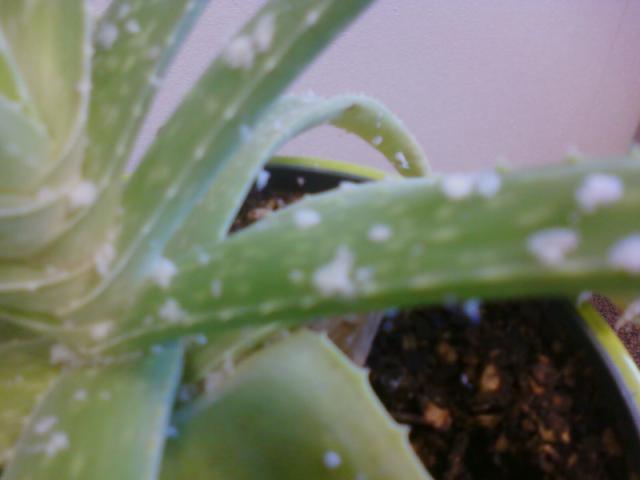
Indoor Ficus Leaf Drop: Scale, Light Change, or Root Bound
Indoor Ficus Leaf Drop: Scale, Light Change, or Root Bound Yellowing, dropping leaves with white sticky dots at leaf bases on an indoor ficus indicate scale insects. However, ficus also drop leaves when moved to lower li
Sooty Mold on Ginkgo: Wipe Test and Insect Control
Sooty Mold on Ginkgo: Wipe Test and Insect Control Black coating on ginkgo leaves that rubs off with a wet finger is sooty mold—fungi growing on honeydew from sap-feeding insects (aphids, scale, whitefly). The mold is co
White Oak Leaf Discoloration: Root Dysfunction from Chemical Injury
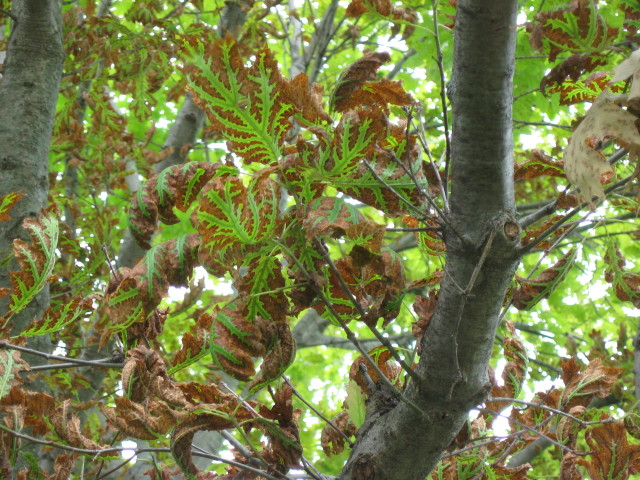
White Oak Leaf Discoloration: Root Dysfunction from Chemical Injury Rusty brown leaves with green veins (interveinal chlorosis) progressing from bottom to top on a white oak, unresponsive to arborist injections and water
Sapsucker Holes on Willow: Bird Damage, Not Disease
Sapsucker Holes on Willow: Bird Damage, Not Disease Neat, rectangular holes in horizontal rows on a willow trunk are made by yellow-bellied sapsuckers, a woodpecker that drills sap wells and eats insects attracted to the
Bagworm Control on Pecan: Tanglefoot and Orthene
Bagworm Control on Pecan: Tanglefoot and Orthene Bagworms (or webworms) on pecan trees can be managed with two trunk-based methods: Tanglefoot (sticky band) to trap descending caterpillars, or Orthene (acephate) sprayed
Pineapple Guava Leaf Tip Burn: Water, Fertilizer, and pH
Pineapple Guava Leaf Tip Burn: Water, Fertilizer, and pH Brown leaf tips and drop on a newly planted pineapple guava in zone 9b suggest establishment stress: insufficient water for root development, fertilizer burn (high
Lightning Strike on Japanese Maple: Wound Care and Shade Color
Lightning Strike on Japanese Maple: Wound Care and Shade Color Straight, gouged bark strips on two large branches of a shaded Japanese maple are classic lightning damage. The bark explodes off as steam from superheated s
Bark Peeling and Leaf Spots on Young Maple: Decay Risk and Ants
Bark Peeling and Leaf Spots on Young Maple: Decay Risk and Ants Bark falling off at the base of a young maple with white leaf spots suggests possible internal decay from a past wound. Black ants nesting in the decay are
Copyright © www.100flowers.win Botanic Garden All Rights Reserved