

Cottony Growth on Hibiscus: Woolly Aphids or Scale?
Cottony Growth on Hibiscus: Woolly Aphids or Scale? White, cotton-like masses on hibiscus stalks near buds, accompanied by flower failure, are typically woolly aphids or cottony scale insects. Both produce waxy filaments

Borer Damage and Scale on Kwanzan and Weeping Cherry Trees
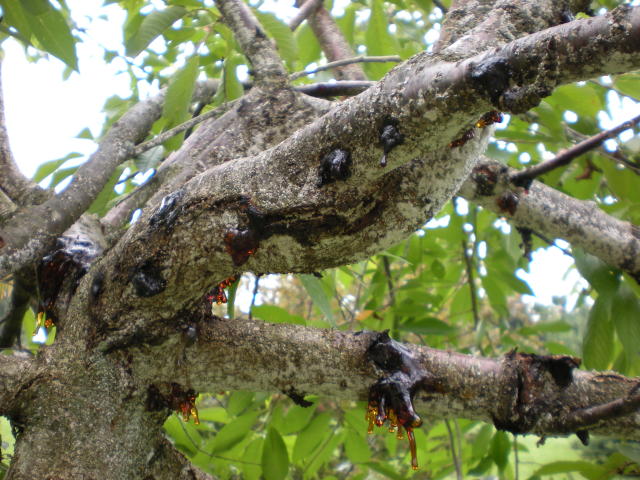
Borer Damage and Scale on Kwanzan and Weeping Cherry Trees Amber resin (gummosis) oozing from the trunk or branches of cherry trees typically indicates borer activity—beetle or moth larvae tunneling beneath the bark. Whi
Oak Leaf Blister on Water Oak: A Common Spring Disease
Oak Leaf Blister on Water Oak: A Common Spring Disease Brown, blister-like spots on water oak leaves that cause curling and early drop are caused by the fungus Taphrina caerulescens. Infection occurs during cool, wet spr
Phyllosticta Leaf Spot on Autumn Blaze Maple: Cosmetic, Not Critical
Phyllosticta Leaf Spot on Autumn Blaze Maple: Cosmetic, Not Critical Small, black, elevated spots on the undersides of Autumn Blaze maple leaves that powder when crushed are the fruiting bodies of Phyllosticta minima, a
Mealybugs and Pink Mealybug on Hibiscus: Organic Solutions
Mealybugs and Pink Mealybug on Hibiscus: Organic Solutions Shriveling leaves around flower buds, failure of blooms to open, and a white powdery substance in the flower center are hallmarks of mealybug infestation—particu
Scale and Woolly Aphids on Magnolia: Identification and Control
Scale and Woolly Aphids on Magnolia: Identification and Control White bumps on magnolia stems and a sticky residue (honeydew) on leaves indicate an infestation of scale insects and/or woolly aphids. Both pests suck plant
Slime Flux (Wet Wood) on Maple Trees: A Bacterial Condition
Slime Flux (Wet Wood) on Maple Trees: A Bacterial Condition Black, vertical streaks on a maple trunk that appear wet, follow bark cracks, and may emit a foul odor are classic symptoms of slime flux (wet wood). This condi
Sooty Mold on Mugo Pine: Treating the Underlying Insect Problem
Sooty Mold on Mugo Pine: Treating the Underlying Insect Problem Blackened branches on one of two similarly situated mugo pines usually indicate sooty mold—a black fungus growing on honeydew excreted by sap-feeding insect
Adjusting Watering for Ginkgo Trees with Brown Leaves
Adjusting Watering for Ginkgo Trees with Brown Leaves Ginkgo trees showing brown foliage after frequent watering (every 3 days) combined with heavy seasonal rain are likely suffering from waterlogged roots. Ginkgos are d
Scale Insects on Boxwood: Identification and Organic Control
Scale Insects on Boxwood: Identification and Organic Control Long, brown, raised ridges on boxwood branches that scrape off with a fingernail, accompanied by heavy leaf drop, are classic signs of scale insects. These pes
Sudden Aspen Decline: Understanding Aspen Die-Off
Sudden Aspen Decline: Understanding Aspen Die-Off When mature aspen trees lose leaves on most branches, show crown thinning, and fail to leaf out fully, Sudden Aspen Decline (SAD) is a prime suspect. This phenomenon has
Golden Raintree Decline: Stress and Possible Root Disease
Golden Raintree Decline: Stress and Possible Root Disease Rapid browning of lantern-shaped seed pods, sporadic leaf yellowing, and progressive defoliation in golden raintrees planted in difficult urban conditions (compac
Troubleshooting Small, Drying Figs on Mission Fig Tree
Troubleshooting Small, Drying Figs on Mission Fig Tree When Mission figs remain thumb-sized and dry up instead of plumping and ripening, the cause is often environmental or cultural rather than a specific disease. The tr
Early Fall Color on Aristocrat Pear Trees: Causes and Solutions
Early Fall Color on Aristocrat Pear Trees: Causes and Solutions When an Aristocrat pear tree displays premature red leaf coloration while neighboring trees remain green, the issue is often physiological rather than patho
Managing Powdery Mildew on Leucothoe
Managing Powdery Mildew on Leucothoe A whitish, powdery coating on leucothoe leaves that progresses to yellowing and leaf drop is characteristic of powdery mildew, a common fungal disease in shady, humid locations. The f
Diagnosing White Fuzzy Growth on Crepe Myrtle
Diagnosing White Fuzzy Growth on Crepe Myrtle After periods of heavy rain, crepe myrtles often develop a white, powdery or fuzzy coating on new shoots. This is typically powdery mildew, a fungal disease favored by humid,
Victoria Plum Tree Disease: Identifying and Managing Common Problems
Victoria Plum Tree Disease: Identifying and Managing Common Problems When Victoria plum fruits develop a scale-like coating, exude gelatinous droplets, and eventually turn dark blue, shrivel, and rot, two primary issues
Ficus White Leaf-Base Dots: Scale or Natural? Alaska Indoor Care
Case Alaska: New ficus (weeping fig) houseplant. Months healthy, new growth. Now: few leaves dropped, small waxy white dots at base of ~60% leaves. Indirect sun, potted. Two Possibilities CauseClues Natural (cystoliths
Cleveland Pear Sudden Death: Fire Blight or Regional Decline?
Case Cleveland pear: leaves dead, small limbs brittle. Last year beautiful. Will it return? Two Scenarios (Steve) ScenarioSymptomsAction Regional DeclinePurple/red fall color over canopy, leaf drop. No pathogen found.
Mature Carrotwood Slime Flux: Arborist Drilling Plan Questioned
Case 40-yr-old carrotwood (LA): black sap oozing from conical hole 2 ft out on major limb. Arborist: slime flux, drill vertically through limb to dry it. Owner approved. Asks if correct. Expert Validation Certified arb
Copyright © www.100flowers.win Botanic Garden All Rights Reserved