
Earthworm Castings in Lawn: Beneficial, Knock Down Mounds If Needed
Worms improve soil—dont kill them. Drag carpet or chain-link on a rope to flatten mounds. Theyre a sign of healthy soil. Live with them; they help.

Joining Garden Clubs: NAFEX, Southern Fruit Fellowship, Georgia Perennial Plant Association
For exotic fruit (mango, pomegranate), join North American Fruit Explorers (NAFEX) and Southern Fruit Fellowship (nafex.org/sff.htm). California Rare Fruit Growers (crfg.org) has tropical factsheets. Georgia Perennial Pl
Pine Straw Mulch: Keep 12 Inches from Foundation for Termite Protection
All mulch must stay 12 inches from foundation per UGA entomologist Dan Suiter. This preserves the termiticide barrier trench. If bait stations are used, consult pest control company. Mulch against foundation bridges term
Mowing Bermudagrass: Rotary Mower at 1.5 Inches, Level Ground Is Key
At 1.5 inches, any sharp rotary mower works. Level lawn prevents scalping—fill low spots with 1:1 sand/topsoil. Below 1.5 inches, use reel mower. Sharp blade + level ground = clean cut. Scalping comes from ruts, not mowe
Gardenia Planting Hole Too Deep: Roots Only Need 12 Inches
Digging 3 feet deep for a gardenia is unnecessary—shrub roots rarely go below 12 inches. Move it back to original spot; dig hole 3 ft wide, 12 in deep. Saves effort, better for plant. depth for shrub planting.
Pot-Bound Dwarf Burford Hollies: Loosen Roots Before Planting, But Check Mature Size
Pot-bound shrubs are fine if you untangle roots before planting. But dwarf Burford holly grows 10×10 ft—too big for foundations. Better: Carissa, Soft Touch, Convexa, Compacta, or dwarf yaupon hollies. Match plant to spa
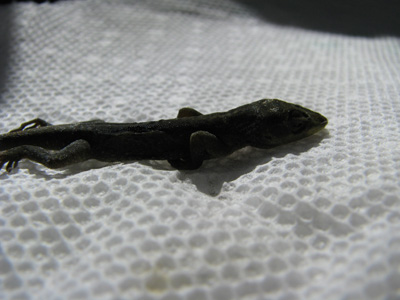
Carolina Anole: Harmless Lizard That Occasionally Wanders Indoors
Small alligator in the house is a Carolina anole—harmless insectivore. It may have entered due to cold, injury, or hunger. Release or bury it. Keep doors closed.
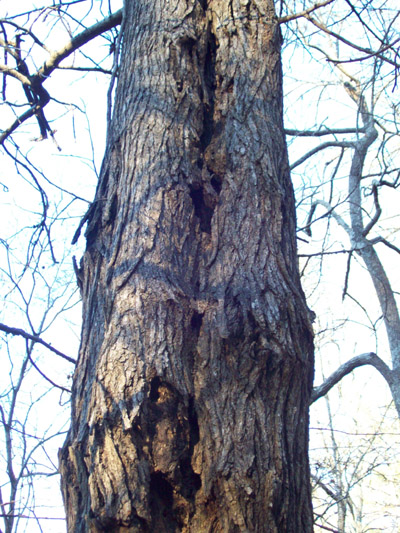
Sweetgum Trunk Rot from Water Entry: Hire an Arborist
Trunk rot on sweetgum started where water entered—likely a limb stub or competing crotch. Damage is substantial; trunk may snap in storm. Hire ISA-certified arborist (georgiaarborist.org) to assess. No DIY fix.
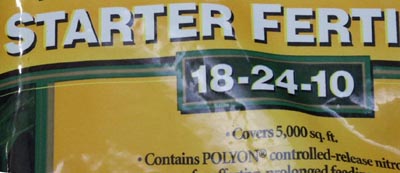
Starter Fertilizer on Established Fescue: Fine If Timed Right
Starter fertilizer (high phosphorus) is fine on established fescue in February. Fescue grows Sept–May; fertilize Sept, Nov, Feb, Apr. Label matters less than timing. Vigorous cool-season growth crowds weeds and survives
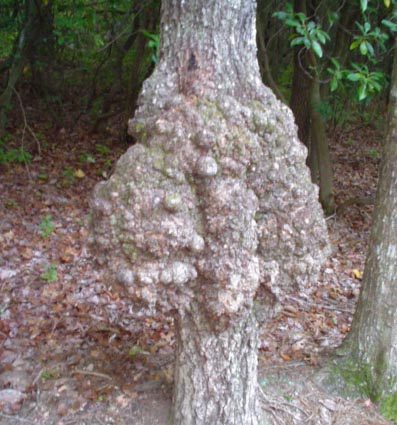
Large Oak Trunk Gall (Crown Gall) May Not Kill Tree for Years
Crown gall (Agrobacterium tumefaciens) causes wild cell growth. If confined to outer bark and not disrupting vascular tissue, tree lives years—weakened at gall, prone to storm failure, but stable. Bacteria and tree coexi
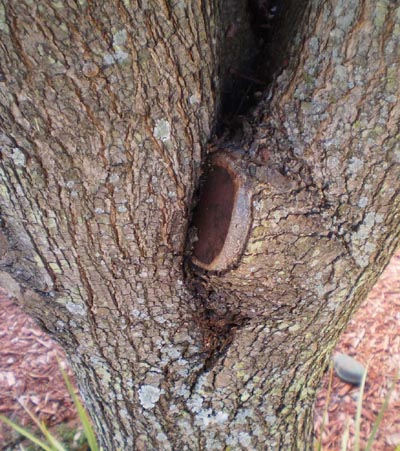
Bradford Pear Self-Destructs After Limb Removal: Replace with Yoshino Cherry
Cutting a low limb on a Bradford pear triggers regrowth that splits the trunk. Its inevitable—Bradfords fail at ~15 years due to weak branch angles. Nothing prevents it. Remove tree, grind stump, plant Yoshino cherry for
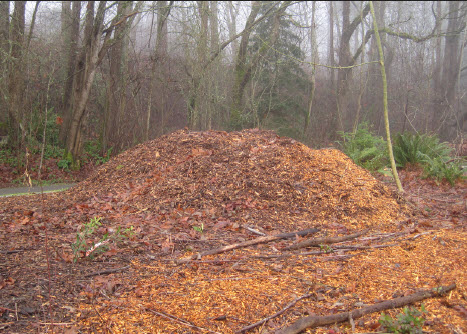
Speeding Wood Chip Composting: Fertilizer + Concave Pile = 6 Months
Level wood chip pile, make top concave. Scatter 10-10-10: cups = height (ft) + width (ft). Example: 5 ft high + 12 ft wide = 17 cups. Water thoroughly. Nitrogen feeds microbes; concave shape channels rain. Steam means it
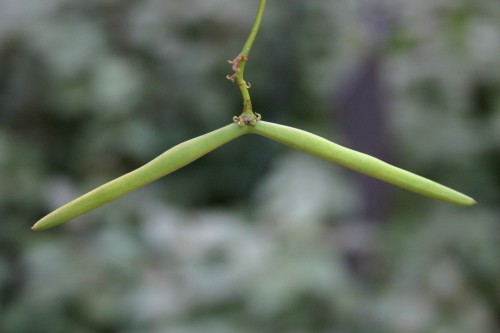
Collecting Confederate Jasmine Seeds: Wait for Dry Pods, Plant in Spring
Confederate jasmine seed pods turn brown and dry—collect then. Plant in spring in sunny, loose soil. Easy propagation from seed.
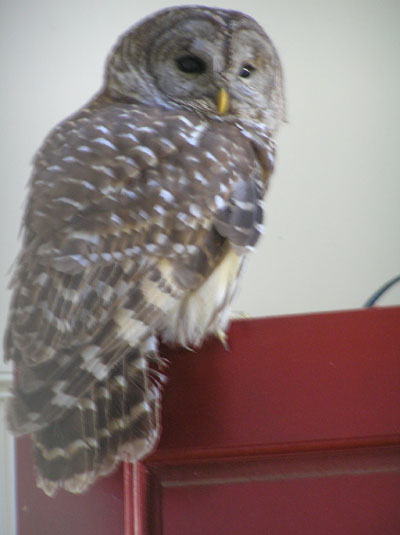
Barred Owl in the House: Fireplace Flue Entry, Safe Release
A barred owl (hoot owl) entered via open fireplace flue, flew through house, perched on chandelier, then left through front door. Call: Who-cooks-for-you. Keep chimney cap off in summer for chimney swifts—theyre amazing.
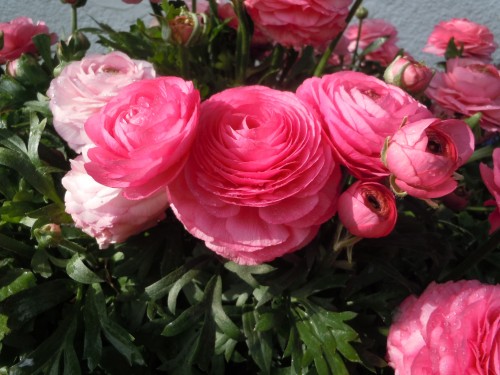
Planting Ranunculus: Claws Down, But They're Short-Lived Perennials
Plant ranunculus claws (tubers) with legs pointing down. They bloom beautifully but often fade after 1–2 years in Georgia. Treat as annuals or expect short life. Good drainage and sun help.
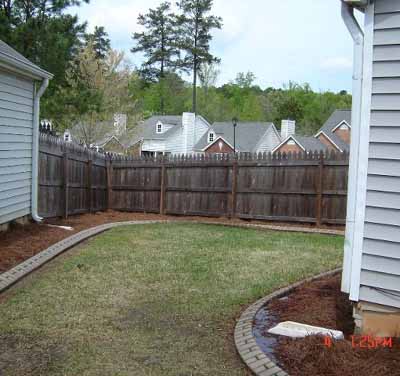
Dogs and Poor Drainage Ruin Lawns: Fix Water Flow or Try Artificial Turf
Four dogs + soggy soil = dead grass. Compaction from paws and wet roots kill turf. Fix: pipe gutter water away, or install French drain/cistern. Artificial turf (K9Grass, Pup-Grass) is pricey but works for small yards. S
Pecan Husks Not Opening: Scab or Shuck Decline
Pecan husks sticking shut indicate scab disease or shuck decline. Both are common in humid seasons. No easy fix for homeowners. Rake and destroy all fallen debris each fall. Plant resistant varieties (Stuart, Elliott, Cu
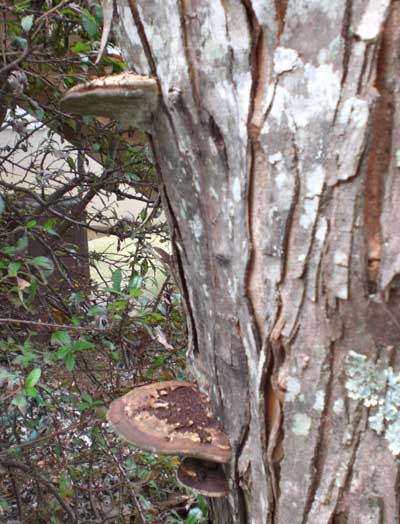
Silver Maple with Trunk Conks and Decay: Dangerous, Remove Immediately
Mushroom conks on trunk + missing bark = advanced internal decay. Roots on that side are gone—tree is poorly anchored. Despite full canopy, its a hazard near house/deck. Two certified arborists said remove; one non-arbor
Blue Daze (Evolvulus) Is Not Winter-Hardy in Georgia
Blue daze attracts hummingbirds and loves heat, but its an annual in Georgia—it will not survive winter. Enjoy it for the season; replant next spring. No overwintering method works reliably. Treat as a warm-season annual
Protecting Chickens from Coyotes and Hawks: Secure Coop Design
Andy Schneider (Chicken Whisperer): Something always loves your chickens more than you. Cover runs with bird netting for hawks. For coyotes: tall fences, electric fencing, buried wire, guard dogs. Secure coop at night. 1
Copyright © www.100flowers.win Botanic Garden All Rights Reserved