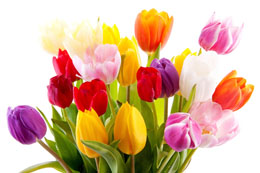
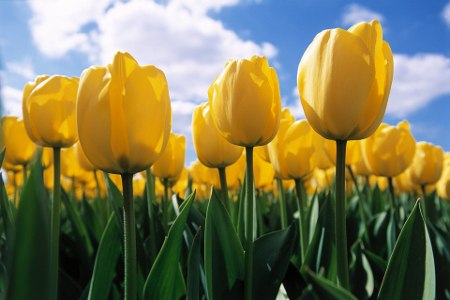
With over 3,000 registered cultivars, tulips are organized into 15 official divisions by the Royal Horticultural Society. Each division shares bloom time, flower form, and parentage. Here's a visual tour of the main types to help you choose the perfect tulips for your garden.
Early Spring Bloomers (March–April)
Division 1: Single Early
- Classic cup shape, strong 10–18 inch stems.
- Colors: Jewel tones to pastels.
- Uses: Rock gardens, borders, forcing.
Division 2: Double Early
- Peony-like, many petals; 12–15 inches.
- Colors: White, pink, yellow, orange, red.
- Best for: Containers, short-stem arrangements.
Mid-Spring Bloomers (April–Early May)
Division 3: Triumph
- Largest group; classic single cup, 18–24 inches.
- Colors: Purple, apricot, white, pink, yellow, orange, red.
- Excellent for: Garden beds, forcing, cut flowers.
Division 4: Darwin Hybrid
- Huge flowers (up to 6 inches), tall (24–28 inches), long-lasting.
- Colors: Red, pink, yellow, orange, bicolors.
- Best for: Perennializing, mass plantings, cut flowers.
Late Spring Bloomers (May)
Division 5: Single Late
- Tall (24–30 inches), oval/egg-shaped blooms.
- Colors: White, black, yellow, pink, purple.
- Uses: Borders, bedding, cut flowers.
Division 6: Lily-Flowered
- Elegant pointed petals reflex outward; 20–24 inches.
- Colors: White, apricot, yellow, orange, red, purple.
- Wind-sensitive; plant in sheltered spots.
Division 7: Fringed (Crispa)
- Petals edged with fine, crystal-like fringes; long-lasting.
- Colors: White, pink, apricot, yellow, orange, red, purple.
- 18–24 inches; excellent cut flowers.
Division 8: Viridiflora (Green Tulips)
- Distinct green streaks/flames on petals; exceptionally long bloom.
- Colors: Pink, purple, yellow with green markings.
- 16–24 inches; great for arrangements.
Division 9: Rembrandt
- Historic "broken" tulips with feathered/flamed patterns (virus-induced).
- Modern virus-free cultivars mimic the look.
- Late bloom; collector favorites.
Division 10: Parrot
- Large, ruffled, twisted petals; exotic colors.
- 16–24 inches; need wind protection.
Other Notable Divisions
- Division 11: Double Late (Peony-flowered) – Full, bowl-shaped, late.
- Division 12: Kaufmanniana – Waterlily tulips, early, short, star-shaped open flowers.
- Division 13: Fosteriana – Emperor tulips, large, early, broad petals.
- Division 14: Greigii – Short, mottled foliage, large flowers, early.
- Division 15: Species (Botanical) Tulips – Wild types, perennial, naturalize well.
Choosing for Your Garden
- For early color: Single Early, Kaufmanniana, Fosteriana.
- For biggest impact: Darwin Hybrid, Triumph.
- For elegance: Lily-Flowered, Viridiflora.
- For cutting: Single Late, Fringed, Double Late.
- For perennializing: Species, Kaufmanniana, Fosteriana, Darwin Hybrid.
Mix divisions for a 6–8 week tulip season from March through May.


