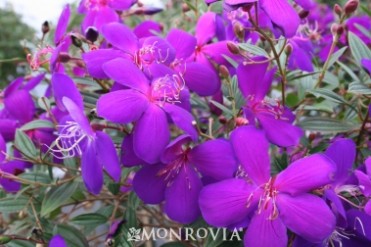

Shade, Slope, and Dogs = No Grass: Use Suckering Shrubs and Groundcovers Instead
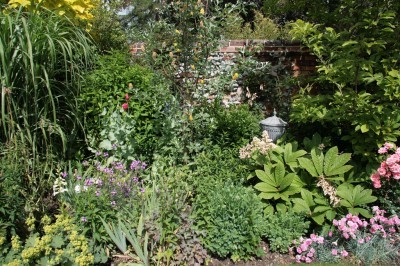
Shade + slope erosion + dogs = 100% grass failure. Designer Theresa Schrum recommends suckering shrubs: Henrys Garnet or Little Henry Virginia sweetspire (Itea virginica), sweetshrub (Calycanthus), summersweet (Clethra).

Measuring Irrigation Output: Use Tin Cans to Calibrate Watering Time
To apply 1–2 inches per week: place empty cans in the garden, run irrigation 30 minutes, measure depth. Calculate time for 1 inch. Soaker hoses deliver ~1 gal/ft/hr. Mulch over soakers saves water. Food gardens exempt fr
Motion-Activated Sprinkler (Scarecrow) Repels Cats from Gardens
The Scarecrow (Contech) or Havahart Spray Away detects motion, sprays water, and makes noise—effectively deterring cats, dogs, deer. Place near beds. Cats quickly learn to avoid the area. Fun to watch, highly effective.
Slow-Release Fertilizers: High Nitrogen Is Fine—It Releases Gradually
Osmocote, Dynamite, etc., have high nitrogen percentages but release it slowly via water and microbes. They cost more but feed for months with one application. Plants need more nitrogen than other nutrients; the high % i
New Bermudagrass Sod Fertilized Too Early, Then Freeze-Damaged
February sod + March fertilizer + April freeze = dead patches. Early green-up depleted reserves; freeze shocked grass back to dormancy with no energy to regrow. Shallow roots (new sod) worsen it. Plug healthy sod into de
Date Palms Not Hardy in Georgia; Try Windmill Palm Instead
True date palm (Phoenix dactylifera) isnt winter-hardy in Georgia. Windmill palm (Trachycarpus fortunei) survives well, has a tall trunk, but fan-shaped leaves—not feathery like date palm. For a similar look in a pot, mo
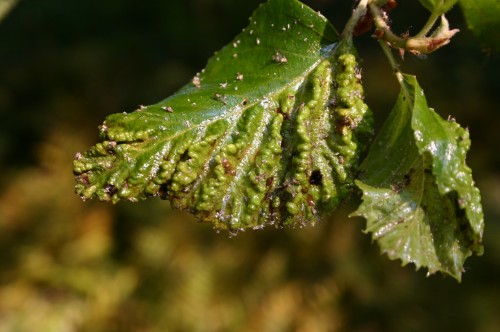
Birch Leaf Corrugation from Witchhazel Gall Aphids: Cosmetic, Treatable
Birch leaves puckered like potato chips are galled by witchhazel gall aphids. Winged aphids move from witchhazel to birch, inducing corrugated galls. Mostly cosmetic. Spray birch leaves with insecticide at spring leaf-ou
Growing Wheatgrass for Wedding Centerpieces: Start Early, Shear to Height
For June wedding grass centerpieces, buy wheat seed (for wheatgrass juice). Sow ½ inch deep in containers, cover with plastic, warm on fridge top. Sprouts in days. Move to sunny window, rotate daily. Shear with scissors
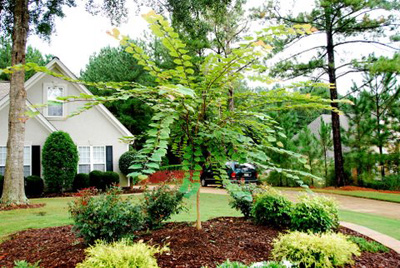
Redbud with Overlong Limbs: Cut Back by Half, Stop Fertilizing
Forest Pansy redbud limbs as tall as the tree indicate excess fertilizer. Cut limbs back by half now. Eliminate lawn fertilizing nearby for 2 years. This reduces rank growth and improves structure.
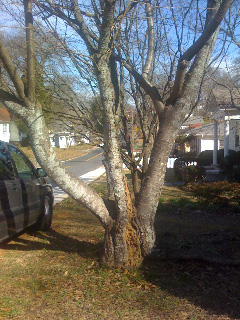
Flowering Cherry with Rotting Trunk: Remove Before It Falls on House
A flowering cherry with a large trunk canker (rotted center, rolled bark edges) has severe structural weakness. The decay started from an old wound (mower, trimmer, root cut). Interior rot continues; no treatment stops i
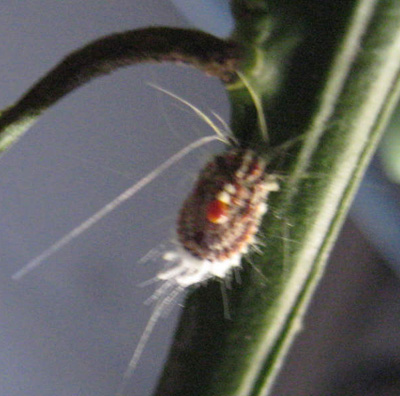
Cottony Cushion Scale on Citrus: Two-Step Control with Tape Traps
Cottony cushion scale has waxy cottony crawlers and white egg sacs (cushions) on adults. Control: 1) Remove adults with alcohol/oil on cotton swab. 2) Wrap sticky tape (sticky-side out) on branches; when crawlers emerge,
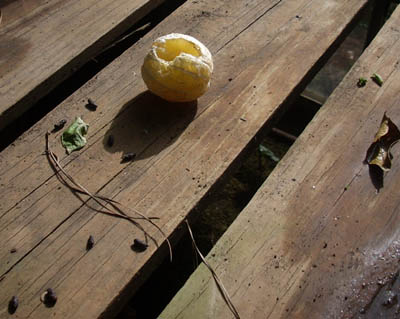
Rats Eat Meyer Lemon Peels, Not Fruit: Greenhouse Pest Mystery Solved
Peeled Meyer lemons with droppings in a greenhouse point to rats. Meyer lemon peel is sweet (like orange), while flesh is very sour. Rats eat the peel, leave the fruit. Droppings are oblong, single-colored (vs. two-toned
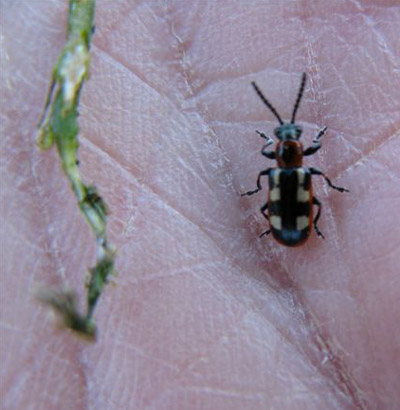
Asparagus Beetle Control: Sanitation, Hand-Picking, and Persistent Spraying
Asparagus beetles (¼–⅜) shred spears. Control: clean all debris in winter to remove overwintering adults. Scout emerging spears for white eggs; hand-pick adults. Spray carbaryl (Sevin) per label, repeatedly each season.
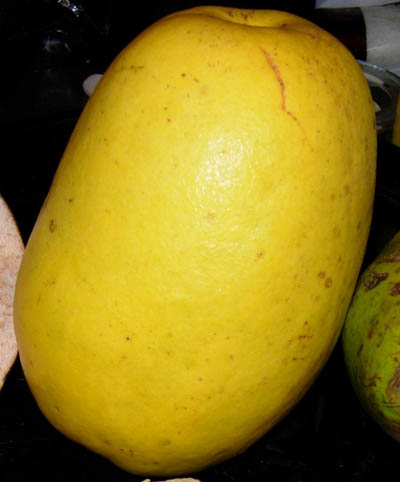
Common Quince: Fragrant, Hard Fruit for Cooking and Jelly
The fruit is quince (Cydonia oblonga)—large, apple-like, very hard, only edible cooked. Varieties include round or elongated shapes. One fruit perfumes a room. Flowering quinces (Chaenomeles) are different landscape plan
Using Soaker Hoses on Slopes: Lay Along Contours, Not Up/Down
Soaker hoses work on slopes if laid horizontally along contour lines. Running them up/down creates uneven pressure—more water at the bottom. Contour placement ensures even distribution. Secure with stakes. Simple rule: f
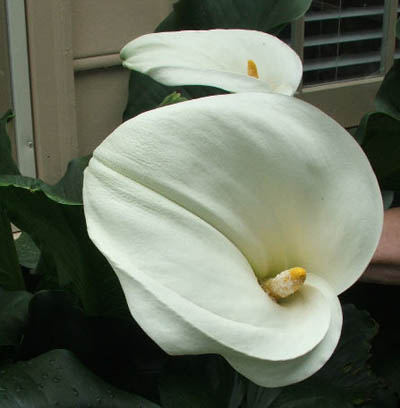
Spectacular Calla Lilies in Georgia: Right Spot, Rich Soil, Winter Care
White callas (Zantedeschia aethiopica) thrive in a moist, morning-sun spot with heavy cow manure mulch. The gardener leaves slimey winter foliage to decompose in place, adding nutrients. Each year blooms double; flowers
Pruning Orchids After Bloom: Cut Spike at Base for Rebloom
After all flowers fade, cut the orchid bloom spike at the base. The plant needs months to rebuild energy for next bloom. Place in bright indirect light, water and fertilize appropriately. Dont cut green leaves or roots.
Bathtub Garden Soil Mix: Goat Manure, Gravel, and Good Dirt
Walter Reeves mother grew vegetables in bathtubs using: gravel base, 12 inches of good dirt, topped with several inches of goat manure from neighbors barn, mixed in. She grew beans, broccoli, strawberries, greens, tomato
How Seedless Clementines Reproduce: Hybrid Origins and Commercial Propagation
Clementines are seedless mandarin hybrids from China. Their pollen is sterile, so no seeds form. Named for Father Clement Rodier (Algeria). Grown commercially in Spain, North Africa, California via grafting—not seed. The
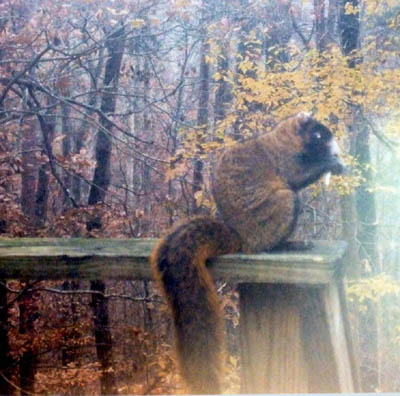
Fox Squirrel: Large, Variable-Colored Squirrel of the Southern U.S.
Fox squirrels are larger than grays—up to 2 feet long including tail, weighing 2+ lbs. They have smaller ears, variable coats (often reddish), and a dark face with white muzzle. Common in south GA, rare in north. Winter
Copyright © www.100flowers.win Botanic Garden All Rights Reserved