

Why Liquid Pre-Emergents Are Hard to Find and Use for Homeowners
Liquid pre-emergents are highly concentrated, requiring precise mixing and even application—pros use calibrated tank trucks. Granular products are pre-mixed on inert carriers, easier to spread accurately. Homeowners can

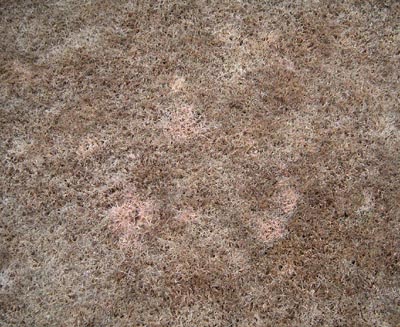
Pink Snow Mold (Microdochium Patch) on Dormant Bermuda: Cosmetic, Self-Limiting
Pink circular patches on dormant Bermuda in winter are Microdochium patch (formerly Fusarium), not true snow mold (which needs snow). Its a foliar disease that fades with spring green-up. No treatment needed on dormant g
Soil Temperature Guide for Planting Vegetable Seeds
Warm-season crops (beans, tomatoes, corn) need soil at 60°F minimum, 70°F ideal. Check georgiaweather.net for local data. In Dallas, GA, 2006 soil temps reached 60°F after April 14. Use a soil thermometer at 2-inch depth
Why Hens Stop Laying in Winter: They Need 14 Hours of Light
Hens require 14–16 hours of light daily to lay. Winter days offer only ~10 hours. Commercial operations add artificial light. For backyard flocks, gradually extend light with a timer (e.g., 4 AM–8 PM) to stimulate laying
Improving Blueberry Flavor with Slow-Release Organic Fertilizers
Small, bland blueberries often need better nutrition. Apply ½ inch cottonseed meal in a 2-foot circle around each bush, or use Milorganite or Holly-tone per label. Water consistently from fruit set to harvest. Blueberrie
Are All Prickly Pear Cactus Fruits Edible? Most Are, But Handle Spines Carefully
Of ~200 Opuntia species, most are edible—both pads (nopales) and fruit (tunas). The most are edible disclaimer covers rare exceptions. Common southeastern prickly pear is safe. Always remove or burn off glochids (tiny sp
Downloading "Gardening in Georgia" Episodes to iTunes: Copyright Limits
Due to copyright, direct download links for Gardening in Georgia are hidden behind the streaming player. Third-party tools claim to capture embedded video, but none are officially supported. Watch online or check for off
Moon Vine Toxicity: Seeds Can Cause Illness, But Handling Is Safe
Moon vine (Ipomoea alba) seeds contain alkaloids that cause vomiting and diarrhea if eaten in quantity, but handling vines and leaves is safe. The reaction expels toxins before serious harm. Its in the morning glory fami
Preventing Dogs from Eating Yard Mushrooms with Bitter Spray
Mushrooms appear with rain and warmth—unavoidable. Train the dog to avoid them using bitter apple spray (Grannicks) on mushrooms before yard access. Many dogs learn quickly. Supervise and redirect. The spray is safe and
Controlling Saw Palmetto with Triclopyr (Brush-B-Gon)
Saw palmetto resprouts from rhizomes after cutting. Homeowners can use triclopyr (Brush-B-Gon), sprayed every 4 weeks during summer growth. It takes persistence. Pros use restricted herbicides (Garlon + Accord) for large
When to Scalp and Dethatch a Lawn: Timing Matters
Scalping (mowing very low) should wait until grass is 25% green—early March is too early. Dethatching (vertical mowing) is different: do it in late May when grass grows vigorously. For thatch control, core aerate or topd
Identifying Fire Ant Mounds vs. Native Ants
6 inches wide. Native ant mounds are smaller and flatter. Most fire ant baits only work on fire ants. Confirm mound size before treating. If unsure, dont apply fire ant products—they wont control other species. Proper ID
Tiny Spider Eyeshine in Grass: A Nighttime Light Trick
Headlamp reflections in grass at night come from spider eyes—tapeta reflect light back to your eyes when the source is near your head. Its not dew; its thousands of harmless spiders. Theyre beneficial predators. The phen
Cold-Hardy Gardenia Variety: 'Kleim's Hardy' ('Daisy')
August Beauty gardenias often die in cold winters. Kleims Hardy (also sold as Daisy) survives much better. It has a looser habit but blooms heavily in May with intense fragrance, then sporadically through summer. A relia
Open-Center Pruning for Peach Trees: Creating a Wine-Glass Shape
Open-center pruning creates a short trunk with 3–4 main limbs radiating outward like a wine glass, allowing sunlight into the center for fruit production. Start at planting by cutting to belt height. For a mature tree, t
Using Wet, Clumped Fertilizer: Absorb with Cat Litter, Don't Make Tea
Wet, dissolved 10-10-10 is too concentrated for compost tea—it will burn plants. Instead, mix in cat litter to absorb liquid, then broadcast the damp granules lightly under shrubs and trees. Wear gloves. The nutrients ar
Container Size and Soil Mix for Deck-Grown Tomatoes and Peppers
Use containers at least 24 inches wide (half whiskey barrels work well) to moderate soil temperature and conserve moisture. One or two tomatoes or six peppers per barrel. Mix: quality potting soil with compost. Dwarf var
Brussels Sprouts Can't Survive Georgia Summers; Plant in Fall for Thanksgiving Harvest
Brussels sprouts fail in Georgia heat—they need 80–90 cool days to mature. Spring planting hits 90°F by May, stopping growth. Plant seedlings in early September instead. Theyll grow through fall, survive winter, and prod
Leyland Cypress Cannot Regrow from Brown Stumps After Hard Pruning
Leyland cypress, like other needled evergreens, cannot sprout from brown, leafless wood. Hard pruning into old wood leaves permanent gaps. Proper pruning trims only green growth annually. If stumps have no green needles,
Why Sweet Cherries Rarely Fruit in Georgia's Climate
Sweet cherries need consistently cold winters; Georgias January temperature swings freeze flower buds annually. Tart cherries (Early Richmond, Montmorency, North Star) may work in far north Georgia. For reliable fruit, b
Copyright © www.100flowers.win Botanic Garden All Rights Reserved