



Rooting Butterfly Bush Cuttings: Softwood in Spring
Butterfly bush (Buddleia davidii) roots readily from softwood cuttings taken in late spring. Step-by-Step Cut 4–6″ tips of new, non-flowering shoots. Make a slanted cut just below a node. Strip all leaves except the to

Preventing Rose Diseases: Proactive Care Beats Reactive Spraying
The best defense against rose diseases (black spot, powdery mildew, rust) is a preventive cultural program started before symptoms appear. Core Practices Full sun (6+ hours) – dries foliage fast. Water at base – never
Roman Chamomile Lawn in Southern Ontario Shade: Better Alternatives
A Roman chamomile lawn in shady, humid southern Ontario (Zone 5b–6a) is a romantic idea but practically difficult. Chamomile needs full sun, sharp drainage, and acidic soil—shade makes it sparse and weedy. Reality Check
Newly Planted Myrtle Tree Browning: Transplant Shock, Not Death
A recently planted crape myrtle (Lagerstroemia) with browning leaves is experiencing transplant shock. The roots havent yet expanded to support the canopy. What to Do Water deeply when the top 2″ of soil are dry. Dont
Don't Bring Daisies and Violets Indoors for Winter—They Need Dormancy
In southern New Hampshire (Zone 5), daisies and violets are hardy perennials that require winter dormancy. Bringing them inside as houseplants disrupts their cycle and weakens them for next year. Why Dormancy Matters C
Pruning and Dividing Lavender After Bloom
For a large, bloomed-out lavender plant (Zone 5–8), heres the post-flower routine. Pruning After flowers fade: Shear back to 2″ above the woody base. Do not cut into old wood—it wont resprout. In subtropical zones (9+)
Calla Lilies in Georgia: Green Blooms and Winter Storage
In Georgia (Zone 7b–8a), calla lilies (Zantedeschia) planted in spring bloomed yellow, then turned green and drooped. The foliage remains healthy. Green Blooms = Transplant Shock Moving from pot to ground disrupts roots
Potted Black-Eyed Susan Drying Out: Root Shock and Overwatering
A recently potted black-eyed Susan (Rudbeckia) with drying flowers despite daily watering is suffering transplant root shock + waterlogged soil. The Problem Daily watering keeps soil saturated—roots rot, cant absorb wa
Fall-Blooming Perennials for Ohio: Asters, Mums, Kale, and More
To bridge the gap when daylilies fade in Ohio (Zone 5–6), plant these frost-tolerant perennials for August–November color. Top Picks New England asters (Symphyotrichum novae-angliae) – purple, pink, white; 3–5 ft; poll
Annabelle Hydrangea Stays Green: Shade, Genetics, or Patience?
Annabelle (H. arborescens) in Zone 4 Wisconsin, cut to 6″ each March, produces lime-green globes that never whiten. Three factors: 1. Too Much Shade Annabelle needs 4–6 hours of direct sun for best flower development. D
Viburnum Hedge Yellowing in Sydney: Climate Mismatch Limits Diagnosis
A viburnum hedge in Sydney (temperate, Zone 10 equivalent) shows yellowing, wilting lower leaves in early spring. The symptoms—older leaves affected, no pests, no herbicides, fine weather—suggest several possibilities, b
Shade Perennials for a 75-Foot Morning-Sun Border in Connecticut
For a long, 6-ft-deep border with morning sun and afternoon shade in rural Connecticut (Zone 5b–6a), here are 15+ reliable perennials to design around. Stars of the Shade Border Hostas – endless leaf colors/sizes; some
Sun-Loving Perennials: Gaura, Blanket Flower, Coreopsis, and "Chameleon"
Your friends divisions—Gaura, Blanket Flower (Gaillardia), Coreopsis, and a mystery Chameleon—are all full-sun, low-maintenance perennials maturing at 12–24 inches. Perfect for the middle of a border. Plant Profiles Ga
Deadheading Clematis: Remove Spent Blooms for More Flowers
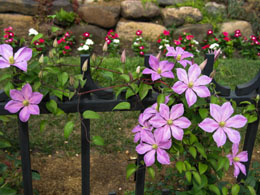
After your clematis finishes its first flush, snip off every faded flower with scissors before seed pods form. Why Seed production drains energy that could go into new growth and a second bloom (on repeat-blooming types
Why Your Bittersweet Vine Has No Berries: You Need a Male and Female
American bittersweet (Celastrus scandens) is dioecious—separate male and female plants. Your single vine (likely female) produces flowers but no berries without a male pollinator nearby. The Fix Plant one male for ever
Saving and Sowing Calla Lily Seeds
The green, bulbous structures on your calla lilies after flowering are seed pods. Heres how to harvest and grow them. Harvest Wait until pods turn brown and dry on the plant. Collect and split open—inside are shiny bla
How to Build a Chamomile Bench: Resources and Techniques
A chamomile bench—fragrant, flowery, sit-upon herbal seating—is a classic English garden feature. Heres how to start. Ready-Made Option Stonesmith Garden Vessels (stonesmith.com) sells a pre-formed chamomile bench kit t
Deadheading Black-Eyed Susans and Daylilies: When and How
For both black-eyed Susans (Rudbeckia) and daylilies (Hemerocallis), the rule is simple: remove spent flowers, leave green foliage. Black-Eyed Susans Cut individual flower stems to the base as they fade. After first fr
Mystery Plant with Red, Feathery, Marijuana-Like Leaves
A deep red, viney plant with fine, soft, feathery leaves reminiscent of cannabis—but not prickly—seen in a Wisconsin nursery. Two candidates fit: 1. Aralia species (e.g., Aralia cordata Sun King) Tropical/subtropical p
Hydrangea Won't Flower: The Old Wood Rule
A 5–7 year old hydrangea in Lancaster, PA (Zone 6b) that bloomed heavily for years but now produces only 5 flowers in June—and none since—has likely been pruned at the wrong time. The Critical Fact Bigleaf hydrangeas (H
Copyright © www.100flowers.win Botanic Garden All Rights Reserved