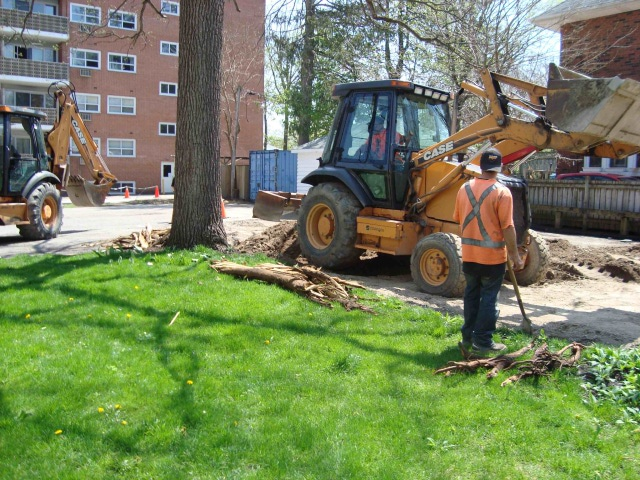


Large Cedar Stumps Near Foundation: Grind, Don't Dig
Digging = Foundation Risk Stumps 20+ years old have massive root systems. Excavating next to a foundation risks: Undermining footings. Damaging waterproofing/drains. Creating voids that settle later. Stumps Wont Respr

Blue Italian Cypress Container Holding and Spacing for Privacy Screen
Container Holding Limits 9-ft trees in nursery pots: plant ASAP. Maximum 1 month if watered daily (pots dry fast). Roots circle and bind quickly at this size. Spacing for Solid Screen Mature width: 4–6 ft. Plant 2–3 ft
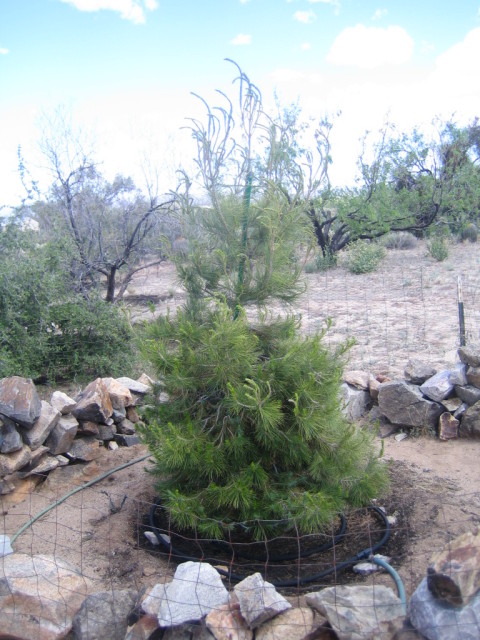
Aleppo Pine Tip Wilt: Heat, Wind, and Water Management in Tucson
Physiology: Soft Tips = Water Balloons uptake, tips droop. Wind (50 mph gusts) accelerates water loss dramatically. Observation Confirms Diagnosis Deep soak → tips recover overnight. Wind event → tips bend INTO wind (
Pine Windbreak in Wet Soil: Species Selection and Berm Solution
Problem: Roots Need Oxygen Waterlogged soil displaces air → roots suffocate → tree dies. Most pines cannot tolerate sustained saturation. Better Species for Wet Sites Loblolly pine – tolerates wetter conditions than mo
Rescuing a Pine in Clay Soil: Proper Planting Technique Over Fertilizer
Clay Soil Fix: Plant High, Mulch Deep Dig hole 2× pot width, same depth. Backfill with 50% native clay + 50% compost/topsoil. Plant so root ball top is 1–2 inches ABOVE grade. Mound soil to cover root ball sides (dont b
Planting Colorado Blue Spruce Seedlings: Spacing, Soil, and Watering
Mature Size Dictates Spacing Hedge: 3–5 ft apart. Specimens: 10 ft apart. Mature: 35 ft tall × 15 ft wide. Site Requirements Full to partial sun (no shade). Moist, nutrient-rich, well-drained soil. Hardy in Maine (zo
Thuja 'Smaragd' Near Septic Field: Root Spread and Safe Planting Distance
Root Zone Dimensions Mature canopy spread: 3–4 ft. Root spread: 1.5× canopy = 4.5–6 ft radius. Root depth: mostly top 2–3 ft. Septic System Risk Roots seek moisture/nutrients. Unsealed septic lines (common) attract ro
Fir Tree Infestation: Aphids/Scale, Sooty Mold, and Systemic Treatment
Diagnosis: Sucking Insects + Sooty Mold Black sticky patches = honeydew from aphids or scale insects. Black sooty mold grows on honeydew. Wasps/ants attracted to sugar. Ladybirds = predators (good sign). Systemic Treatm
White Pine Roots Lifting Pavers: Foundation Risk Assessment and Root Barriers
Pine Roots Rarely Damage Foundations Pines are taproot-dominant; lateral roots usually descend when hitting foundation backfill. At 12–15 ft from house with 20 ft height, foundation risk is minimal. Primary risk = windth
Arborvitae Taproots: PVC Pipe Watering Is Unnecessary
Roots Find Water Naturally Taproots grow downward seeking moisture. Installing PVC pipes to direct roots is a myth—it adds cost, compaction risk, and no benefit. Proper Watering Method Place pan under tree. Run sprinkl
Newly Planted Italian Cypress with Drooping Tops: Normal Spring Growth
Its Physiological, Not Pathological Fast spring growth produces soft, flexible terminal leaders that droop under their own weight. As they lignify (harden off) over summer, they straighten naturally. Watering Caution C
Killing a Large Conifer Near Power Lines: Girdling Method for Ireland
Drilling + Salt = Ineffective Salt in drilled holes wont translocate. Living tissue is the cambium just under bark. Effective: Girdling (Ring Barking) Cut through bark completely around trunk, 1–2 inches wide, down to
Pruning Dwarf Alberta Spruce: Shearing Technique and Size Reality
Shear, Dont Selectively Prune Dwarf Alberta spruce (Picea glauca Conica) is maintained by light shearing to preserve its dense, conical Christmas tree form. Critical Rules Never cut the central leader (top) – causes de
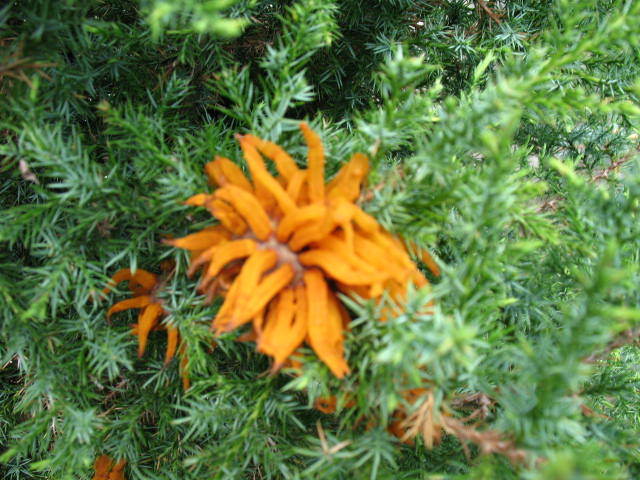
Cedar Apple Rust on Volunteer Juniper: Identification and Management
Your Shrub Is a Juniper (Cedar) The orange, gelatinous pods with rubbery horns are cedar apple rust (Gymnosporangium juniperi-virginianae)—a fungal disease, not part of the plant. Life Cycle & Hosts On juniper: Spring
Pine Wind Resistance in Louisiana: Species Differences and Root Architecture
Pines Generally Outperform Hardwoods in Wind Taproot systems provide superior anchorage. Mississippi Extension Service study (post-hurricane) ranked species: Longleaf pine – most wind-resistant Slash pine – intermediate
White Pines Planted with Burlap: To Dig or Not to Dig?
Best Practice: Remove Burlap at Planting Wire, twine, and burlap should be removed to prevent root circling and girdling. Treated burlap persists for years; even untreated can impede root egress in clay soils. 6 Weeks P
Emerald Cedar Hedge: Growth Habit and Thickening Timeline
Mature Dimensions Height: 25 ft (slows dramatically at 15 ft) Width: 5–8 ft (slows at 4 ft) Hedge Management Maintain at 8–15 ft height. Natural shape = upside-down ice cream cones. Initial planting creates a zigzag t
Snow-Damaged Pines: Assessing Survival and Recovery Watering
Green Needles = Still Alive As long as any green foliage remains, the tree is alive. But with 75%+ needle loss, photosynthetic capacity is severely reduced—water uptake from roots drops accordingly. Supportive Care Wat
Transplanting a 7-Foot Christmas Tree: Timing, Root Ball, and Weight Calculations
Best Time: Early Fall Move evergreens 6+ weeks before ground freeze. Spring works (4 weeks after deciduous leaf-out) with rigorous watering. Root Ball Formula Width: 9–12″ per inch trunk diameter Depth: 6″ per inch tru
Storm Damage on Mature Conifer: Wound Care and Long-Term Assessment
Dont Fill the Cavity Modern arboriculture: leave wounds open. Clean ragged edges to smooth wood, but dont use sealants, concrete, or foam. The tree compartmentalizes decay naturally. What the Hole Reveals A 12″ deep × 4
Copyright © www.100flowers.win Botanic Garden All Rights Reserved