


Crabgrass (Digitaria spp.) is one of the most persistent lawn invaders, capable of ruining a manicured yard in a single season. With over 300 species in the Poaceae family, this annual weed thrives in thin, stressed turf. But with proper timing and integrated management, you can reclaim your lawn.
Crabgrass seeds germinate when soil temperatures reach 55°F, typically in early spring or late winter. Plants mature by mid-summer, producing thousands of seeds before dying at the first autumn frost. The name "Digitaria" refers to the finger-like seed heads that radiate from the stem.
Pre-emergent herbicides create a soil barrier that stops seedlings before they surface. Apply before germination—often when lilacs bloom in your area. Both granular and liquid formulations work; water activates the barrier. Avoid aerating after application, as it breaks the protective layer. Reapplication may be needed since seeds germinate at different times.
Post-emergent herbicides kill existing plants but work best on young seedlings, which resemble desirable grass. Overuse of chemicals risks human and pet health. Corn gluten meal is an effective organic pre-emergent that also adds nitrogen to the soil.
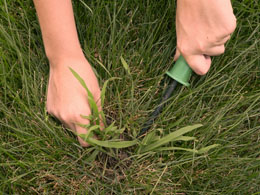
For small infestations, hand-pulling works—crabgrass has shallow roots. Always read and follow herbicide labels precisely. Integrated management—combining cultural, mechanical, and targeted chemical controls—delivers the best long-term results.
Bermuda Grass Invading St. Augustine: No Selective Herbicide—Outcompete It
Safe Ant Control: A Least-Toxic Approach for Your Home and Garden
Lawn Aeration: The Secret to a Healthier, Greener Lawn
Buying Grass Seed: Choose the Right Type for Your Lawn
Best Time to Water Your Lawn: Morning Strategy, Depth, and Frequency
Chipmunks Undermining Sidewalk: Trap, Don't Gas
Crabgrass and Nutsedge Lawn Renovation: Timing and Product Choice
Eliminating a Weed-Infested Lawn for Reseeding
Removing a Large Cactus Garden: Manual Removal vs. Herbicide
Killing a Tree with Herbicide: Cut-Stump vs. Frill Methods
Large Rosemary Bushes: Pruning for Size and Shape
Eradicating Invasive Shasta Daisies: Roundup Spot Treatment or Total Renovation
Copyright © www.100flowers.win Botanic Garden All Rights Reserved