
Identifying a Mystery Green Sundew: Likely Drosera capensis 'Alba'
Seedling ID Is Often Impossible Many sundews look identical as seedlings. The rescued plant—green, Cape-like form, no red pigment—is most likely: Drosera capensis Alba (all-green form), or A typical D. capensis grown in

Germinating Pinguicula macroceras Seeds: Stratification Tests and Warm Sowing
Early Seed Set Suggests No Stratification Needed P. macroceras sets seed in early spring (March–April). Like Darlingtonia (same habitat), seeds likely germinate without cold stratification. The nursery hypothesizes they
Reviving a Neglected Venus Flytrap: The 3–4 Month Recovery Timeline
Assessing a Light-Starved VFT A Venus flytrap left in a dark prop room for a week will blacken severely. Recovery is possible but slow: Signs of life: Any green tissue that isnt shrinking. Timeline: 3–4 months to determ
Storing Carnivorous Plant Soil: Does It Expire?
A customer asked if Sarracenia Northwests soil mix remains viable if purchased now but not used until next year. Yes—If Kept Dry Jacob Farin confirms: Dry soil retains its properties indefinitely. Breakdown only begins
Sarracenia flava Flower Stalk Damage: Frost, Insects, and Patience
Flowering Timing by Climate S. flava blooms when weather warms. In cooler zones (8 and colder), flowers may not open until late spring. Nursery plants in Oregon often bloom weeks after southern customers plants. Brown Sp
Transitioning Drosera adelae from Terrarium to Open Culture
Terrariums Are Unnecessary for D. adelae Drosera adelae thrives as an open houseplant. Terrariums cause weak growth, fungal issues, and prevent natural insect capture. Step-by-Step Acclimation to Open Air Prop terrarium
Nepenthes Fertilization: Foliar vs. Pitcher Feeding, and Managing Leggy Growth Under Lights
Fertilizer Application: Foliar Is Simpler and Safer While adding dilute fertilizer to pitchers works, foliar feeding (spraying leaves) is: Equally effective—all plants absorb nutrients through leaves. Far less labor-int
East vs. South/West Windows for Carnivorous Plants: Light Quality Explained
Why South/West Windows Are Recommended While the sun rises in the east, east-facing windows often provide lower light intensity due to: Morning fog/clouds in many climates. Lower sun angle = less energy per square foot.
Comprehensive Care for Nepenthes alata and Venus Flytrap: Water, Dormancy, Repotting, and Cat Safety
Nepenthes alata Care (Tropical Pitcher Plant) Water: Keep soil moist, not soggy. No standing water tray. Top-water daily; let excess drain. Light: Bright indirect (south/east window). Avoid direct sun on leaves. Humidit
Why a 9-Watt Fluorescent Light Fails for Sun-Loving Carnivorous Plants
Light Intensity Reality Check A 9-watt fluorescent tube emits ~600 lumens. Healthy growth for Sarracenia, fork-leaf sundews, and pygmy sundews requires ≥6,000 lumens (full sun = 10,000+). This light provides shade-level
Why Feeding Chicken to Venus Flytraps Is Fatal
Never Feed Meat to Carnivorous Plants A new grower fed chicken to a Venus flytrap, believing it provided energy like an animal stomach. This is catastrophically wrong. Flytraps digest insects—small, nitrogen-rich, low-f
Rescuing Venus Flytraps from Hard Water and Incorrect Soil in Florida
Diagnosis: Hard Water Toxicity Bradenton, FL well water is typically very high in dissolved minerals (often 200–400+ ppm). This burns VFT roots, causing blackened traps and decline. The sand used may also leach minerals
Sarracenia & Venus Flytrap Flower Pollination Timing
Sarracenia Pollination Window Sarracenia flowers are receptive for ~5 days after opening. Self-pollination (using pollen from the same flower) works but yields lower seed set than cross-pollination between different flow
Choosing Water for Venus Flytraps: Testing Well Water vs. Rainwater
Water Purity Is Non-Negotiable Venus flytraps require water with <50 ppm total dissolved solids (TDS). Higher mineral content burns roots, leading to decline and death. Testing Your Well Water Purchase a TDS meter or aq
Best Carnivorous Plants for a Classroom Fruit Fly Setup (No Terrarium Needed)
Skip the Terrarium Terrariums create more problems than they solve: stagnant air, fungal outbreaks, overheating, and poor light penetration. Nearly all common carnivorous plants thrive as open houseplants. Top Picks for
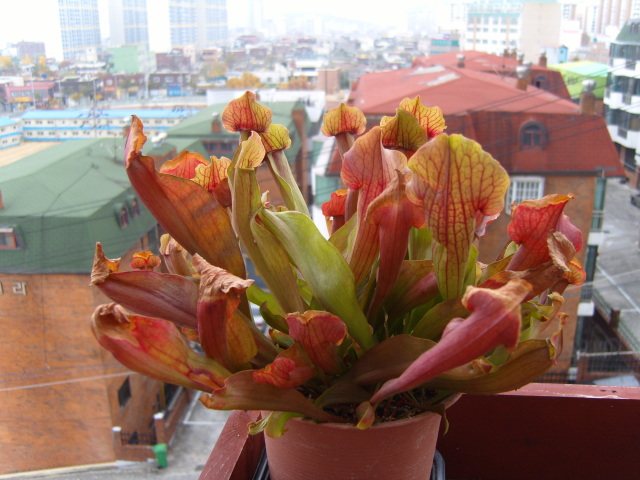
Identifying a Sarracenia Hybrid and Repotting Guidance
Hybrid Identification The plant shown (photo included) appears to be a mass-produced, unregistered cultivar hybrid—likely Sarracenia rubra × purpurea or S. alata × purpurea. These were common in the trade years ago. With
VFT Seed Germination Temperatures and the Biennial Nature of Drosera intermedia
Venus Flytrap Seed Germination Dionaea muscipula seeds require consistent temperatures above 65°F (18°C) to germinate reliably. At optimal warmth, expect sprouts in 3 weeks; cooler temps extend this to 6–8 weeks. Outdoor
Why Sarracenia Pitchers Stay Closed: Light Deficiency in Window Culture
Diagnosing Flat Unopened Pitchers New Sarracenia growth emerges as tight, rolled tubes that gradually open over weeks. However, 9-inch tall unopened pitchers in a south window (Connecticut) indicate severe light deficien
Fixing Soil Mistakes: Vermiculite, Contaminated Peat, and Springtail Infestations
Critical Soil Errors to Avoid A grower used Schultz peat moss and vermiculite—a serious mistake. Vermiculite retains excess moisture and leaches minerals (magnesium, aluminum) toxic to carnivorous plants. The correct mix
Nepenthes 'Caesar' Care: Treating This Hybrid Like N. truncata
Care Requirements for Nepenthes Caesar Nepenthes Caesar is a hybrid (likely involving N. truncata) that follows the same general care as its parent species. Key points: Light: Bright, indirect light—south or west window
Copyright © www.100flowers.win Botanic Garden All Rights Reserved