
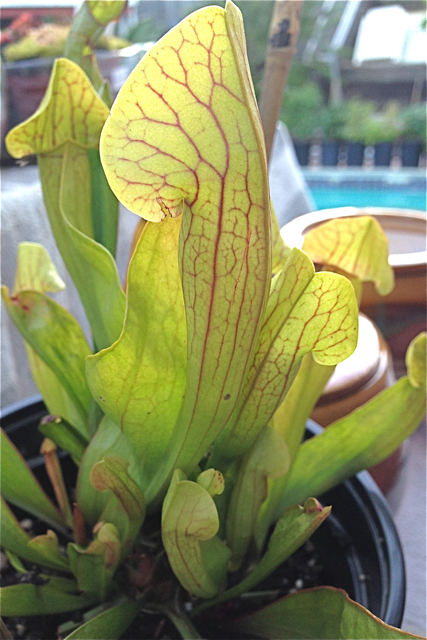
Identifying Commercial Sarracenia Hybrids: The 'Swamp Monster' S. × catesbaei
Unlabeled nursery plant from Xtreem Plants (Booman Floral) is S. × catesbaei (S. purpurea×flava)—common natural hybrid. Variable appearance from seed batches. Booman markets wild-type plants under trademarked names (Swam


Handling Frozen Venus Flytraps: Iowa Zone 5a Winter Protection
One freeze (4-20°F) likely didnt kill acclimated King Henry VFTs. Move to garage (30s°F ideal) or cool windowsill. Zone 5a requires protection—bury in mulch if left outside. Keep soil damp, not waterlogged. Spray sulfur
Direct Sowing Drosera rotundifolia Seeds in Ontario Bog Gardens
For Ontario bog gardens: broadcast D. rotundifolia seeds now on open peat surface with chopped live sphagnum. Germination begins at consistent above-freezing temps. Maturity in ~2 years. Local seeds best adapted. Avoid p
Choosing LED vs. Fluorescent Grow Lights for Carnivorous Plants
Chinese LED panels work but vary wildly—experiment with distance. They emphasize red/blue diodes for chlorophyll absorption. White light sources (fluorescent) are predictable: 48 T5HO (2-tube) or T8/T12 shoplights with 6
Zone 9b Sarracenia and VFT Winter Care: No Refrigeration Needed
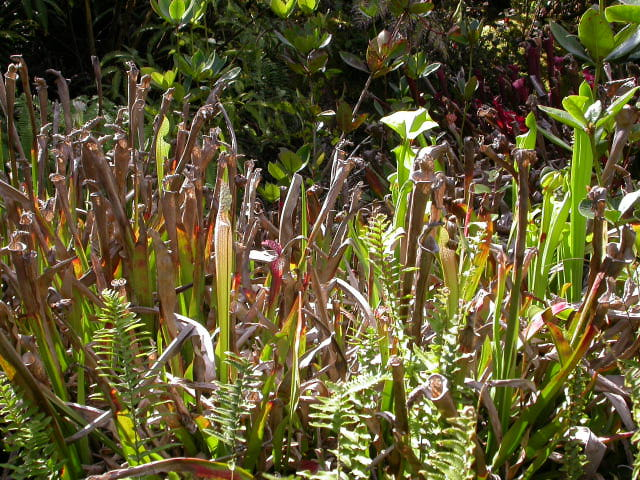
In Zone 9b (Windermere, FL), temperate CP get sufficient natural dormancy from short days/cool temps—no special treatment needed. Refrigerator dormancy risks fungal death. Only true tropical zones (Key West, Hawaii) requ
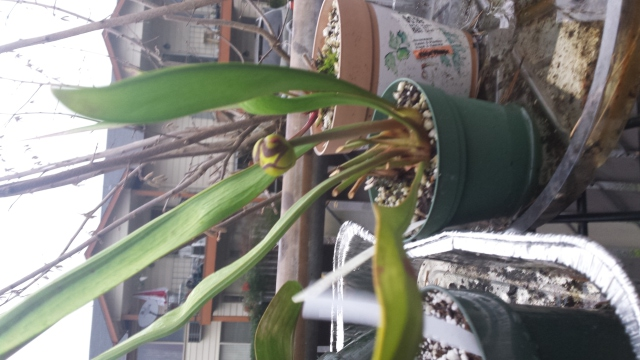
Anomalous Winter Flowering in Sarracenia flava var. maxima
Mid-winter flowering in S. flava (Portland, OR) is highly abnormal—typically September at latest. Frost-damaged flower stalk confirms untimely bloom. Clip it off; plant isnt ready to support flowering. Possible microclim
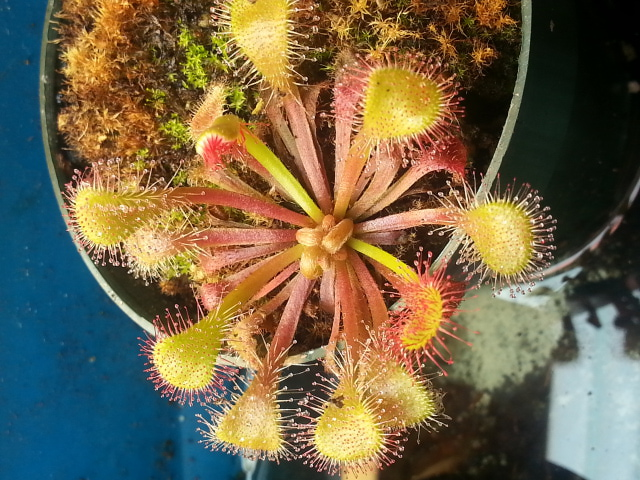
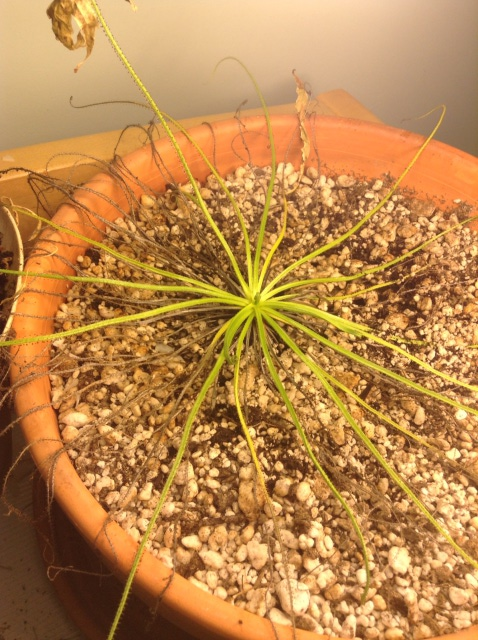
Identifying a Mystery Drosera Hybrid: Possible Ivan's Paddle
Plant resembles D. rotundifolia×intermedia/anglica hybrid—rotundifolia leaves with elongated petioles. Growing in tropical conditions without dormancy supports hybrid ID (pure rotundifolia would dormancy/die). May be Iva
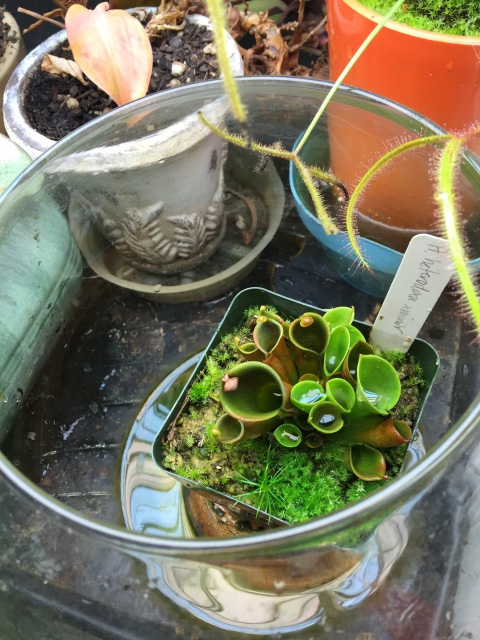
Heliamphora Nectar Spoon Development: Light Intensity Indicator
Missing nectar spoons and pale pitchers in Heliamphora heterodoxa×minor indicate insufficient light. Raise plant closer to T5HO fixture (remove goldfish bowl—its redundant with nearby water trays). Reddish pitcher splash
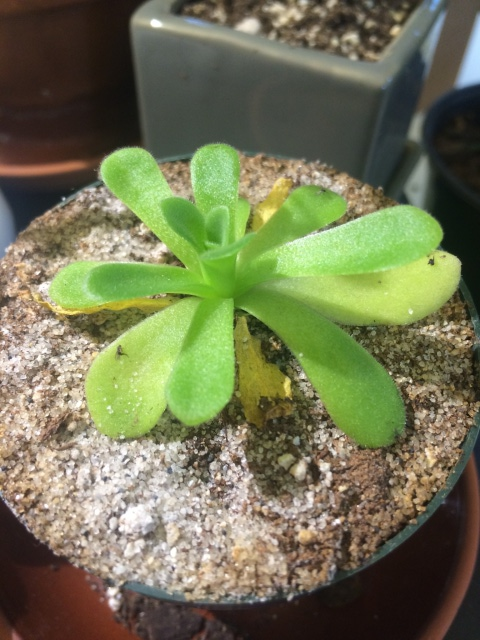
Mexican Pinguicula Light and Water Requirements: Debunking Dormancy Myths
Pinguicula agnata losing dew and yellowing lower leaves = insufficient light. All CP need high light; butterworts are shade-tolerant but still require direct sun or close artificial light. Mucilage production is photosyn
Evaluating Budget LED Grow Lights for Carnivorous Plants
Budget LED panels (like the Erligpowht link) are reasonable starting points. LEDs require distance experimentation—plants can receive excessive light without heat cues. Check plants in white light to assess color/growth.
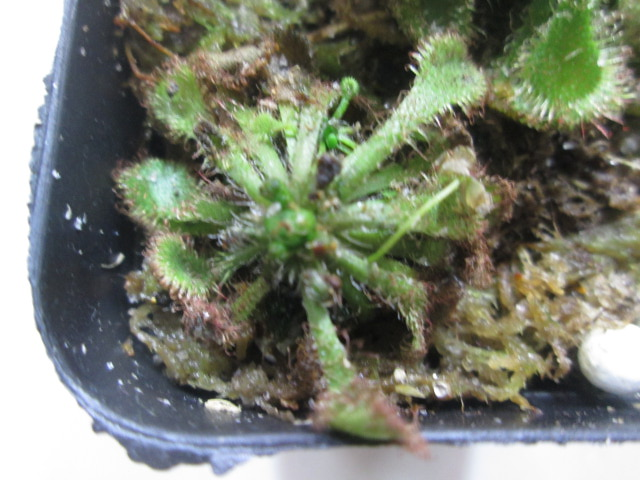
Troubleshooting Brown Sundews in Terrariums: Light, Acclimation, and Setup Issues
Older leaf browning after shipping/transplant is normal. Key issues: 2×20W CFL at 12hr may be insufficient—lights must be <12 from plants. Terrariums hinder light penetration and overheat in sun. Ensure mineral-free wate
Non-Vining Nepenthes Species and Vine Management
All Nepenthes vine eventually, but slower vineers include N. ampullaria, truncata, ventricosa, rajah. Prune elongating vines to stimulate bushy basal growth—effective for N. sanguinea and others.
Mild Winter Outdoor Cultivation of Cephalotus, Drosophyllum, and Drosera regia
Day 53-57°F/night 46-50°F is safe for all three species outdoors. They tolerate light freezes. Monitor forecasts—return indoors if hard freezes return. Forum discussion on Drosophyllum cold tolerance available for refere
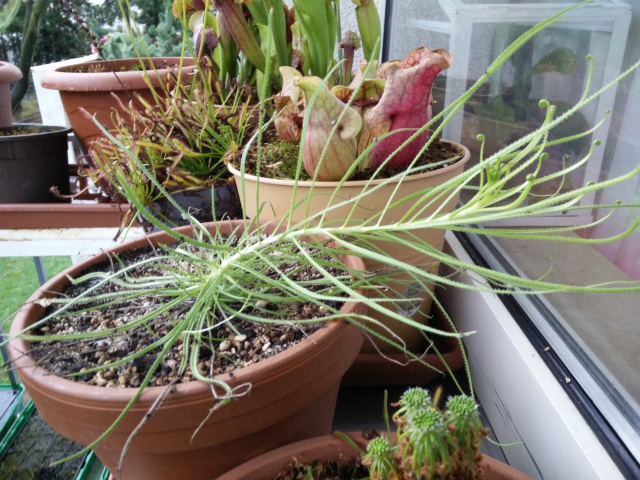
Correcting Etiolated Drosophyllum: Light, Watering, and Regrowth Options
Bending Drosophyllum indicates past low light—etiolated stem from stretching. Current brighter light makes new growth upright. Options: add CFL/LED for winter indoor periods (4cm from plant, natural photoperiod), or acce
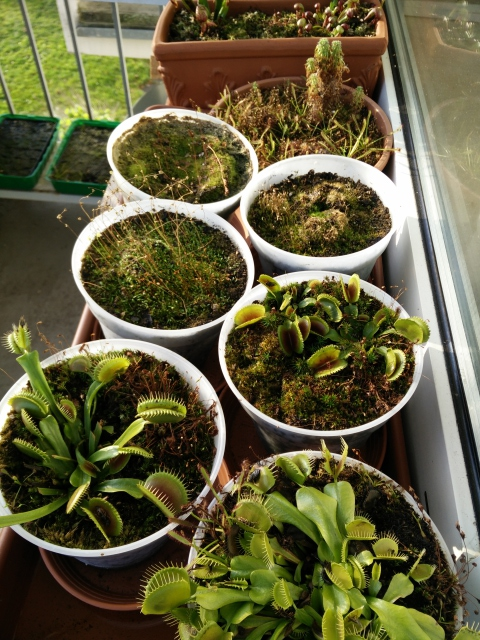
Square vs. Round Pots for Carnivorous Plants: Space Efficiency vs. Aesthetics
No empirical evidence favors square or round for root health. Square pots are space-efficient and transport-friendly; round pots are aesthetically preferred. Root circling concerns are anecdotal. For CP, only Sarracenia,
Winter vs. Spring Repotting: Timing, Division Risks, and Soil Refresh Strategies
Critical rule: never divide Sarracenia in active growth (summer stunts them). Late winter/early spring only. Transplanting (without division) is less timing-sensitive for Sarracenia. VFTs and hardy sundews: transplant on
Summer Thrips Management in Sarracenia: Pruning and Spinetoram Use
Remove all thrips-damaged Sarracenia foliage before spraying—damaged leaves wont recover. Spinetoram (Yates Success) is non-systemic but translaminar; coat exposed tissue thoroughly. Follow label reapplication schedules.
Immediate Repotting of Dormant Plant-of-the-Month Club Shipments
Dormant plants (VFT, hardy sundews, Sarracenia) can be potted into 6 containers immediately upon arrival. Winter transplanting avoids shock. Plants are well-acclimated to cool temperatures.
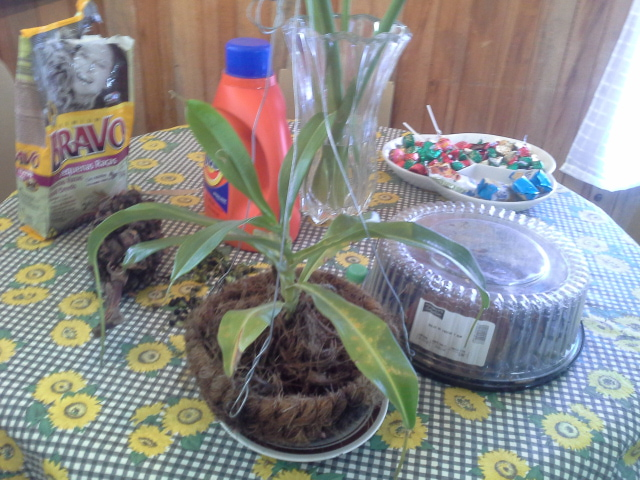
Identifying Mystery Nepenthes in Tropical Climates
Without tags or mature pitchers, species/hybrid ID is impossible—thousands of similar hybrids exist. Care follows general Nepenthes guidelines: partial sun, moist not wet, minimal disturbance. In Panama, grow outdoors ye
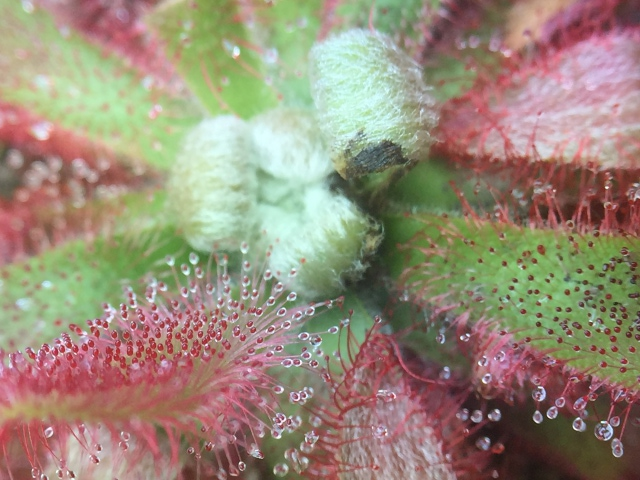
Localized Black Spots on Drosera graomogolensis: Physical Damage Assessment
Localized black spots on an otherwise healthy D. graomogolensis with recent caterpillar activity indicate physical damage, not disease. Monitor new growth—if spots dont recur, no treatment needed. Your T5HO setup (12hr,
Copyright © www.100flowers.win Botanic Garden All Rights Reserved