

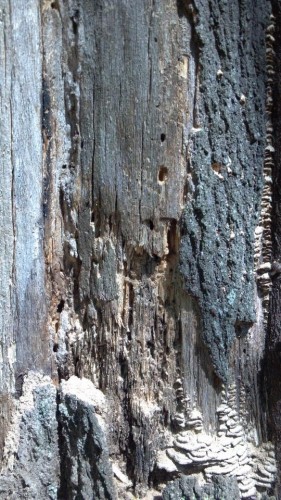
Tree Trunk Damage: Old Injury Leads to Ambrosia Beetles
A large front-yard tree showed extensive lower-trunk damage: numerous small holes, sawdust, and rot, yet the canopy remained leafy. The damage likely occurred years earlier—perhaps during construction when heavy equipmen

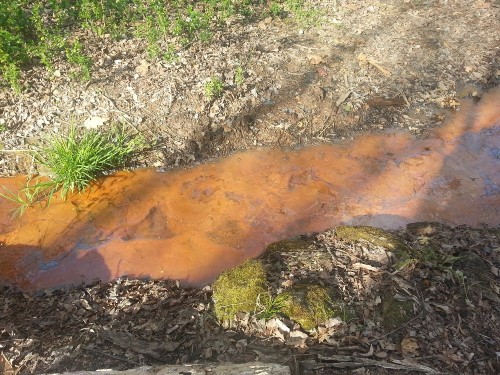
Why Stream Water Turns Rusty Orange
A homeowner in Cumming noticed a small woodland stream running rusty orange. The discoloration comes from dissolved iron that feeds certain bacteria, a common spring occurrence when warming water and runoff from red clay

Recovering a Lawn After Saltwater Flooding
After Hurricane Sandy, a lawn in Fairfield, Connecticut, was damaged by saltwater from Long Island Sound. Salt burns plant roots, with severity proportional to soil salinity. To remediate, spread gypsum at 10 pounds per
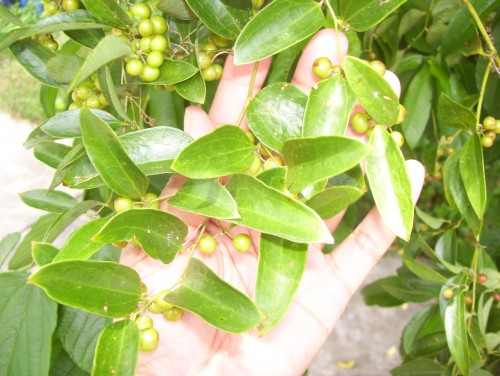
Lanceleaf Greenbriar: Thornless Vine with Edible Shoots
A reader asked about a vine with glossy black winter berries, wondering if it was edible or poisonous. Plant identification expert Shannon Pable identified it as Smilax smallii, commonly called lanceleaf greenbriar or ba
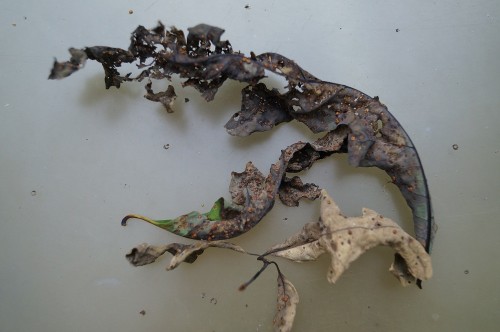
Jumping Oak Gall: Tiny Wasps Cause Leaf Drop
When a patio was suddenly covered in small rust-orange dots and an oak tree began losing leaves rapidly, the culprit was identified as jumping oak gall. This condition occurs when a minute wasp lays eggs on oak leaves; t
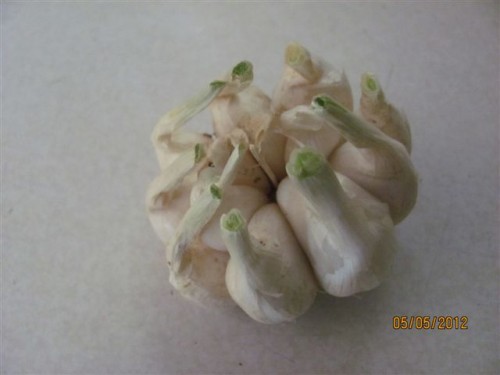
Why Garlic Cloves Separate: Warm Winter Sprouting
A gardener who has grown garlic for years found that this season’s harvest produced cloves that were not encased in a single bulb but separated individually. The likely cause is an unusually warm winter that triggered pr
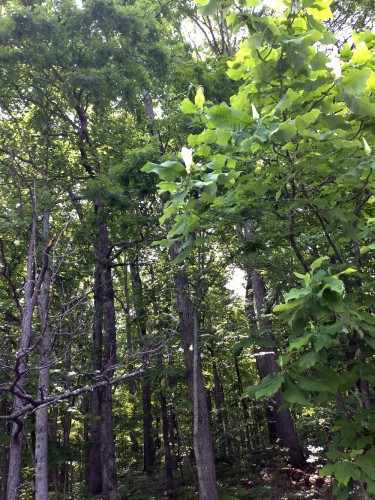
Identifying Deciduous Magnolias: Big-Leaf Magnolia at Stone Mountain Lake
A reader photographed a striking tree while fishing on Stone Mountain Lake, noting blooms far larger than a typical magnolia flower and leaves measuring up to 24 inches long and 10–12 inches wide. The flowers resemble th
Licenses Needed to Start a Landscape Business in Georgia
Starting a landscape installation business requires multiple licenses: Business license from each municipality where you work Federal tax ID and Secretary of State registration Level 1A Soil Erosion & Sedimentation Cert
Pollinator for Red Robin Holly
Red Robin holly (a Mary Nell selection) usually sets plenty of berries from neighborhood pollen. For maximum berry set, plant Festive holly nearby—its pollen is most compatible. Avoid Little Red, which produces no pollen
Pepper Cross-Pollination: Myth vs. Reality
Peppers are largely self-pollinating. Cross-pollination by bees is rare but possible. If it occurs, it affects only the seeds—the current seasons fruit flavor and heat are unchanged. If you save seed from a sweet pepper
Pine Bark Nuggets and Termites: Minimal Risk
Pine bark nuggets are low-risk for termites—they contain little cellulose, termites primary food. However, any mulch against the foundation creates a moist bridge for termites to bypass treated soil. Keep all mulch at le
Finding 15-0-15 Fertilizer for Centipedegrass
If your soil test calls for 15-0-15, look for fertilizers labeled for centipedegrass or St. Augustinegrass—theyre often formulated as 15-0-15 or 17-0-17. Alternatively, any lawn fertilizer with a low middle number (phosp
Best Fig Varieties for Georgia and Space Requirements
Celeste, Brown Turkey, and LSU Purple are top-performing figs for Georgia. Check local nurseries or the Georgia Organics fruit tree sale (georgiaorganics.org). Figs need space: 15 feet wide by 12 feet tall. If you must p
Daffodil Foliage in Winter: Normal and Harmless
Daffodils often push leaves up during winter warm spells. This is completely normal—they wont bloom until spring. Cold wont damage the foliage. If a hard freeze is forecast, you can lightly mulch with pine straw for peac
Edible vs. Ornamental Salvia: Know the Difference
Not all salvias are edible. Culinary sage is Salvia officinalis. Ornamental types like May Night, tricolor salvia, and annual salvia are not toxic but lack culinary value—theyre bred for flowers, not flavor. Russian sage
Springtails: The "Hopping Black Pepper" After Rain
Those tiny, jumping specks after a warm winter rain are springtails (Collembola). They hatch en masse in damp conditions and use a spring-loaded tail (furcula) to leap. Harmless and beneficial, they feed on decaying orga
Finding Chinkapin (Dwarf Chestnut) Plants
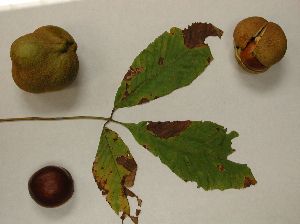
The Allegheny chinkapin (Castanea pumila) is a shrubby chestnut relative with edible nuts, but its susceptible to chestnut blight and rarely sold commercially. It prefers sunny, well-drained ridges. For a source, contact
Potting Soil vs. Potting Mix: Which to Use Where
Potting mix is a soilless blend of peat moss, pine bark fines, perlite, and sometimes sand/fertilizer—ideal for containers indoors and out. Potting soil typically contains some native soil plus composted wood or peat, ma
Join the Georgia Native Plant Society for Plant Rescues
The Georgia Native Plant Society (gnps.org) organizes plant rescues at development sites, saving native flora from destruction. Trips are usually in the metro area, moderately easy, and a fantastic way to learn native pl
Optimal Mulch Depth: How Thick Is Too Thick?
Mulch conserves moisture but can intercept light rain if too deep. A layer exceeding 6 inches will absorb rainfall before it reaches the soil. Aim for 2–3 inches of pine straw, bark, or leaves. This depth suppresses weed
Copyright © www.100flowers.win Botanic Garden All Rights Reserved