


When a patio was suddenly covered in small rust-orange dots and an oak tree began losing leaves rapidly, the culprit was identified as jumping oak gall. This condition occurs when a minute wasp lays eggs on oak leaves; the leaf tissue forms a gall around each egg, and a larva develops inside. Eventually the larvae become active, dislodging the galls from the tree. The fallen galls continue to jump up to an inch high—much like Mexican jumping beans.
Although heavy infestations can cause noticeable defoliation, the tree is not permanently harmed and no control measures are necessary. The galls are simply a fascinating, temporary natural phenomenon.
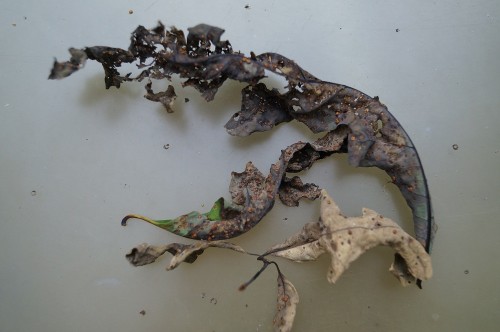
jumping oak gall
Young Oak Vertical Bark Cracks: Stress Injury, Consider Replanting
Oak Insect Galls: Benign Wasp Nurseries on Mature Tree
Why Is My Mature Oak Tree Shedding Leaves and Acorns Excessively?
Oak Loopers Defoliating Michigan Oak: Natural Cycles, Little Control Possible
White Oak Leaf Galls: Wool Sower Gall Identification
Tamarack: The Deciduous Conifer That Loses Needles in Fall
Oak Galls (Horned/Gouty): Cosmetic, Not Lethal
Confirming Shortleaf Pine and Measuring DBH Correctly
Tree Galls on Chinaberry and Goldenrain: Identification and Low Concern
Wool Sower Gall on Oak: A Curious but Harmless Oddity
Copyright © www.100flowers.win Botanic Garden All Rights Reserved