
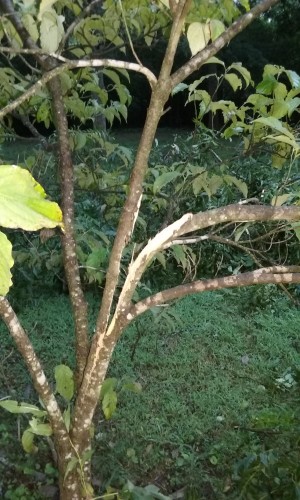
Dogwood Split by Falling Limb: Bolt or Replace?
A large pecan limb crushed a dogwood, splitting it. Bolting the split is unlikely to succeed; the damaged limbs union with the trunk will probably fail. The tree will be lopsided. Replacement is the best option for aesth

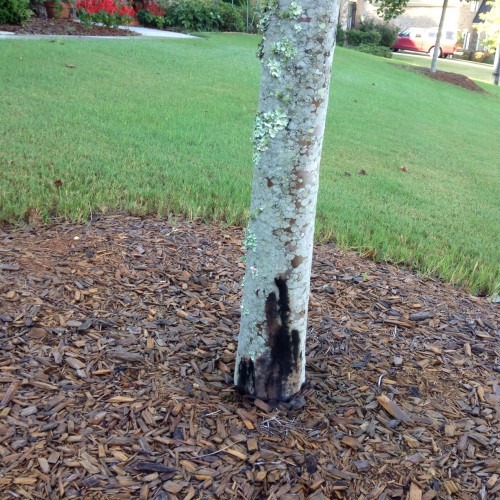
Maple Planted Too Deep: Fatal Flare Burial
The blackened trunk base and vertical cracks indicate the tree was planted too deep, burying the root flare. Soil-borne fungi attack buried bark. Excavating may not help; the tree will likely die.
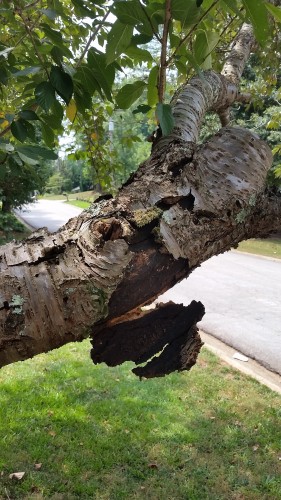
Kwanzan Cherry Limb Rot from Pruning Wounds
Two pruning errors caused rot: a stub left to rot, creating a water-entry hole, and a large flush cut that couldnt seal. Water entered both, rotting the limbs. Sealants fail. A rain shield might slow it, but the tree is
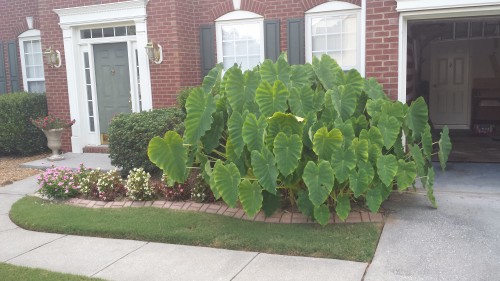
Transplanting a Massive Elephant Ear
Your spreading elephant ear (likely Colocasia or Alocasia) can be divided by gently excavating offsets from the main corm. Replant immediately or store roots in a cool, dry box over winter (cut tops in October, plant in

Anoles and a Rat Snake in Camellias: Nighttime Roommates
Green anoles sleeping on camellia leaves at night is normal behavior. A baby rat snake nearby may eat lizards but likely not in cool evening temps. Both are part of a healthy garden ecosystem.
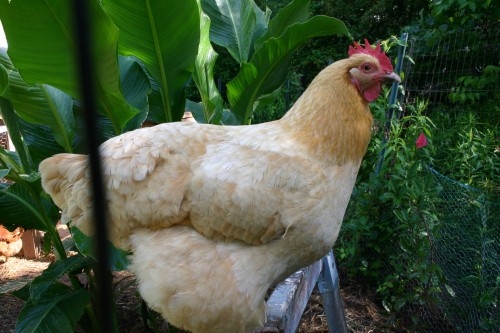
Poultry Litter on Pastures: Nutrient Source With Odor Concerns
Farmers apply chicken litter as a cost-effective fertilizer. If odor is a nuisance, contact county commissioners about regulations. Odor can be mitigated with proper management; see UGA publications on poultry litter, od
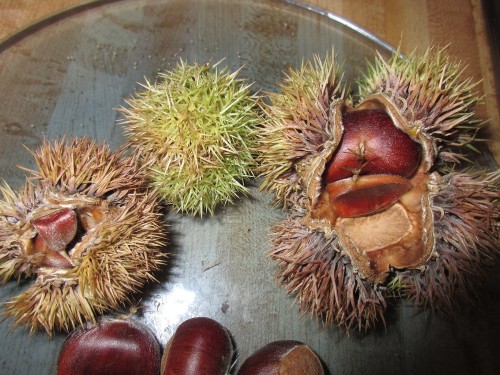
Growing Chinese Chestnuts from Seed
Spiny burs contain 1–3 edible nuts. Store nuts in a sealed bag in the refrigerator crisper for 60–90 days (stratification), checking for spoilage. Plant when roots emerge; protect with chicken wire from squirrels. Full s
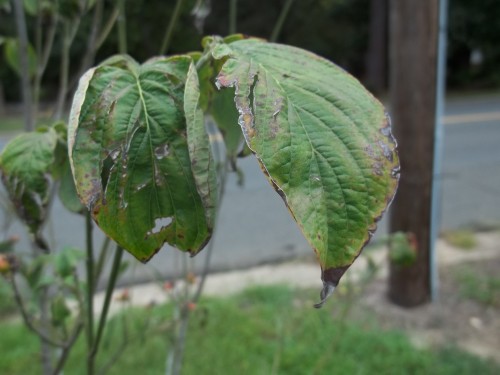
Dogwoods Planted in June: Likely Lost to Drought Stress
June-planted dogwoods with brown leaf edges suffered root-ball drying despite irrigation. Burlap left on the root ball hindered root expansion. Fall planting is far superior. These trees probably wont leaf out next sprin
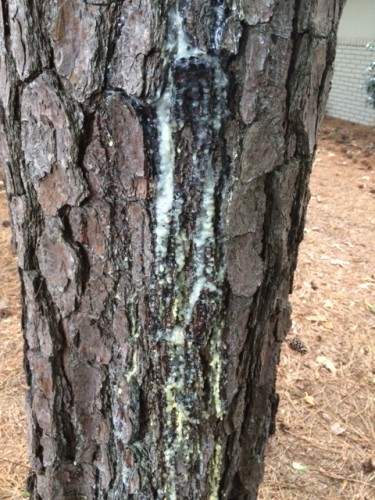
Pine Pitch Canker: White Sap Indicates Disease
White hardened sap (rosin) on pine trunks signals pitch canker disease. No sprays or injections cure it. Hire a certified arborist to assess structural risk, as the infection weakens the trunk.
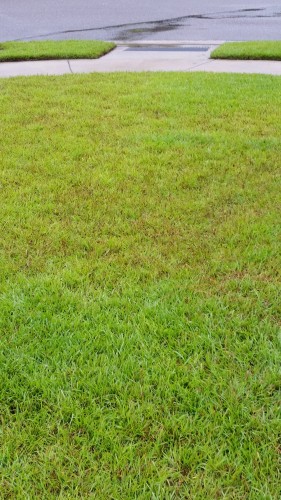
Centipedegrass Yellowing: High Soil pH Is the Culprit
Centipedegrass prefers pH 5.5–6.0. Your soil pH of 6.8 prevents iron uptake, causing light-colored blades. Lowering pH depends on soil type; contact your Extension office for the correct method.
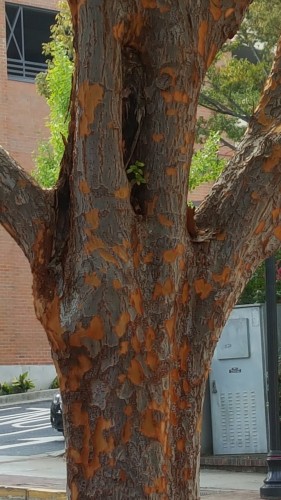
Lacebark Elm: A Beautiful, Hardy Tree for North Georgia
The tree in the photos is a lacebark elm (Ulmus parvifolia), prized for its mottled bark. It thrives in north Georgia. UGAs Dr. Michael Dirr introduced cultivars Allee (upright) and Athena; this appears to be Allee.
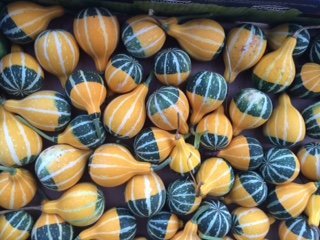
Volunteer Bicolor Pear Gourds from Squirrel-Planted Seeds
A squirrel likely buried gourd seeds from a neighbors Thanksgiving display. The resulting vine produced over 100 bicolor pear gourds. Theyre edible when young, but mostly decorative. Enjoy the bounty!
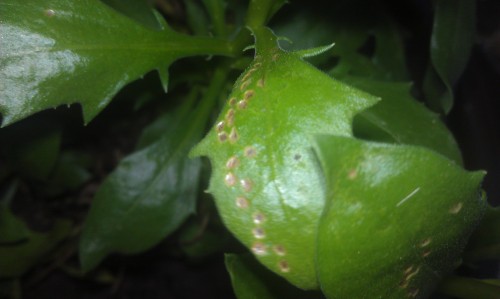
African Daisy (Osteospermum) Leaf Damage: Likely Stink Bugs
Moderate leaf damage on African daisy is typical of leaf-footed bugs or stink bugs piercing leaves to suck sap. Its unsightly but not threatening. Any garden insecticide can control them if desired.
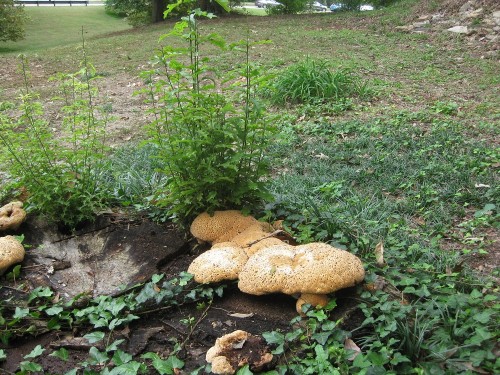
Oak Stump Sprouts: Weak and Disease-Prone
Sprouts from a diseased oak stump will grow a few years, then either succumb to the original fungus or fall over due to weak attachment. No good outcome. Grind the stump or let English ivy cover it. Mushrooms on the stum
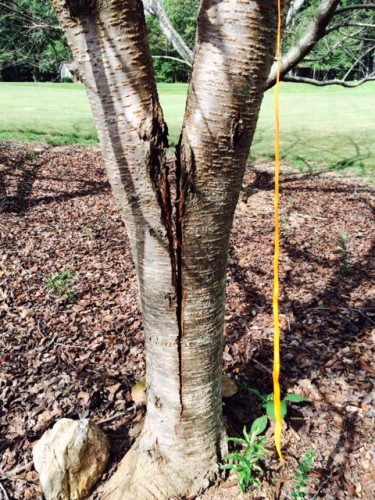
Split Trunk on Flowering Cherry: Cable It or Lose It
A split trunk wont heal on its own. A certified arborist can install steel cables above the split to buy a few more years. Without intervention, the tree will likely fail within a year. The halves will not graft together
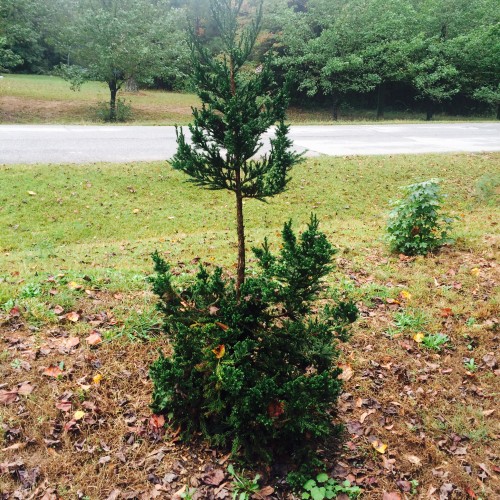
Deer Rub Damage on Young Tree: Permanent Bare Spot
A deers antler rubbing has stripped mid-height branches. The tree wont regrow branches in that zone; it will always have a bare section. It may survive and become less noticeable as it grows taller, but you can replace i
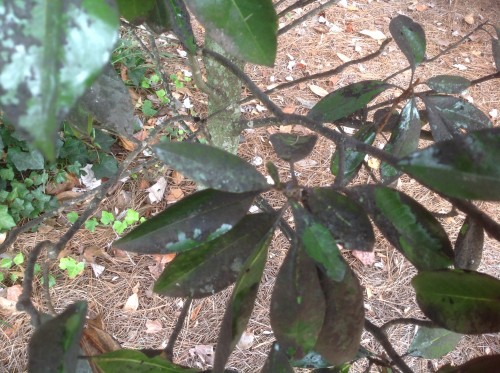
Controlling Magnolia Scale and Sooty Mold
Magnolia scale insects suck sap and excrete honeydew, which feeds sooty mold. Three-step control: (1) Spray neem oil now, covering leaf undersides. (2) Apply a systemic insecticide to the soil in October. (3) In March, w
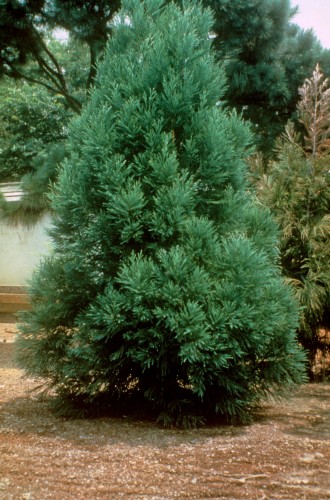
'Yoshino' vs. 'Radicans' Cryptomeria: Key Differences
Landscapers note: Radicans is smaller (45×20), darker green, resists tip blight better, and doesnt bronze in winter. Yoshino grows larger (60×30), bronzes in winter, and needs more space. Radicans fits residential sites
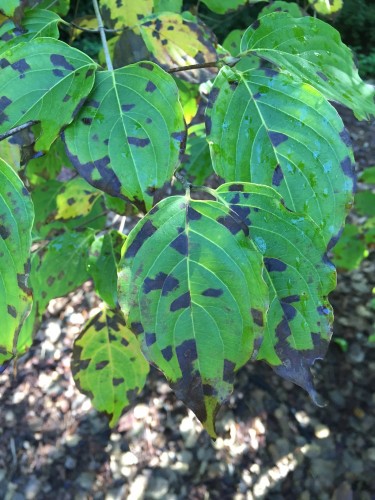
Dogwood Leaf Spot in Fall: Pseudocercospora
Spots on dogwood leaves in fall are likely Pseudocercospora cornicola, favored by wet weather. Its cosmetic, not fatal. No chemical control needed; rake and dispose of fallen leaves to reduce inoculum.
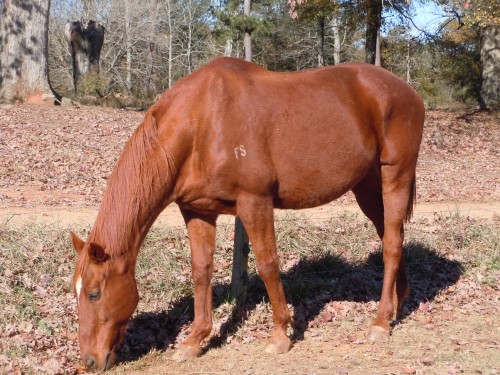
UGA Resources for Horse Pasture Management
The University of Georgia offers excellent guides on horse fencing and forage systems. Read them, then contact your local Extension office at 1-800-ASKUGA1 for personalized advice.
Copyright © www.100flowers.win Botanic Garden All Rights Reserved