Diagnosing Chronic Cape Sundew Stunting: Light, Not Minerals
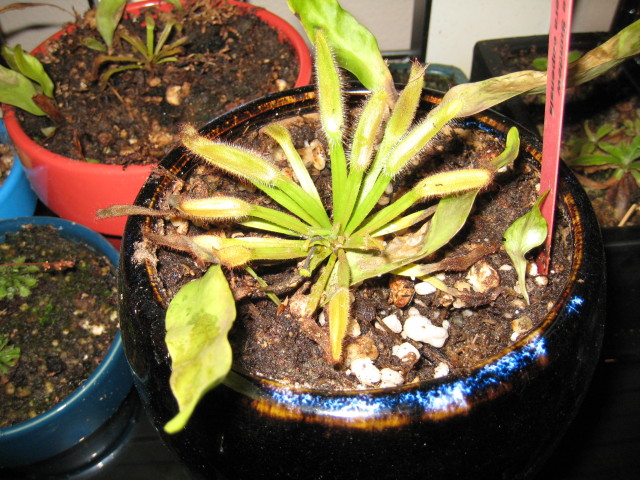
The Real Culprit: Insufficient Light Despite good water (distilled), soil (Black Gold peat, Whitney Farms perlite/sand), and isolation from butterwort trays, your D. capensis shows chlorotic, pale, stunted growth—classic


Pitcher Formation Timeline for Nepenthes × deRoose's Alata
3–4 Weeks in Warm Conditions With warm temps and consistent watering, new pitchers appear in 3–4 weeks from initiation to opening. Early tendril/pitcher development is visible sooner. West Window Note Your California we
Standing Water for Venus Flytraps and Sundews: How Much?
The Core Rule Soil must never dry out. Keep pots in 1/4–1/2 inch of water—no more than halfway up the pot. This mimics bog conditions. Details Use tray/saucer under pot. Refill when water drops low. Water must be disti
Can Dead Sphagnum Moss Regenerate Live Moss?
Depends on Source Chilean sphagnum: typically no viable spores—won’t regenerate. New Zealand sphagnum: often contains live spores—will regrow if kept wet and cool. Timeline Expect visible live moss in ~2 months under
T5 HO Fluorescent Light Distance for Carnivorous Plants
Starting Point: 6 Inches T5 HO tubes run hotter than T12. Begin at ~6 inches, monitor leaf temperature and plant color. Indicator Species D. capensis and D. spatulata are good gauges: red coloration without burning = sw
Slow Growth in New Sarracenia Bog: Patience, Not Soil Replacement
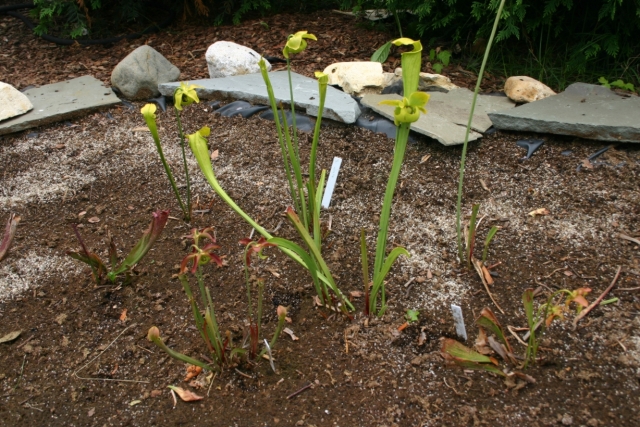
Assessment Plants look healthy but slow—not hard-water damage. Likely a temperature/establishment issue. First-year bog plants often lag behind potted ones as roots colonize the larger volume. Advice Don’t replace soil
RO/DI Water (0–3 ppm) Is Excellent for Carnivorous Plants
Your reef-grade RO/DI water (0–3 ppm) is effectively distilled—ideal for CPs. Our nursery RO output is ~20 ppm, which is also fine. The deionizer simply removes residual ions that pass the membrane. Use with confidence.
Managing Mineral Buildup in a Large Minibog (Kiddie Pool)
Likely Causes Mineral buildup from evaporation (no drainage) and/or anaerobic decay in waterlogged lower media. Sand from pine savannah may contribute alkalinity/salts. Fixes Drill 1/4-height holes around pool sides—cr
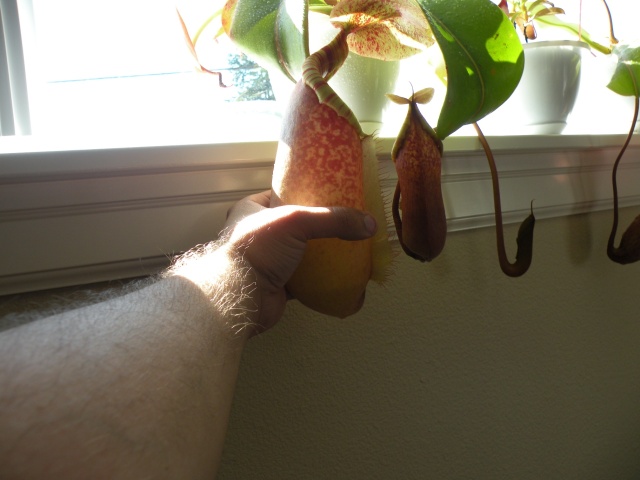
Growing Nepenthes 'Caesar': Conditions, Acclimation, and Fertilization
Preferred Conditions N. Caesar (N. merrilliana × N. truncata) likes it bright and warm—both parents are lowlanders. Thrives on sunny west windows (Portland examples). Acclimation from Hawaii If shipped from Leilani Nurs
New Nepenthes ventricosa Losing Pitchers: Transition Stress
Common After Shipping Pitcher loss within weeks of arrival is normal transition stress, especially for N. ventricosa. The plant is adjusting to your home’s microclimate. Care During Adjustment Monitor soil moisture—kee
Stalled Sarracenia Flowers and Yellowish Venus Flytraps
Stuck Flower Stalks Cut them off. Stalks that remain green and unopened for 2+ months won’t mature—likely a photoperiod issue. No harm in removal. Yellowish Flytraps Could be a less-red variety or odd growth. Send a pho
Legal and Ethical Issues of Collecting Wild Carnivorous Plants in Alabama
Federal Law Illegal to dig: Sarracenia oreophila and S. rubra ssp. alabamensis—both federally endangered. State Law & Ethics Other species fall under Alabama state law. Ethically, wild collection is discouraged—many CP
Pruning Damaged Sarracenia Pitchers for Recovery
Cut the Bad, Keep the Good Remove badly damaged/deformed pitchers—they drain energy. Leave ones with significant insect capture (still functional). Phyllodia Note Phyllodia (non-carnivorous leaves) appear due to photope
Florida Carnivorous Plant Growing: Light, Gravel, Dormancy, and Indoor Lighting
Florida Giant Sundew Color D. filiformis ‘Florida Giant’ stays greener than typical forms—minimal red is normal. 5.5 Hours Sun Sufficient if colors develop. Plants are the best guide—pale = more light needed. Pea Grave
Venus Flytrap Self-Pollination: Can a Single Plant Produce Seeds?
Usually No Dionaea rarely sets viable seed via self-pollination. Cross-pollination between genetically distinct plants is typically required. With only one plant in bloom, seed production is unlikely this year. Option A
Why Cape Sundew Leaves Sometimes Don't Reopen After Feeding
Normal Behavior Older leaves often stay curled after digesting prey. Large insects also prevent reopening. Only newer leaves reliably unfurl post-feeding. No Action Required This is typical for D. capensis. The plant co
Sarracenia flava Phyllodia, Not Defects: Normal Summer Growth
Plants Look Healthy The “deformed” leaves on your S. flava var. cuprea are phyllodia—non-carnivorous summer leaves. This is normal seasonal behavior. S. flava and S. oreophila produce phyllodia mid-summer; S. leucophylla
Can a Severed Nepenthes mirabilis Regrow from Roots or Stem?
Good News: High Resilience N. mirabilis is tough. If the root mass is intact, it will send up new shoots. If stems broke off, they root easily as cuttings—treat like any stem-forming plant. Next Steps Pot the root mass
Most Shade-Tolerant Nepenthes for Indoor Growing
Ground-Hugging Species Tolerate Lower Light Species that grow near the forest floor are most shade-tolerant: N. sibuyanensis, N. ampullaria, N. gymnamphora. Lowland N. truncata also handles shade decently. Species to Av
Feeding Nepenthes Bloodworms and Nectar Production
Bloodworms: Yes, in Moderation Bloodworms are fine. Add a small pinch to each open pitcher. Repeat on newly opened pitchers. Once a month is plenty—no strict schedule needed. Nectar Production Pitchers produce nectar on
Copyright © www.100flowers.win Botanic Garden All Rights Reserved