
Using Black Trash Bags as UV Shields for Clear Plastic Water Trays
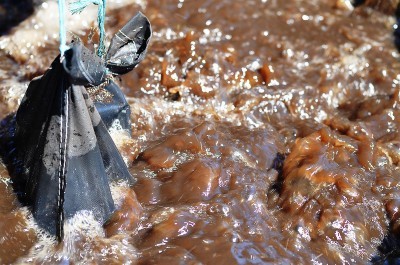
Yes, Trash Bags Work Black plastic trash bags are an effective, cheap UV shield for clear plastic kiddie pools or trays. They slow photodegradation of the clear plastic. Selection Tips Choose thicker bags (check “mil”

Growing Sundews from Seed: Cold Stratification Guide
Species Matters With 100+ Drosera species, requirements vary. Temperate species (D. filiformis, D. intermedia, D. rotundifolia) need cold stratification. Tropicals do not. Also, seed viability declines with age—old seed
Nepenthes jacquelineae: Handling a Damaged Center Leaf on Arrival
Species Sensitivity N. jacquelineae is a fussy ultra-highlander. Shipping stress often causes pitcher/leaf loss. Keep it cool and humid—avoid dry conditions entirely. Depending on your climate, a permanent partial enclos
Advanced Dionaea Questions: Trigger Hair Mechanics and Ether Anesthesia
Beyond Basic Care Your questions touch on plant electrophysiology and biochemistry—topics explored in scientific literature but outside practical horticulture scope. Resources for Deep Research International Carnivorou
Drosera spatulata Seed Production and Digestion Time
Seed Production Most D. spatulata forms self-pollinate. Assist by gently brushing open flowers with a paintbrush to transfer pollen. Flower stalks won’t root if just stuck in soil—plantlets require a propagation dome lik
Fixing Dry, Leggy Venus Flytrap and Sundew: Light and Water Corrections
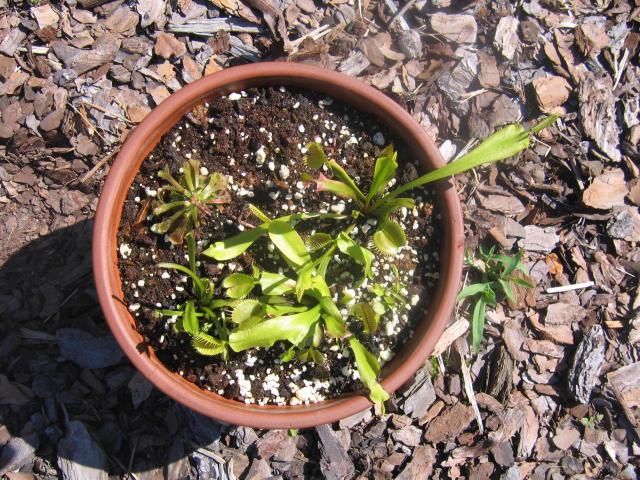
Two Main Issues 1. Watering Soil looks dry. Keep pots in 1–2 inches of water at all times. Terracotta pots worsen evaporation—switch to plastic or glazed ceramic. No need to repot now; just keep them wet. 2. Insufficien
Rescuing a Stunted Sarracenia flava in an Undrained Glass Vase
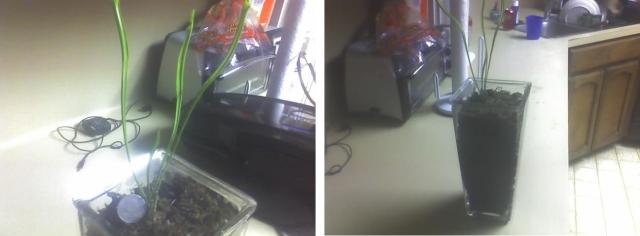
The Core Problem Growing S. flava in a clear, undrained glass vase in full Texas sun creates a lethal combo: soil overheats (slow-cooker effect), oxygen plummets, and anaerobic bacteria thrive. It’s remarkable the plant
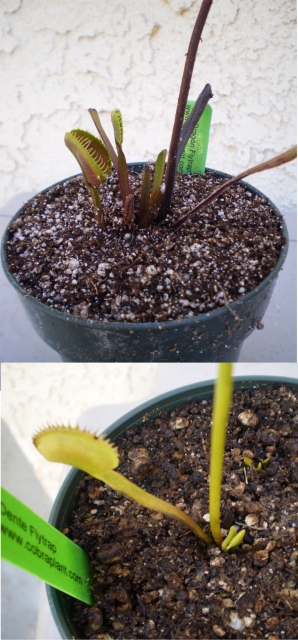
Neem Oil Damage on Venus Flytraps: Diagnosis and Recovery
Cause: Phytotoxicity from Overuse The deformed, stunted new growth on your VFTs aligns with Neem II overapplication. Excessive or frequent spraying, especially if it reached the soil/roots, causes this damage. Recovery
Venus Flytrap 'Dente' Care: Black Traps, Repotting, and Flowering
1. Black Traps After Feeding Normal. Each trap digests 1–2 insects before dying. Trim blackened traps; new growth will replace them. 2. Repotting Timing Fine to repot now. Keep a little original soil around roots to min
Identifying Coastal vs. Mountain Darlingtonia from Nursery Purchase
Likely Coastal Form Plants from the open house labeled simply “Darlingtonia” in 2-inch pots, located among elevated plants near the house with live sphagnum moss, are almost certainly the coastal form. Why It Matters Co
Why Sarracenia flava Produces Smaller Pitchers Later in Season
Normal Growth Pattern The first spring pitchers of S. flava are the tallest. Subsequent growth reaches only 1/2–2/3 that height. This is completely normal. What Comes Next After the early large pitchers, the plant produ
Best Budget Grow Light for Carnivorous Plants
Top Recommendation: Two-Tube Shop Light The most cost-effective, efficient option is a standard 48-inch, two-tube fluorescent shop light (~$10 at hardware stores). Bulb Specs Type: 40W cool-white tubes (not “plant spec
New Nepenthes ventrata Losing Pitchers After Shipping? Normal Transition
What’s Happening Pitchers browning and dying within days of arrival is typical shipping stress. Each pitcher naturally lasts ~6 weeks; the oldest may have been near the end of its life. The plant is adjusting to your mic
Can Nepenthes Pitcher in Winter? Yes—With Proper Light
Tropical Growth Cycle Nepenthes are tropical plants that produce pitchers year-round if given adequate light and photoperiod. Winter pitcher failure usually stems from short days and low light intensity. Winter Lighting
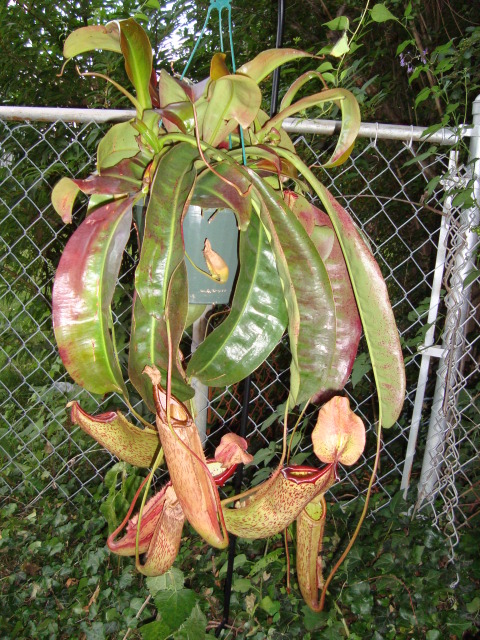
Red Leaves on Nepenthes × miranda: Normal Coloration, Not Pests
The Red Color Is Natural The reddish spots and overall red tint on your N. × miranda leaves are normal pigmentation, not mite damage or disease. This hybrid (N. maxima × N. northiana) inherits red-leaf genetics from N. m
Nepenthes × deRoose's Alata vs. True N. ventrata
The Difference N. × deRooses alata is often mislabeled as N. ventrata or simply N. alata. Genetically, it’s N. alata × (N. ventricosa × N. alata)—a backcross. A true N. ventrata is a straightforward N. alata × N. ventric
Ideal Light Conditions for Nepenthes ampullaria
Partial Sun Is Best N. ampullaria thrives in partial sun—morning sun or dappled light through trees. A grower in Hawaii successfully cultivates it on the ground under light shade cloth among other Nepenthes. Home Growin
Recovering a Dog-Damaged Nepenthes burkei
Situation Assessment Your N. burkei suffered root disturbance from repotting (twice in a short span) and physical damage to the growth point. It’s small (~2 inches), slow-growing, and producing reduced leaves/pitchers—cl
Complete Care Guide for Nepenthes ventrata
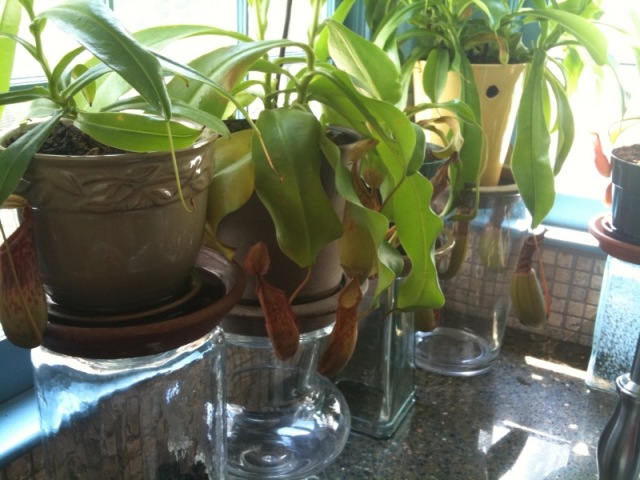
Light Partial sun outdoors under a tree, or bright window light (morning or south-facing all day). A west window with only 3–4 hours of direct sun may need supplemental lighting: 40W cool-white or daylight fluorescent tu
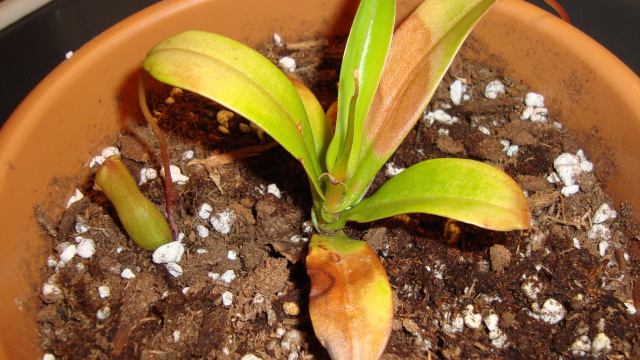
Diagnosing Leaf Burn on a Young Nepenthes ventricosa
The Problem: Sunburned Leaves The reddish-brown spots and crispy edges on the older leaves of your N. ventricosa are classic leaf burn. This species is less sun-tolerant than N. miranda. The plant likely came from a shad
Copyright © www.100flowers.win Botanic Garden All Rights Reserved