

New Weeping Mulberry Rapid Decline: Watering Method Correction
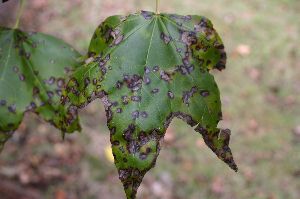
Identifying the Fatal Error A weeping mulberry planted July 1 in Kentucky, watered by light spraying from above for 20 seconds twice per watering, showing curled, brittle, black-spotted leaves and rapid defoliation by Ju

Fire Blight-Ravaged Pear Tree: Removal and Replanting Strategy
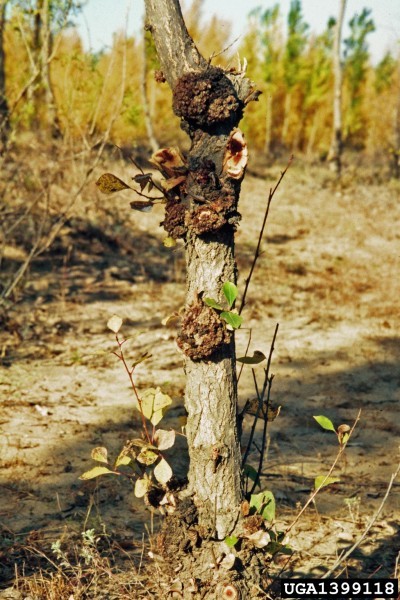
When to Remove A pear tree overcome with fire blight everywhere after a wet spring—despite some healthy branches—should be completely removed. The bacterium (Erwinia amylovora) has systemically invaded; pruning wont erad
Newly Planted Sycamore Yellowing: Watering and Planting Depth Check
Diagnosing Week-Old Decline A large nursery sycamore planted in Birmingham, AL showing yellow leaves with brown spots and yellow-margined brown areas within a week indicates water deficit—not disease. Hill planting exace
Container Climbing Rose Bark Peeling: Oak Root Rot Diagnosis
Recognizing a Terminal Disease Climbing roses in NM containers with sudden yellowing, leaf death, and bark peeling above soil line with white fungal growth underneath have oak root rot (Armillaria mellea)—despite the nam
Lacebark Elm Leaf Holes and Transplant Adjustment
Separating Two Issues A 6-week-old 45-gallon lacebark elm in Central Texas shows: Tiny holes in 20–30% of leaves (progressive, not sudden) → likely shot hole fungus (Wilsonomyces) or flea beetles. Browning/curling o
India Crabapple White Fuzzy Growth: Mealybugs or Woolly Aphids
Identifying the White Material White fuzzy growth at branch-trunk junctions on a newly planted (May) India crabapple indicates mealybugs or woolly aphids—both produce white waxy coverings. Both suck sap and weaken young
Indoor Parade Rose Leaf Loss: Black Spot vs. Environmental Stress
Diagnosing the Decline An indoor potted Parade Rose losing leaves with decaying appearance—husband suspects black rot—more likely faces environmental stress or black spot fungus (Diplocarpon rosae). Black spot shows circ
Crape Myrtle Bark Tracks and White Specks: Scale Insect Infestation
Identifying the Bark Scratches Tracks on 15-year-old crape myrtle trunks filled with sesame-seed-sized white specks, attended by ants and a beetle, indicate scale insects (likely crape myrtle bark scale, Acanthococcus la
Pine Tree Black "Fungus": Likely Sooty Mold from Insect Honeydew
Reassessing the Black Coating Black, mold-like growth on pine trunks/branches from ground up, with bark peeling, on 8–20 year old trees is likely sooty mold—not a primary pathogen. It grows on honeydew from insects feedi
River Birch Yellowing and Black Coating: Aphid Honeydew and Sooty Mold
Decoding the Black Spray Paint A thriving 3-year-old river birch with 50% yellow leaves and black trunk/limb coating has aphid infestation. Aphids excrete honeydew (sugar-rich), on which sooty mold grows—black, non-paras
Indoor Lemon Tree: Mealybugs, Scale, and Sticky Honeydew
Identifying the Pests Sticky floor/base (honeydew), brown leaf spots, and 1 cm white/brown/red stationary insects on branches indicate a dual infestation: mealybugs (sticky, mobile) and armored scale (hard, fixed, red in
Dwarf Weeping Cherry Yellowing: Watering Correction and Shot Hole Check
Diagnosing Sudden Leaf Drop A dwarf weeping cherry in hot, humid weather with daily sprinkler irrigation showing yellowing, curling, brittle leaves and leaf drop—especially on the west side—has two likely issues: 1. Ove
Mature Sycamore Wet Spots: Flatheaded Borer Treatment
Diagnosing Trunk Weeping A 45-year-old California sycamore with numerous 2-foot wet spots on the trunk (no odor) indicates flatheaded borer (Chrysobothris spp.) activity. The tree exudes sap to drown larvae boring in the
Rose Canker Disease: Branch Dieback with Brown Healing
Identifying Alternaria Stem Canker Rose branches falling off with brown, cleanly scabbed bases showing gradual girdling indicates Alternaria stem canker—a fungal disease forming concentric rings in the cankered area. Thi
Oak Leaf Fungus at 5000 ft: Cosmetic Leaf Spot Management
Assessing the Concern Oak leaf fungus at high elevation in Northern CA—prevalent on older leaves, less on new basal sprouts, with wind-shattered foliage—is almost certainly leaf spot fungi (e.g., Tubakia, Actinopelte). T
New Paper Birch Cluster Yellowing in July: Transplant Stress Recovery
Diagnosing Early Fall Color White paper birches planted in early June showing bright yellow leaves by early July are experiencing transplant shock—roots cannot supply enough water for the canopy in summer heat. Summer pl
Amorphophallus rivieri Pest Management: Organic Options for School Gardens
Addressing Root Pests and Petiole Spots An Amorphophallus rivieri (voodoo lily) with brown petiole patches and white root insects needs gentle intervention suitable for a school garden. The pests are likely fungus gnat l
Drummond Red Maple Leaf Scorch and Tip Dieback in Texas
Common Maple Stress Response One of four Drummond Red Maples in southeast Texas showing cupped leaves with black margins, tip dieback, and transient new growth—while siblings thrive—indicates individual stress susceptibi
Glory Red Maple Leaf Browning in Florida: Transplant Shock vs. Drought
Evaluating a Newly Planted Maple A November-planted Glory Red Maple in Spring Hill, FL showing center-leaf browning in summer faces two likely causes: Transplant shock: Root system not yet supporting full canopy. Dr
Sunflower Black Stem Deposits: Diagnosis Needed
Multiple Possible Causes Black deposits at sunflower leaf-stem junctions could indicate: Sunflower stem weevil frass (larval droppings) Phoma black stem fungal lesions Aphid honeydew + sooty mold Natural pigment
Copyright © www.100flowers.win Botanic Garden All Rights Reserved