

Birch Trees Oozing Red Discharge: Bronze Birch Borer
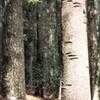
Two 25-year-old birches ooze red discharge from under bark. Owner fears loss. Diagnosis: Bronze Birch Borer Larvae tunnel in cambium, girdling trunk/limbs. Red sap accumulates above tunnels; bark shows swollen ridges.

Bradford Pear Shape Correction: Slow, Careful Pruning
10-year-old Bradford pear grows tall, not wide. Never pruned. Owner wants classic pear shape. Natural Habit Bradfords usually develop broad shape naturally. This one may have genetic variation. Correction Strategy Pru
Euonymus Bush Death: Scale Insect Infestation
Euonymus has tiny whitish spots on leaves, withering, dead branches. Acidic soil, heavy rain. Diagnosis: Scale Insects Whitish spots are scale covers; scrape to reveal cigar-shaped bodies. Immobile when touched. Heavy
Peach Tree Fruit Rot at Pit: Pollination Issue, Not Disease
Elberta peaches in NC and CA look fine outside but have brown, rotten flesh around pit. Owner asks for disease ID and prevention. Assessment Reddish-brown around pit is normal in ripe peaches. If no off-smell or mushy t
Arborvitae Bagworms: Identification, Life Cycle, and Control
Four-year-old arborvitae show distress; two dead with cocoon-like bags containing large worms. Pest: Bagworms (Thyridopteryx ephemeraeformis) Caterpillars build spindle-shaped silk bags camouflaged with foliage. One ge
Crepe Myrtle Decline: Nutrient Deficiency Suspected
Second-year crepe myrtle has no blooms, no new growth, light green uneven leaves. Likely Cause Nutrient deficiency—common in young trees establishing. Action Submit soil sample to county Extension office for analysis.
Pin Oak Trunk Oozing Reddish-Brown: Slime Flux from Wetwood
Large pin oak in eastern NE oozes dark reddish-brown fluid from old branch scar 20 feet up. Condition: Slime Flux / Wetwood Bacteria invade wound → ferment → produce methane gas → pressurize sap → flux out. Flux darken
Climbing Black-Eyed Susan Yellow Spots: Bacterial Leaf Spot and Bloom Boost
Zone 6 climbing black-eyed Susan has yellow spots on leaves and few flowers. Diagnosis Likely bacterial leaf spot (or fungal). Copper fungicide/bactericide (Hi-Yield) treats both. Treatment & Bloom Enhancement App
Honeydew and Sooty Mold from Aphids on Street Trees: City Management
A city tree dripping sticky sap (honeydew) onto roofs, cars, and driveways for 4 years, with grass dying under it during bloom, is infested with aphids or soft scale insects. The sap is actually honeydew—sugary waste exc
Removing Large Poison Ivy Vines from Trees Safely
A thick, arm-sized poison ivy vine climbing high into a tree requires careful herbicide application to avoid contact with the urushiol oil that causes severe allergic reactions. Effective Herbicide Methods Cut-stump tre
Sasanqua Camellia Hedge Decline: Drought, Cold Injury, or Disease?
A 30-plant sasanqua camellia hedge (10 years old) with random whole-limb dieback despite soaker hoses during drought raises several possibilities. The scattered pattern (not contiguous) argues against a spreading root ro
Bark Beetle Damage on Elm: Signs and Last-Resort Treatment
An old elm with daily bark shedding and strange markings (hieroglyphics) under the bark is infested with bark beetles (likely Scolytus spp.). The galleries they carve in the cambium create the distinctive patterns. Bark
Lucky Bamboo Care: It's Not Bamboo, It's Dracaena
Lucky bamboo (Dracaena sanderiana) with yellowing leaves, brown tips, and a single pale leaf with reddish tinge and brown dots is suffering from improper growing conditions. Despite the name, its not a bamboo—its a Draca
Apple Scab and Cedar-Apple Rust on Ornamental Crabapple
A 12-foot ornamental crabapple with random branch dieback and premature leaf loss in summer likely has apple scab (Venturia inaequalis) or cedar-apple rust (Gymnosporangium juniperi-virginianae). Both cause early defolia
Lesser Peachtree Borer on Weeping Cherry: Diagnosis and Management
A weeping cherry bleeding sap (gummosis) from the trunk after Japanese beetle infestation and frequent pruning is likely attacked by the lesser peachtree borer (Synanthedon pictipes). This clear-wing moth larva tunnels i
Leaf-Rolling Insects on Ficus: Systemic Control for Protected Pests
Black insects inside folded, yellowing ficus leaves indicate a leaf-rolling pest—likely aphids, thrips, or a caterpillar that creates a shelter by webbing or rolling the leaf. The rolled leaf protects them from contact s
Rescuing Ponytail Palms from Root Rot After Excessive Rain
Ponytail palms (Beaucarnea recurvata) losing base leaves with yellow/brown discoloration after prolonged heavy rain are showing classic root rot symptoms. One plant already lost with white fungal mycelium and soft roots
Scale Insects Masquerading as Fungus on Lilac
A lilac with a white, non-powdery coating on stems that killed the main stalk and is spreading is likely infested with scale insects, not a fungus. The white long substance is the waxy covering of scales—often oystershel
Maple Tree Leaf Loss: Drought Stress and Watering Solutions
A young maple losing 40% of its leaves in summer, with dry, withered inner branches, is likely suffering from drought stress. Even with a full crown previously, restricted root zones (common in urban/suburban settings) a
Cedar Apple Rust on Apple Trees: Identification and Management
Apple leaves with yellow spots containing a dark center, and a collection of tiny structures on the leaf underside, are classic symptoms of cedar apple rust (Gymnosporangium juniperi-virginianae). This fungal disease req
Copyright © www.100flowers.win Botanic Garden All Rights Reserved