


Pruning Storm-Damaged Peach Trees: Best Practices
When a heavily fruiting peach tree suffers broken branches, prompt, proper pruning is the only treatment needed. A semi-dwarf Babcock peach in Albuquerque, NM, lost major limbs under fruit weight. The unripe fruit was re

Borers in Weeping Willow: Signs and Management
A weeping willow with shotgun-like holes in the trunk, darkening bark, and progressive dieback is showing classic symptoms of wood-boring insects. Borer larvae tunnel beneath the bark, disrupting vascular tissue and caus
Scale Insects on Variegated Shrubs: Identification and Control Options
Raised white and brown spots on leaves and stems of variegated shrubs that dont move but rub off easily are characteristic of scale insects. With hundreds of scale species in the U.S., exact identification without magnif
Scale Insects Killing Lilac Bushes: Diagnosis and Treatment
A lilac bush with cream-colored dots on stems and branches, with most of the plant dead to the ground except outer branches, is likely suffering from a scale insect infestation. These immobile, oval-shaped pests attach t
Sooty Mold on Wax Myrtle: Cause and Solution
A wax myrtle (Morella cerifera) covered in black growth on branches and pods is likely affected by sooty mold—a black, powdery fungus that grows on honeydew, a sugary excretion from sap-feeding insects like scale, aphids
Woolly Apple Aphids on Crabapple Trees: Identification and Control
Cotton-like white masses on a young crabapple tree are a classic sign of woolly apple aphids (Eriosoma lanigerum). These aphids secrete a white, waxy filament that covers their bodies, giving the appearance of cotton or
Identifying Fruit Problems on Meyer Lemon Trees
A Meyer lemon tree with small holes in the fruit skin, followed by black, moldy pith, indicates a pest or disease issue—not the whitefly problem previously treated. The holes suggest insect feeding, while internal mold p
Diagnosing Leaf Drop in Rubber Trees and Schefflera
When houseplants like rubber trees (Ficus elastica) and schefflera (Schefflera actinophylla) start dropping leaves without obvious pests, the cause is often cultural rather than pathological. A gardener with over 20 hous
Managing Asian Scale on Sago Palms in Florida
If you live in Jacksonville, Florida, and have noticed a white, powdery coating on your sago palms, youre likely dealing with Asian scale (Aulacaspis yasumatsui). This invasive pest has become increasingly common across
Fruitless Mulberry Bleeding Sap: Bacterial Wetwood (Slime Flux) Management
30+ year fruitless mulberry bleeding heavily from main branches, not near pruning sites. Trunk hammered by child earlier. Owner wants to stop flow and save tree. Diagnosis: Bacterial Wetwood / Slime Flux Internal bacte
Houseplant Soil Insects: Fungus Gnats and Others—Sanitation and Control
Two-year battle with tiny black/white insects, worms in soil of 100+ houseplants. Malathion, soil replacement, root rinsing failed. Recent losses to spider mites and chlorine sensitivity. Primary Pest: Fungus Gnats Tin
Greenish-Blue Growth on Fruit Tree Trunks: Harmless Lichens
Fruit trees have greenish-blue growth on lower trunks. Owner wants removal for appearance. Identification: Lichens Symbiotic algae-fungus organisms. Not parasitic; no harm to trees. Indicate clean air. If Removal Desir
Overhanging Lime Trees: Legal Rights to Trim and Stability Concerns
Three lime trees 6 feet apart overhang a small courtyard. Branches cause black residue on furniture. Neighbor refuses trimming despite council permission. Owner worries about one-sided pruning stability. Legal Right to
Peace Lily Sudden Collapse: Humidity and Watering Adjustment
Two-year-old peace lily in central Florida (AC at 75–80°F) suddenly goes limp, leaves droop. Owner changed saucer to ceramic; no improvement. Common Issue Peace lilies often decline indoors long-term. Low humidity from
Cleveland Select Pear Trees: Fire Blight Diagnosis and Management
Two Cleveland Select pears in central Illinois show progressive branch dieback and thinning over two years. Diagnosis: Fire Blight Bacterial disease (Erwinia amylovora) favored by warm, wet springs. Symptoms: blossom bl
Black-Eyed Susan Leaf Spots: Fungal Diseases, Cultural Control
Black-eyed Susans have black spots on leaves. Owner seeks remedy. Cause Several fungal leaf spots: Alternaria, Cercospora, Colletotrichum, Phyllosticta, Septoria. Favored by wet conditions. Control Fungicides (e.g., D
Japanese Maple Leaf Scorch and Transplant Shock: Same Symptoms, Different Causes
One-year-old Japanese blood maple in VA shows browning at top and limb ends after beautiful spring leaf-out. Summer not particularly dry. Two Likely Causes Leaf Scorch Non-infectious; caused by environment: drying wind
Maple Tree Limb Crack with Larvae: Remove Limb, Treat Borers
Central Maryland maple has cracked limb with white larvae in trunk-side crack. 2/3 of limb dead. Ants also present. Diagnosis Larvae are secondary invaders in the crack, not primary cause. The crack likely existed undet
Live Oak Foaming at Base: Wetwood (Slime Flux) or Borers
Live oaks in north central Texas emit air bubbles and foam at base after rains during hot, dry summer. Two Possible Causes 1. Wetwood / Slime Flux Internal bacterial infection creates gas pressure, forcing sap out. Sap
Hibiscus with Tiny Beige Dots: Aphids or Scale, Systemic Treatment
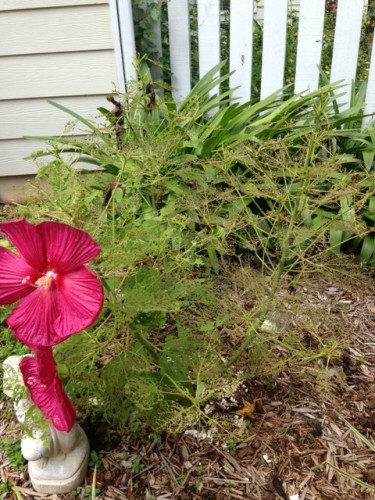
Hibiscus buds and leaves covered in tiny white/beige dots. Owner wants identification and solution. Likely Pests Aphids or scale insects—both appear as small dots on buds and leaves. Recommended Treatment Bayer Advanc
Copyright © www.100flowers.win Botanic Garden All Rights Reserved