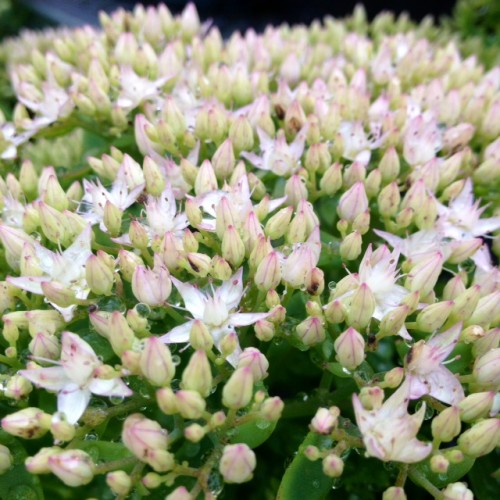

Hydrangea 'Annabelle' Frost Damage vs. Fungus
Newly planted Annabelle hydrangeas in heavy clay amended with peat, manure, and sand developed black spots and mushy new growth after heavy rain. The symptoms appeared following hard frosts. Theresa Schrum advises that f

Mystery Plant: Tall Yellow-Flowered Spike Isn't Chicory
A gardener brought an 8-inch clump from a wildflower mix to a nursery three years ago, labeled as chicory. Now the plants stand five feet tall with spikes of yellow, four-petaled, mildly trumpet-shaped flowers. True chic
How to Tell When Granny Smith Apples Are Ripe
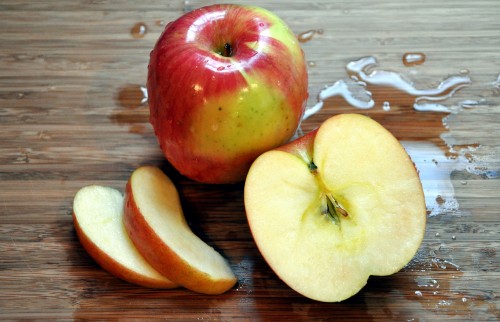
Granny Smith apples stay green even when fully ripe, so you cant rely on color alone. The most practical approach is to start taste-testing in late October, since this variety matures later than most. For a more scientif
Aucuba Berries: Seed Identification and Dioecious Nature
Green-Leafed Aucuba with Red Berries A non-variegated aucuba producing bright red berries is simply a female plant of the species Aucuba japonica. The berries are the seeds. Like hollies, aucubas are dioecious—separate m
Bougainvillea in Atlanta: Container Culture for Year-Round Beauty
Not Winter-Hardy in Ground Bougainvillea cannot survive Atlanta winters outdoors. It must be grown as a container plant and moved indoors. Annual Cycle for Success April–October: Place outdoors in bright shade (not ful
Carpetweed Identification: Confirm Before You Treat
Many Plants Called Carpetweed Carpetweed is a common name for several unrelated plants. True carpetweed (Mollugo verticillata) is a summer annual with whorled leaves and tiny white flowers. Carpetgrass (Axonopus spp.) is
Protecting Citrus Trees in Zone 7b: Site Selection and Cold Shelters
What Protected Location Really Means For citrus in zone 7b (5–10°F lows), a protected site is sheltered from north and west winds—typically the east or southeast side of a building. Avoid south-facing walls; they warm up
Hydrangea Identification Guide: Know Your Type Before You Prune
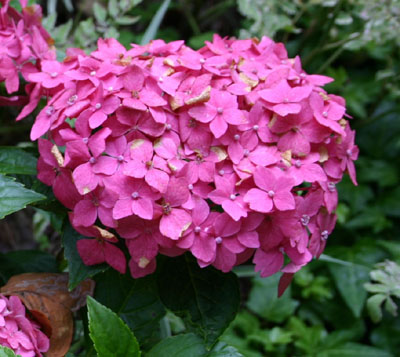
Why Identification Matters Pruning hydrangeas at the wrong time removes next years flower buds. The key is identifying your type by examining faded blooms in summer. Common Hydrangea Types and Pruning Times TypeFaded B
Forsythia Crown Gall: Identification and Pruning Treatment
What Are Those Knots on Forsythia Stems? Odd, knobby growths on forsythia stems with few flowers are likely crown gall, caused by the bacterium Agrobacterium tumefaciens. The bacterium enters through wounds and triggers
Greenhouse Watering Systems: Why Drip Irrigation Beats Sprinklers
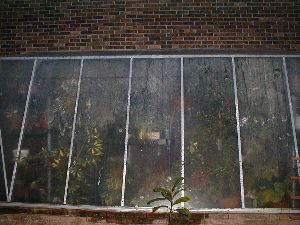
The Challenge of Mixed Plant Watering A 10×7 ft south-facing greenhouse houses diverse plants—ferns, bromeliads, orchids, bougainvillea, succulents, and more—each with vastly different water needs. A single sprinkler or
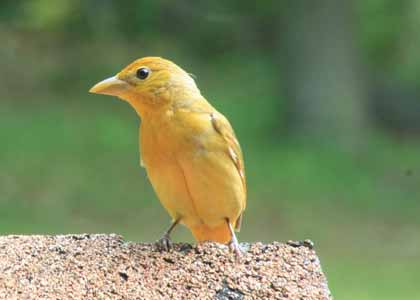
Identifying the Summer Tanager: A Yellow Bird in Georgia
Not a Goldfinch—Its a Female Summer Tanager A homeowner in Newton County spotted a yellow bird that didnt match a goldfinch. Naturalist Charles Seabrook identified it as a female summer tanager (Piranga rubra). Key Iden
Dwarf Fescue in Atlanta: Performance and Better Alternatives
Evaluating Dwarf Fescue Cultivars Dwarf fescue varieties like Bonsai and Shortstop II were tested in the 1996 National Turfgrass Evaluation Program (NTEP) trials in Griffin, Georgia. Out of 129 cultivars, they ranked 115
Replacing Old Pine Straw: To Rake or Not to Rake?
The Great Pine Straw Debate A gardener asks whether to remove old pine straw, fallen leaves, and liriope clippings before applying fresh straw, or simply top-dress over the existing material. The spouse insists on a clea
Dogwood Club Gall Midge: Identification and Control
What Are Those Swollen Nodules on Dogwood Branches? If your dogwoods have swollen, gall-like growths at branch tips where flower buds should be, theyre likely infested with dogwood club gall midge (Resseliella clavula).
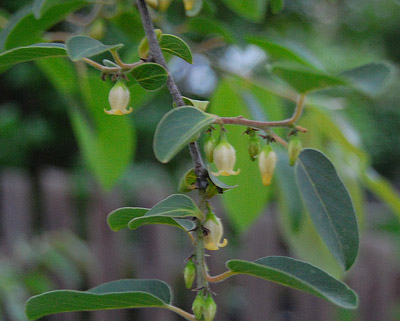
Identifying Young Persimmon Trees: Male vs. Female Flowers
Recognizing a Persimmon Tree A homeowner near Washington, DC noticed bell-shaped flowers on a young backyard tree and wondered if it was a fruit tree. Plant identification expert Shannon Pable confirmed it as a common pe
Huckleberry Identification and Growing in Georgia
What Is a Huckleberry? Huckleberry is a common name applied to several different plants. The true huckleberry (Gaylussacia baccata) grows primarily in the Northeast and Canada. However, many plants in the blueberry genus
Pine Straw vs. Beauty Bark: Origins, Harvest, and Landscape Benefits
What Is Pine Straw? Pine straw consists of naturally fallen needles from pine trees, primarily longleaf and slash pines. Its harvested extensively in South Georgia and north Florida from pine pulpwood plantations. Crews
Removing Thatch from Bermudagrass Lawns: Professional Dethatching Guide
What Is Thatch and Why Does It Matter? Thatch is a dense layer of undecomposed stems and roots that accumulates between the soil surface and the green grass blades. While a thin layer (less than ½ inch) can be beneficial
Can You Eat Fruit After Using Imidacloprid on Blueberries and Figs?
Understanding Imidacloprid Use on Edible Plants A homeowner recently applied a systemic insecticide containing imidacloprid around blueberry bushes and fig trees, and now wonders whether the fruit will be safe to eat thi
Balancing Your Compost: Green vs. Brown Materials and Fertilizer Alternatives
Creating rich compost doesnt require a perfect 2:1 ratio of green to brown materials. While green materials like grass clippings and kitchen scraps provide nitrogen, brown materials such as dried leaves and wood chips su
Copyright © www.100flowers.win Botanic Garden All Rights Reserved