
DIY Sod Installation: Fall vs. Spring
Fall sodding works if soil preparation is thorough. Till in lime (if needed), rake smooth, and never lay sod on compacted soil. Water to keep sod and top inch of soil moist—not soggy. Do not fertilize. Deep roots prevent

Trapping Camel Crickets with Duct Tape
Camel crickets are easily caught on sticky surfaces. Make traps: staple 12-inch strips of duct tape (sticky side up) onto 12x12 cardboard squares to cover them completely. Place several along baseboards in the infested r
Overseeding Fescue in Cool Weather: Perfect Timing
With warm soil but cooling air, now is ideal for fescue overseeding. Fescue is a cool-season grass; it does most of its growing between now and April. Fertilize at seeding, then again in late November, mid-February, and
Grub Control: Why Doing Nothing Is Often Best
Grubs are annual pests—larvae of beetles like Japanese beetles and chafers. Those found now will become adults next summer and leave. Natural controls (predators, diseases) keep populations low in home lawns. Insecticide
Serviceberry: Managing the Shrubby Habit
Serviceberries (Amelanchier species) are naturally multi-stemmed, shrubby trees. Constantly removing basal shoots fights their genetics. If you want a single-trunk tree, youll need ongoing pruning. Accept the natural for
Why Winterizer Fertilizer Harms Bermudagrass
Applying winterizer to bermudagrass wastes money and risks cold damage. Bermuda starts storing root reserves in mid-September for spring green-up. High-nitrogen fertilizer (common in winterizers, e.g., 30-0-10) forces to
Mixing Fescue and Ryegrass for Winter Erosion Control
When soil temps are above 55°F, fescue alone germinates well—no rye needed. In cooler months (Dec-Feb), a mix can help: rye germinates fast as a nurse grass, but limit it to 40% of the blend. A ratio of 2 lbs rye + 3 lbs
River Rock vs. Mulch Around Trees
River rocks are a decorative choice, but they dont decompose to feed the soil like organic mulch. Weeds eventually grow between the stones, creating maintenance. Organic mulch (wood chips, pine straw) improves soil healt
Winter Pruning Dates for Southeast Georgia
In Southeast Georgia, winter pruning for beautyberry and crapemyrtle (both bloom on new wood) is best done in January and February, before spring growth begins. This is earlier than the December-March window typical for
'Green Giant' Arborvitae for Privacy Screening
Green Giant arborvitae is an excellent choice for a tall, fast-growing evergreen screen. It reaches heights to block second-story views, has attractive foliage, and is less prone to canker than Leyland cypress. For faste
Removing Stubborn Holly Bushes: Persistence Wins
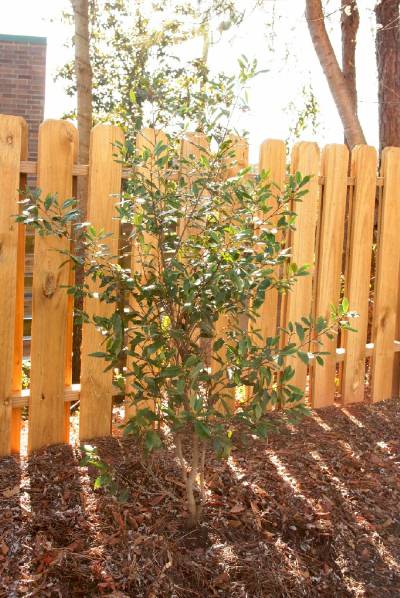
Holly has an incredible will to survive. Glyphosate (Roundup) absorbs slowly and doesnt translocate well in holly. Even repeated applications may not kill it. Whether you pull with a truck or cut and treat the stump, exp
Yellow Jacket Nests: Why Multiple Entrance Holes?
Yellow jackets dont deliberately create multiple entrances for ventilation. UGA entomologist Paul Guillebeau explains they often nest in pre-existing cavities like rotted roots, which may have several openings by chance.
Evergreen Shade Trees for Middle Georgia: Pine is the Main Option
Few evergreens provide dense shade like a pine. For a front yard where summer cooling and winter sun are desired, deciduous trees are superior—they shade the house in summer but allow warming sunlight through bare branch
Planting Daffodils: Soil Prep Matters More Than Bulb Price
Success with daffodils hinges on soil preparation, not bulb cost. All bulbs demand fast-draining winter soil; cold, wet conditions cause rot. Amend planting holes with expanded shale (PermaTill, Soil Perfector) for drain
Disease-Resistant Climbing Roses from Bill Radler
Bill Radler, breeder of the Knock Out® series, has developed several climbing roses with strong disease resistance. Notable cultivars include Morning Magic™, Winners Circle, Ramblin Red, and Cancan. While personal experi
Pruning Leyland Cypress: Avoiding Brown Gaps
Leyland cypress does not regenerate green growth from old, brown wood. Pruning back three feet into the brown zone will leave permanent bare patches. Only cut back to a point where green shoots remain. The best time for
Winter Care for Blueberry Bushes
Blueberries are fully winter-hardy and need no cold protection. The real threat comes later: birds eating the fruit. A simple, effective solution is a cage made from 1¼-inch PVC pipe covered with bird netting, painted gr
Luffa Vine: Vigorous but Not Invasive in Cold Climates
Luffa gourds grow explosively in summer, potentially covering structures. However, they are reliably killed by winter cold in temperate zones, preventing invasiveness. The dried gourds are then harvested for sponges. Det
Using Wood Chips as Mulch: Best Practices
Wood chips excel as mulch under trees, shrubs, and on paths—apply 4 inches to settle to 2 inches. For future garden beds, a 12-inch layer left to decompose for two years creates rich, black soil. However, for flowers and
Why Not Overseed Centipede or St. Augustine with Ryegrass
Overseeding centipedegrass or St. Augustinegrass with ryegrass is not recommended. The fertilizer needed for ryegrass stimulates the warm-season turf, making it vulnerable to freeze damage. The ryegrass also traps winter
Copyright © www.100flowers.win Botanic Garden All Rights Reserved