
Goldfish Die-Off Linked to Bullfrog Ammonia in Rural Pond
A thriving goldfish population in a 15x20 rural pond began declining after bullfrogs colonized it. Daily deaths of seemingly healthy fish—sluggish, then tipping over—pointed to chronic ammonia toxicity from frog waste.

Fish Deaths After Animal Carcasses in a Garden Pond
When a squirrel and badger drown in a 10,000-liter garden pond, the resulting decomposition can trigger a cascade of water-quality issues leading to fish deaths. The dark, oily water appearance is a classic sign of organ
Troubleshooting a Well-Fed Pond’s Float Valve System
When a pond’s automatic fill system—controlled by a float valve and a well pump—stops working, but the pump runs when the “contact” in the control box is manually pressed, the issue is typically electrical or mechanical
Identifying and Treating Reddish-Brown Scum on a Mature Pond
A sudden appearance of reddish-brown scum on a mature 1,000-gallon water garden—especially after bubbles resembling soap suds—often signals an algae bloom fueled by excess nutrients. In this case, the pond receives rainw
Effective Methods for Removing Muck from a Goldfish Stream
Over time, a backyard goldfish pond fed by a natural spring or stream can accumulate a layer of muck and sludge, reducing water depth and potentially harming water quality. If your 40-foot-long stream pond has lost about
Leech Eradication in a Fish-Free Swimming Pond: Trapping is the Only Safe Way
You want a chemical to kill leeches in a 15,000-gallon swimming pond with no fish. You want it safe for swimming. The hard truth: no such chemical exists. Anything that kills leeches at that volume will persist, harm hum
Old Catfish "Moose" Declining: Quality of Life Decisions
An 8-year-old channel catfish (Moose) in a 3000-gallon koi pond stops eating, lies on the bottom, barely moving his tail. No ulcers, gills look normal. Hes been a peaceful, beloved resident. What now? Why Old Catfish De
New Pond Critters: Tadpoles and Wasps—Friend or Foe?
A brand-new pond and waterfall attract unexpected visitors: tiny tadpole-like creatures and thirsty wasps. What are they, and how do you manage them? The Tadpoles: Likely Frog/Toad Larvae In a new pond, the only things
Brown Water in a Natural Half-Acre Pond: Iron, Tannins, or Clay?
A half-acre natural pond (mud bottom, crayfish, frogs) was clear in spring, turned brown when weather warmed. Lab tests show no E. coli, water is swimmable. Aeration lightened it slightly. How to restore clarity? Diagno
Sudden Koi Deaths in a Large Pond: Looking Beyond Water Tests
Two 20-inch koi die overnight in a 4,000-gallon concrete pond. Water tests (ammonia, nitrite, nitrate, pH, chlorine) are perfect. Fish were gasping at the surface near the skimmer for weeks. You did a 10% water change ye
Leech Control in a Swimming Pond: Traps, Not Chemicals
Leeches in a swimming pond are a nightmare. You found one on your sandal—was it a nest or a hitchhiker? Either way, you want them gone without harming fish, plants, or swimmers. Chemicals are dangerous, expensive, and ki
Mystery Tiny Black Fish in Pond: Meet the Gambusia
You inherited a pond with three goldfish. After a few days away, you return to find dozens of tiny black fish (fingernail-sized) eating algae and food. You didnt add them. No new plants. Where did they come from, and are
Diagnosing Tea-Colored Pond Water: Tannins vs. Mineral Buildup
When a well-maintained, filtered pond suddenly turns tea-colored despite no obvious organic input, the cause is often invisible — dissolved organics or minerals. A simple jar test reveals the culprit. The 24-Hour Jar Te
Ducks, Algae, and Pond Liners: What You Need to Know
Ducks and ponds go together like peanut butter and jelly—but do ducks eat algae? Is sand under your liner a good idea? Lets clear up these common questions for a 30x100 ft kidney-shaped pond. Do Ducks Eat Algae? Yes. Du
Koi Spawning Behavior: Aggression or Courtship?
You added a new, slightly smaller koi to your 2300-gallon pond. Immediately, your three established koi (just over 12 inches) began chasing, bumping, and nudging the newcomer—who has a distinct lump on her left side. Is
Clearing Green Water in a Patio Fountain: No Fish, No Problem
A new patio fountain turns pea-soup green within days. Youve tried algaecide and water changes, but the algae returns. Without fish or plants to consider, you have powerful options that arent safe for living ecosystems.
Decoding a Two-Pond Pump Setup: Which Hose Goes Where?
Inheriting a pond system often means puzzling over plumbing left by previous owners. A common head-scratcher: a pump in the lower pond with two outlet hoses—one going up to the upper waterfall, the other dumping water ba
Severely Bloated Goldfish: Is It Dropsy? What to Do
Discovering a severely bloated goldfish in an established pond is alarming. After years of stability, one fishs abdomen has doubled in size. This is a classic presentation of dropsy—a symptom, not a disease itself, indic
Foam & Algae After Pond Liner Repair
Pond leak repaired. Now heavy foam + algae. Foam not from organics (started after repair). Algae: strong green, covers stones in 2 days. 2 tbsp chlorine kills algae but more foam. No fish yet. Asks chemical treatment. F
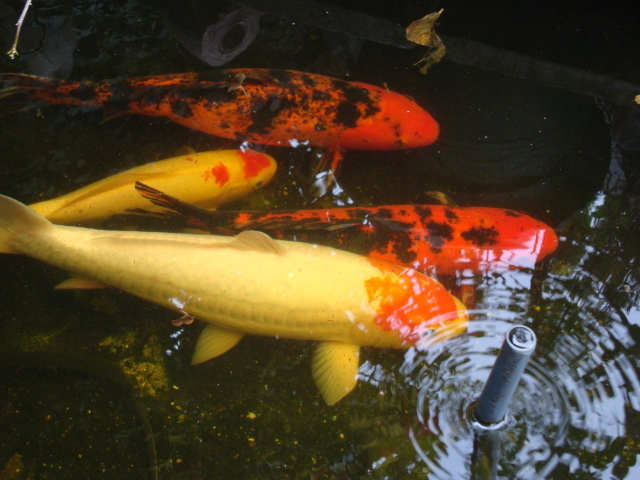
Identifying Pond Fish: Koi vs Goldfish
4 large fish in small pond. Thought goldfish (started 4). Someone says koi, need bigger pond. Photo attached. Asks ID and relocation. Photo Analysis Large white = koi (barbels visible). Small white = likely koi (90%).
Copyright © www.100flowers.win Botanic Garden All Rights Reserved