
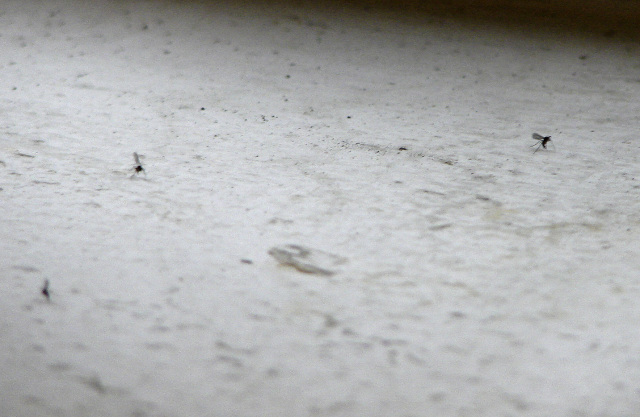
Eliminating Fungus Gnats from a Coral Cactus (Euphorbia lactea crest)
Small flies at the soil base that rise when watering are fungus gnats. Adults are harmless, but larvae feed on fine roots in moist, organic soil. Isolate the plant immediately. Control: hang yellow sticky traps for adult

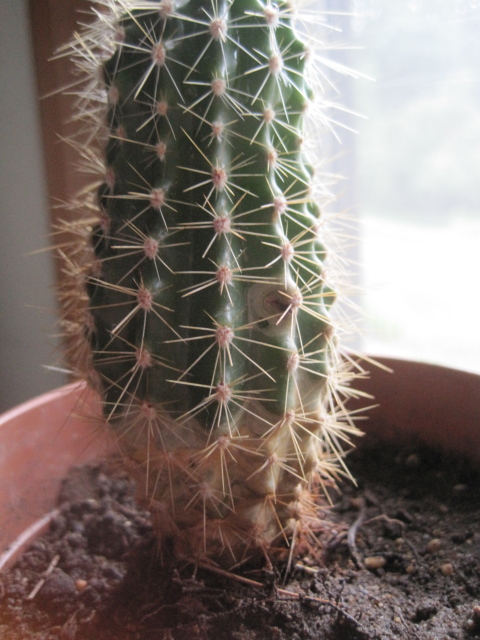
White Discoloration on a Potted Saguaro: Corking or Rot?
A 7-year-old potted saguaro in New England shows whitish corking at the base (normal aging) and a suspicious white spot with black speckling higher up—possible rot from a repotting injury. The plant was watered sparingly

Yellowing Base on a Mexican Fencepost Cactus (Pachycereus marginatus)
A 60-inch Mexican fencepost cactus shows yellowing from the base up 15 inches. The yellow tissue may be softer than the healthy green above. This pattern typically indicates rot originating in the roots and moving upward
Propagating Ocotillo (Fouquieria splendens) from Cuttings
Ocotillo can be rooted from cuttings, though success varies. After cutting a branch, let the end callous for a few days. Plant 3–4 inches deep in well-draining soil, mounding soil 4 inches around the base for stability.
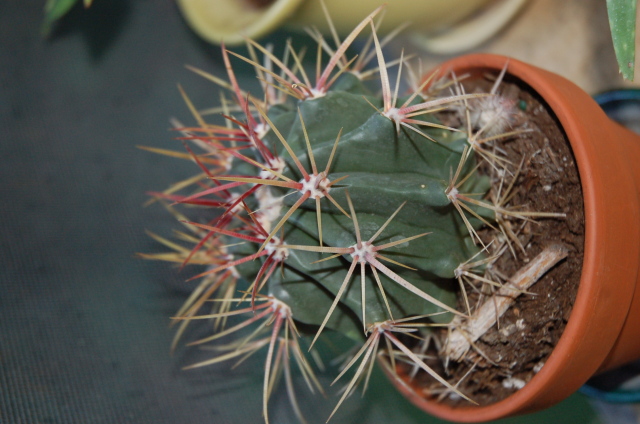
Identifying and Caring for a Ferocactus latispinus
A central Minnesota grower acquired several unnamed cacti from a floral shop. The first appears to be Ferocactus latispinus ssp. latispinus. General cactus care applies: well-draining soil (2:2:1 peat moss, turface/perli
Saving a Totem Pole Cactus After Trauma and Rot
A 3–4 foot totem pole cactus (Lophocereus schottii monstrose) suffered a 1-inch-deep gouge near the base from a falling clock. A scab formed, but black rot and mold appeared after rainy weather. The plant is 15+ years ol
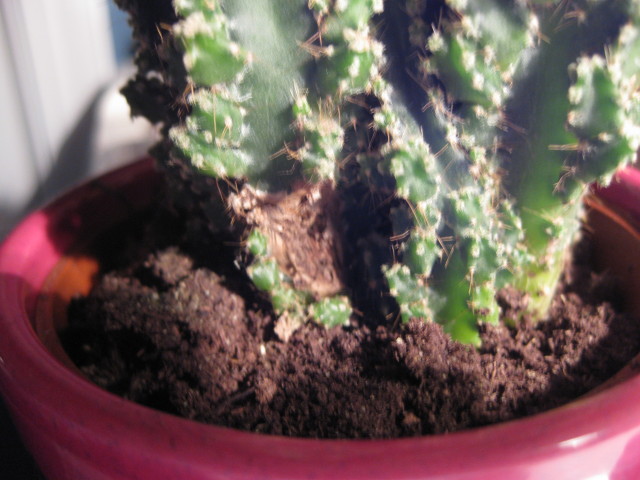
Rescuing a Fairy Castle Cactus with Stem Rot
A Fairy Castle cactus (Acanthocereus tetragonus) has a dry, flaky brown spot mid-stem—no mush, odor, or root involvement. Roots appear healthy. The spot is isolated but may hide deeper rot. Cut the affected stem with a s
Diagnosing Yellowing Arms on an Argentine Giant Cactus
A large, 5-foot-wide Argentine Giant (Echinopsis candicans) with multiple arms is yellowing. No mushiness or black spots reported. Possible causes: natural aging of older arms (energy directed to new growth), nutrient de
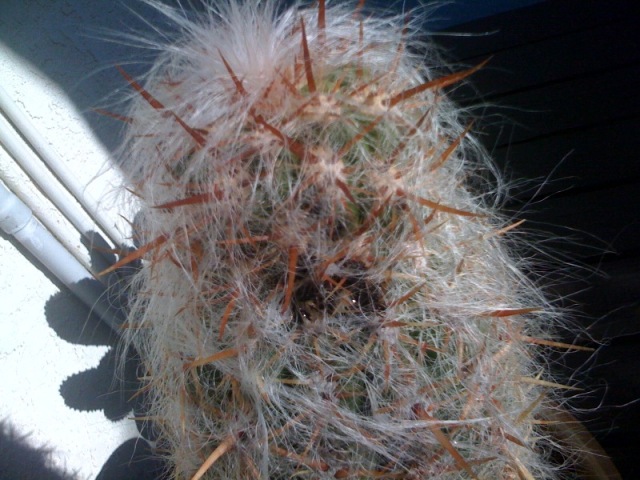
Treating Black Rot on an Old Man Cactus (Cephalocereus senilis)
An old man cactus has a growing black, soft spot near the top—classic black rot. By the time its visible externally, internal damage is usually more extensive. The only chance to save the plant is aggressive surgical rem
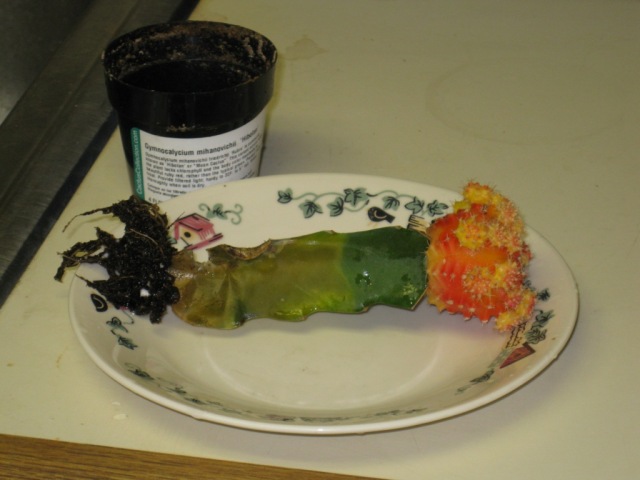
Saving an Overwatered Gymnocalycium mihanovichii (Moon Cactus)
A Gymnocalycium mihanovichii (moon cactus) shows advanced rot from chronic overwatering—watered whenever the soil surface dried, keeping it constantly moist. The plant is beyond saving; the rot is fungal or bacterial and
Treating White Fungus-Like Growth on a Paddle Cactus
A paddle cactus (likely Opuntia) is covered in a white, fungus-like growth. Without a photo, the most common culprits are mealybugs, scale, aphids, or root mealybugs—all of which secrete honeydew that fosters fungal grow
Repotting an Overgrown Aloe Vera with Numerous Pups
A rescued 2-foot aloe vera has two massive, leaning stalks crowded with 10+ pups (1–6 inches), tangled roots, and brown, soft leaf tips from neglect. The plant is root-bound in degraded soil. Start by soaking the root ba
Diagnosing a Drooping Candelabra Cactus (Euphorbia)
A mature candelabra cactus (likely Euphorbia trigona or similar) has begun drooping over the past week and a half—first the top, then lower branches. No changes in watering, location, or soil in five years. The plant is
Moving Cacti from Southern California to Tehachapi (Zone 8)
Relocating a potted cactus collection—including a 50-year-old barrel cactus—from Southern California to Tehachapi (Zone 8, with occasional snow) requires careful transition. The key is keeping plants above freezing. If w
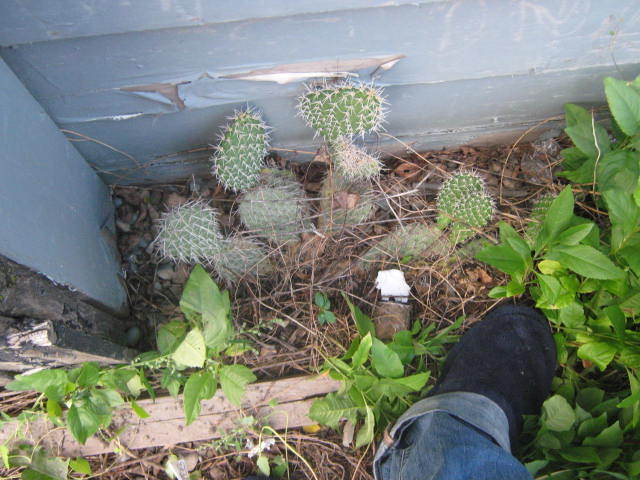
Identifying a Cold-Hardy Opuntia in Alberta
A surprise discovery in a Calgary alley: a cactus growing wild in southern Alberta. The plant is likely Opuntia polyacantha, a cold-hardy prickly pear native to Canada and the northern U.S. These cacti thrive in full sun
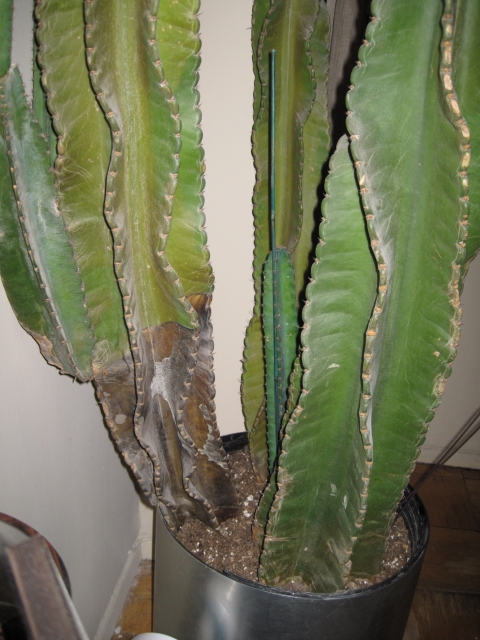
Saving a Large Potted Euphorbia from Black Rot
A 5-foot Euphorbia (often mistaken for a cactus) in a New York City apartment has developed black rot at the base of one trunk, extending up about a foot. The rot encircles the trunk, but tissue above appears healthy. Th
Caring for Seedling Cacti from a Child's Growing Kit
Successfully germinating cactus seeds from a childs gardening kit is a great start—five out of six pots showing growth means you dont have a black thumb after all! Since the seedlings are still tiny and some pots contain
Propagating a Broken Euphorbia Ammak Variegata Arm
When a 2-foot arm of a Euphorbia ammak variegata breaks off at the mother stalk, you have a few options for propagation. The broken end should be cleaned up with a sterilized knife to create a clean cut—this reduces the
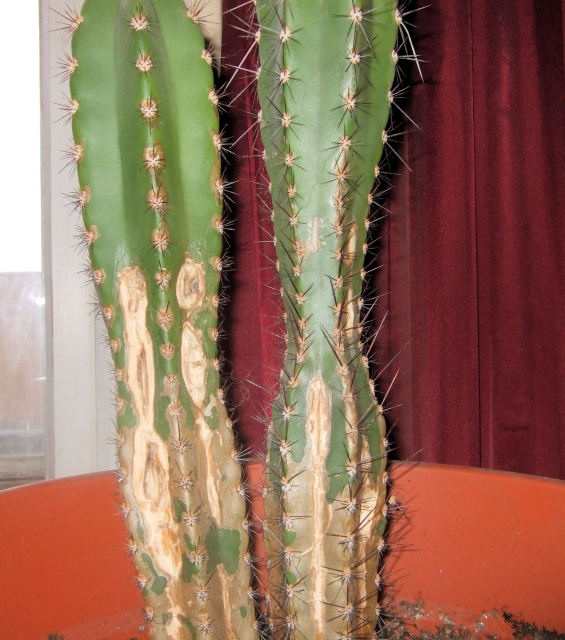
Sunburn Scars on Cereus and Opuntia
Permanent Sunburn Damage After Sudden Intense Exposure Three cacti left in 95°F sun for 7 hours developed light brown, peelable growth at trunk bases. Peeling made it worse. New growth above is unaffected. Diagnosis Sev
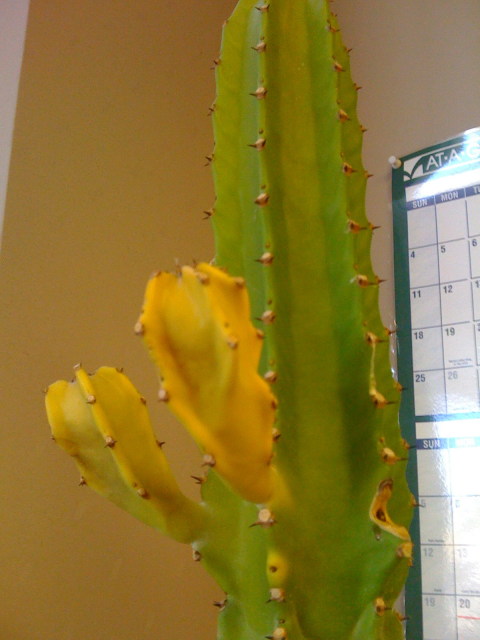
Yellowing Arms Indicate Mother Plant Problem
Cactus Arms Turning Yellow to Black: Check the Main Stem Arms on an unidentified cactus are yellowing/blackening; dried ones removed but spread continues. Plant moved to sunnier spot. Key Insight Arms dont die independe
Copyright © www.100flowers.win Botanic Garden All Rights Reserved