Ficus religiosa: The Tree Under Which Buddha Awakened
Few trees carry the spiritual weight of *Ficus religiosa*—the sacred fig, bodhi tree, bo tree, peepul, or pipal. For over 2,500 years, this species has been revered in Buddhism, Hinduism, and Jainism as the tree beneath which Siddhartha Gautama attained enlightenment. Beyond its sacred status, it is a magnificent, long-lived keystone species of the Indian subcontinent's ecosystems.
Botanical Profile
- Family: Moraceae (fig/mulberry family).
- Genus: *Ficus* (850+ species).
- Species: *F. religiosa*.
- Synonym: *Urostigma religiosum*.
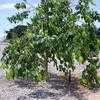
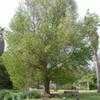
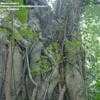
- Habit: Large, semi-evergreen to deciduous tree, 60–100 ft tall, spreading crown 100+ ft wide; often develops prop roots from branches (banyan-like).
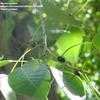
- Leaves: **Distinctive:** Cordate (heart-shaped) with a long, tapering "drip tip" (acuminate apex), 4–7 in. long, 3–5 in. wide; glossy green; flutter distinctively in slightest breeze (long petiole).
- Bark: Pale gray, smooth, flaking in patches.
- Flowers/Fruit: Syconia (figs) ½ in. diameter, paired in leaf axils; green ripening to purple-black; pollinated by specific fig wasp (*Blastophaga* spp.).
- Latex: Milky, copious.
Native Range and Distribution
- Native: Indian subcontinent (India, Nepal, Sri Lanka, Bangladesh), SW China, Indochina.
- Cultivated/Planted: Throughout tropical/subtropical Asia, and worldwide at Buddhist temples, parks, gardens.
- Naturalized: Hawaii, Florida, Caribbean, parts of Africa, Australia.
Religious and Cultural Significance
- Buddhism: The **Bodhi Tree** at Bodh Gaya, Bihar (descendant of original) is the holiest site. Buddha attained enlightenment (~528 BCE) meditating beneath it. "Bodhi" = awakening.
- Hinduism: Associated with Vishnu, Brahma, Shiva; Trimurti said to reside in roots, trunk, leaves. Sacred thread ceremonies use its wood.
- Jainism: 24th Tirthankara Mahavira attained kevala jnana under a *F. religiosa*.
- Folk traditions: Village deity shrines beneath it; circumambulation (pradakshina) for wishes; never cut (sin).
- National tree: India (1950), Sri Lanka.
Ecological Role
- Keystone species: Figs fruit asynchronously → year-round food for frugivores (birds, bats, primates, civets).
- Pollination mutualism: Obligate with *Blastophaga* wasps; each *Ficus* species has specific wasp.
- Soil building: Leaf litter, prop roots stabilize slopes.
- Air purification: High photosynthetic rate; planted for urban air quality.
Growing Requirements
- Climate: Tropical/subtropical; zones 10–12 (marginal 9b). Brief frost tolerance when mature.
- Light: Full sun.
- Soil: Deep, well-drained, fertile; tolerates clay, seasonal wet. pH 6–7.5.
- Water: Regular moisture; established trees drought-tolerant.
- Propagation: Seed (clean, fresh), cuttings, air layering.
- Growth rate: Fast: 3–5 ft/year.
Landscape Considerations
- Space: **Enormous**—needs park-scale area. Roots lift pavement, invade pipes.
- Latex: Irritant; messy on cars, patios.
- Figs: Sticky drop; attracts bats, birds (noise, droppings).
- Invasiveness: Can spread via birds/bats in tropical zones (e.g., Hawaii).
Famous Specimens
- **Mahabodhi Tree**, Bodh Gaya, India (direct descendant, UNESCO site).
- **Jaya Sri Maha Bodhi**, Anuradhapura, Sri Lanka (planted 288 BCE, oldest human-planted tree with known date).
- Giant specimens at temples across Southeast Asia.


