





| Family: | Moraceae (mor-AY-see-ee) (Info) |
| Genus: | Ficus (FY-kus) (Info) |
| Species: | auriculata (aw-rik-yoo-LAY-tuh) (Info) |
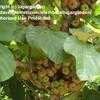
The Roxburgh Fig (Ficus auriculata), also known as the Elephant Ear Fig or Roxburgh's Fig, is a spectacular, large-leaved, evergreen to semi-deciduous tree native to the Himalayan foothills, southern China, and Southeast Asia. It is grown primarily for its **astonishing foliage**—among the largest of any fig—and its unique, cluster-borne figs.
The leaves are **massive, broadly ovate to cordate (heart-shaped), 12–20+ inches long and wide**, with a long petiole. They are thick, leathery, dark green and glossy above, paler with prominent veins below. The sheer size and tropical drama of the foliage make this a premier "big leaf" ornamental for frost-free and marginal climates.
The figs (syconia) are **borne in dense clusters on the trunk and main branches (cauliflory)**, a striking sight. They are pear-shaped, 1.5–2 inches, green ripening to reddish-brown, edible but not highly prized (bland, fibrous). The tree grows 20–40 feet tall with a spreading, rounded canopy and smooth, gray bark. It can be strangler-like in the wild but grows as a free-standing tree in cultivation.
USDA Zones 10–11 (marginal in 9b with protection). Full sun to part shade; moist, well-drained, fertile soil. Fast-growing. Used as a shade tree, specimen, or large container plant for tropical effect. The leaves are used as plates/wrappers in some cultures; the latex has traditional medicinal uses. A bold, architectural foliage plant for tropical and subtropical gardens.
Euphorbia bupleurifolia: A Bizarre, Pineapple-Topped Succulent with a Caudex
Candelilla (Euphorbia antisyphilitica): A Leafless, Wax-Producing Shrub for Extreme Heat
Desert Rose (Adenium arabicum)
Dorstenia gigas (Socotra Fig Tree)
Bontaalwyn (Aloe grandidentata): A Toothed Aloe Beauty
Copyright © www.100flowers.win Botanic Garden All Rights Reserved