


Canadian Hemlock, also called Eastern Hemlock, is the most shade-tolerant of North American conifers—a graceful, fine-textured evergreen that thrives in the cool, moist understory of northern forests. Tsuga canadensis (family Pinaceae) ranges from Nova Scotia to Georgia, west to Minnesota, forming dense, cathedral-like stands.
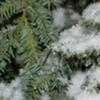
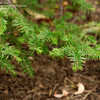
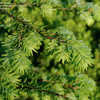
The needles are short (½ inch), flat, dark green above with two white stomatal bands beneath, arranged in two ranks on the twig. They're soft to the touch—unlike spruce or fir. The branches are horizontal to pendulous, creating a feathery, layered texture. The tree grows 40-70 feet tall (to 100+ in old growth) with a pyramidal crown. The bark is gray-brown, scaly, furrowed. Cones are tiny (¾ inch), pendant, abundant.

| Family: | Pinaceae (py-NAY-see-ee) |
| Genus: | Tsuga (SOO-guh) |
| Species: | canadensis (ka-na-DEN-sis) |
The greatest threat is the Hemlock Woolly Adelgid (HWA), an invasive insect from Asia that has devastated hemlock forests across the East. It appears as white, woolly masses at needle bases. Treatment options exist (systemic insecticides, biological controls) but are challenging at forest scale. Resistant species (Tsuga chinensis, T. diversifolia) and hybrids are being developed.
In landscapes, Canadian Hemlock is superb for shady sites, hedges (shears beautifully), screens, and specimens. It prefers cool, moist, acidic, well-drained soil and partial to full shade. Cultivars: 'Pendula' (weeping), 'Gentsch White' (white-tipped foliage), 'Jeddeloh' (dwarf, spreading), 'Sargentii' (spreading, feathery). A native treasure worth protecting and planting where HWA is managed.
Canadian Border Patrol Daylily: A 1995 Salter Guardian
Lemon Tree: The Classic Citrus for Fruit, Fragrance & Foliage
Chonta Palm (Juania australis): Rare Chilean Palm
European Hornbeam (Carpinus betulus): The Classic Hedge & Shade Tree
Plumeria pudica: The Everblooming, Evergreen Frangipani
Durian (Durio zibethinus): The King of Fruits—Love It or Hate It
Washingtonia × filibusta: The Hybrid Fan Palm for Marginal Climates
Canadian Hemlock (Tsuga canadensis): Versatile Evergreen for Challenging Sites
Hosta plantaginea: The Fragrant Species with Giant White Flowers
Fakahatchee Grass (Tripsacum dactyloides): Bold Native Grass for Wet Sites
American Persimmon (Diospyros virginiana)
Eastern Arborvitae (White Cedar): The Classic Northern Evergreen Screen
Canadian Wild Ginger (Asarum canadense): Native Woodland Ground Cover
Copyright © www.100flowers.win Botanic Garden All Rights Reserved