Juniperus virginiana: Tough, Adaptable, and Ecologically Vital
Often called red cedar (though a juniper, not a true cedar), *Juniperus virginiana* is the most widely distributed conifer in eastern North America. From dry ridges to abandoned fields, this pioneer species colonizes harsh sites, providing wildlife habitat, aromatic wood, and year-round greenery. Its variability in form—from columnar to broadly pyramidal—makes it a versatile landscape plant.
Botanical Profile
- Family: Cupressaceae (cypress family).
- Genus: *Juniperus*.
- Species: *J. virginiana*.
- Varieties: var. *virginiana* (eastern), var. *silicicola* (southern/coastal, "southern red cedar").
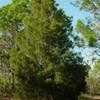
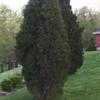
- Habit: Evergreen tree, 30–65 ft tall (occasionally 90 ft), 15–25 ft wide; variable: columnar, pyramidal, or broad.
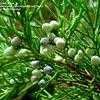
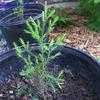
- Foliage: Two types: juvenile (awl-shaped, sharp, whorled) and adult (scale-like, appressed, 1/16 in.). Color: green to blue-green; may bronze in winter.
- Bark: Reddish-brown, fibrous, exfoliating in long strips.
- Cones: Dioecious. Male: small, yellow, pollen cones. Female: berry-like, ¼ in., blue-black with waxy bloom ("juniper berries"); mature in 1 year.
- Roots: Deep taproot + widespread laterals; drought-tolerant.
Native Range and Ecology
- Native: Eastern North America: Maine to Florida, west to Great Plains (dry line).
- Habitat: Old fields, fence rows, glades, dry ridges, limestone outcrops, sand dunes. Pioneer on disturbed/abandoned land.
- Succession: Early successional; shaded out by hardwoods over decades.
- Wildlife: **Keystone species.** Berries eaten by 50+ bird species (cedar waxwings, robins, bluebirds), mammals. Dense cover for nesting, winter shelter. Host for juniper hairstreak butterfly.
Uses and Values
- Wood: Heartwood reddish, aromatic, lightweight, **highly decay-resistant**. Fence posts (last 50+ years), cedar chests, closets, pencils (historically), paneling, novelty items. Oil distilled for fragrance, insect repellent.
- Landscape: Windbreaks, screens, hedges, specimens, topiary, bonsai. Cultivars offer diverse forms.
- Christmas trees: Traditional in South/Central US; aromatic, dense.
- Medicinal/Traditional: Native American uses (berries, twigs, smoke) for colds, arthritis, purification.
- Gin flavoring: Juniper berries (usually *J. communis*, but *J. virginiana* used regionally).
Growing Requirements
- Hardiness: USDA zones 2–9 (var. *virginiana* to zone 2; var. *silicicola* to zone 7).
- Light: Full sun (shade intolerant).
- Soil: **Extremely adaptable:** dry, rocky, sandy, clay, limestone, acidic to alkaline. Poor fertility OK. Good drainage essential.
- Water: Very drought-tolerant once established. Intolerant of wet feet.
- Propagation: Seed (cold stratify 2–3 months), cuttings (difficult), cultivars grafted.
- Growth rate: Moderate: 1–2 ft/year.
Popular Cultivars
- 'Canaertii' – dark green, pyramidal, heavy fruit.
- 'Grey Owl' – low, spreading, silver-blue foliage.
- 'Taylor' – extremely narrow, columnar (15–20 ft × 3–4 ft).
- 'Burkii' – broad pyramidal, blue-green, male (no fruit).
- 'Emerald Sentinel' – narrow, dark green, female.
- 'Glauca' – silver-blue foliage.
Pests and Diseases
- Cedar-apple rust: *Gymnosporangium juniperi-virginianae* requires apple/crabapple alternate host. Galls on juniper; leaf spots on apple. Plant resistant apples or separate hosts.
- Bagworms: Can defoliate; handpick or *Bt*.
- Spider mites: In hot, dry, dusty conditions.
- Phomopsis blight: Tip dieback in wet springs.
Cedar vs. Juniper
True cedars (*Cedrus*) are Pinaceae (Mediterranean/Himalayas). Junipers (*Juniperus*) are Cupressaceae (Northern Hemisphere). "Red cedar" is a colonial misnomer that stuck.


