


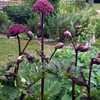
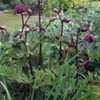
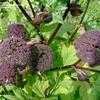
Korean angelica (Angelica gigas), also called purple angelica, is a striking biennial or short-lived perennial from Korea and China. In its second year, it shoots up 4-6 feet with thick, hollow, deep purple-black stems and large, compound leaves. Dense, rounded umbels of dark crimson-purple flowers appear in late summer, creating a dramatic architectural presence.
Prefers moist, fertile soil in part shade to full sun (cooler climates). Self-sows moderately; allow some seeds for continuity. Ornamental value is primary—stunning in back of borders, cottage gardens, or as a focal point. Roots used in traditional Korean medicine. All parts may cause photosensitivity in sensitive individuals.
Purple Moor Grass (Molinia caerulea): A Native European Grass with Airy Purple Panicles
Japanese Angelica Tree: Bold Foliage & Architectural Spines
Rosemary (Rosmarinus officinalis): Aromatic Evergreen Herb for Kitchen and Garden
Catnip (Nepeta cataria): The Feline Favorite Herb
Borage (Borago officinalis): Starflower for Bees and Cuisine
Comfrey (Symphytum officinale): Healing Herb and Dynamic Accumulator
Bloodroot (Sanguinaria canadensis): Spring Ephemeral with Red Sap
Lovage (Levisticum officinale): Towering Celery-Flavored Herb
Sweet Fern (Comptonia peregrina): Native Nitrogen-Fixer with Fern-Like Foliage
Chervil (Anthriscus cerefolium): Delicate Anise-Flavored Herb for Spring
Fenugreek (Trigonella foenum-graecum): Ancient Spice and Medicinal Legume
Goldenseal (Hydrastis canadensis): Endangered Native Medicinal Herb of Eastern Forests
Hairy Angelica (Angelica venenosa): Native Woodland Biennial
Copyright © www.100flowers.win Botanic Garden All Rights Reserved