


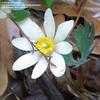
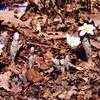
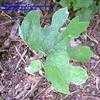
Bloodroot (Sanguinaria canadensis) is a captivating spring ephemeral native to eastern North American woodlands. Each plant produces a single, white, multi-petaled flower that emerges wrapped in a single, deeply lobed leaf. When cut, the rhizome exudes a bright orange-red sap, historically used as dye and medicine.
| Family: | Papaveraceae (pa-pav-er-AY-see-ee) |
| Genus: | Sanguinaria (san-gwin-AR-ee-uh) |
| Species: | canadensis (ka-na-DEN-sis) |
The flower opens in sunlight and closes at night, lasting only a few days. After flowering, the leaf expands to 6–12 inches across. The plant goes dormant by mid-summer. The red sap contains sanguinarine, an alkaloid with antimicrobial properties but also toxic.
Plant rhizomes horizontally just below soil surface in fall. Part to full shade, moist, humus-rich soil. Do not disturb once established. Allow to naturalize. Hardy in USDA zones 3–8.
Caraway (Carum carvi): Biennial Spice and Medicinal Seed
Common Myrtle (Myrtus communis): Fragrant, Evergreen Mediterranean Shrub for Topiary and Hedges
Anise (Pimpinella anisum): Sweet, Licorice-Flavored Annual for Seeds and Leaves
Licorice (Glycyrrhiza glabra): The Sweet Root of Herbal Medicine and Confectionery
Dorstenia bahiensis: Unusual Tropical Fig Relative with Shield-Shaped Flowers
Catstongue (Priva lappulacea): Tropical Groundcover with Sticky Seeds
Sesame (Sesamum indicum): Ancient Oilseed Crop for Seeds and Oil
Hosta plantaginea: The Fragrant Species with Giant White Flowers
Comfortroot (Hibiscus aculeatus)
Hibiscus hamabo: Coastal Species
Mandrinette – Hibiscus boryanus
Furcraea macdougalii: A Giant, Trunk-Forming Relative of Agave
Euphorbia bupleurifolia: A Bizarre, Pineapple-Topped Succulent with a Caudex
Candelilla (Euphorbia antisyphilitica): A Leafless, Wax-Producing Shrub for Extreme Heat
Copyright © www.100flowers.win Botanic Garden All Rights Reserved