


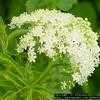
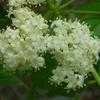
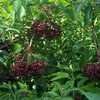
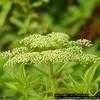
American elderberry (Sambucus canadensis) is a large, deciduous native shrub producing flat-topped clusters of fragrant white flowers in early summer, followed by dark purple berries in late summer. Both flowers and ripe berries are edible and prized for culinary and medicinal uses.
| Family: | Adoxaceae (a-dox-AY-see-ee) |
| Genus: | Sambucus (sam-BYOO-kus) |
| Species: | canadensis (ka-na-DEN-sis) |
| Synonyms: | Sambucus bipinnata, Sambucus mexicana, Sambucus nigra subsp. canadensis, Sambucus nigra var. canadensis |
Native to eastern North America, this multi-stemmed shrub reaches 6–12 feet tall and wide. The pinnately compound leaves have 5–11 leaflets. Flowers are self-fertile but cross-pollination increases yield. Raw berries contain cyanogenic glycosides; always cook before eating.
Grow in full sun to part shade, moist, well-drained soil. Tolerates wet sites. Prune in late winter to remove old wood. Plant two cultivars for better fruiting. Hardy in USDA zones 3–9.
Planting and Caring for American Elderberry: A Wildlife-Friendly Shrub
Purple Pincushion (Escobaria vivipara): A Cold-Hardy, Clumping Cactus with Magenta Blooms
American Beachgrass (Ammophila breviligulata)
American Persimmon (Diospyros virginiana)
Glandularia pulchella: South American Mock Vervain – Moss Verbena for Hot, Dry Sites
American Climbing Fern (Lygodium palmatum)
Common Elderberry: A Wildlife Magnet and Edible Landscape Star
Elderberry: The Roadside Shrub That Heals, Feeds Wildlife, and Dyes Fabric
Horseradish (Armoracia rusticana): Pungent Root for Sauce and Medicine
Korean Mint (Agastache rugosa): Robust, Licorice-Scented Perennial for Tea and Pollinators
Lesser Calamint (Calamintha nepeta): Cloud of Tiny White Flowers for Pollinator Gardens
American Spikenard (Aralia racemosa): Bold, Native Woodland Perennial with Showy Berries
Salad Burnet (Sanguisorba minor): Cucumber-Flavored Perennial
Common Barberry (Berberis vulgaris): Thorny Shrub with Tart Berries
Copyright © www.100flowers.win Botanic Garden All Rights Reserved