


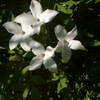
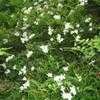
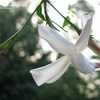
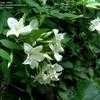
Jasminum officinale, the Poet's Jasmine or Common Jasmine, is a vigorous, deciduous to semi-evergreen vine celebrated for its masses of starry, pure white, intensely fragrant flowers. It's the jasmine of poetry and perfume.
| Classification | Details |
|---|---|
| Family | Oleaceae (oh-lee-AY-see-ee) |
| Genus | Jasminum (JAZ-mih-num) |
| Species | officinale (oh-fiss-ih-NAH-lee) |
| Synonyms | Jasminum grandiflorum, J. officinale var. grandiflorum, J. officinale var. affine, J. affine |
Native to the Caucasus, Iran, Afghanistan, Pakistan, and the Himalayas, this twining vine reaches 20–30 feet. The leaves are pinnate, with 5–9 leaflets. Clusters of 1-inch flowers bloom from summer to fall, scenting the air, especially evenings. It prefers full sun to part shade, well-drained soil, and regular moisture.
Hardy in zones 7–10 (dies back in colder parts). Use on trellises, arbors, walls, or as a groundcover. Prune after flowering. The essential oil is used in perfumery. A timeless, romantic vine for fragrance and vertical beauty.
Salvia officinalis: Common Sage, the Culinary Herb
Purple Pincushion (Escobaria vivipara): A Cold-Hardy, Clumping Cactus with Magenta Blooms
Lakeview Orange Jessamine (Murraya paniculata 'Lakeview')
Spirodela polyrhiza: Giant Duckweed
American Elderberry (Sambucus canadensis): Native Shrub for Berries and Blooms
Common Sage (Salvia officinalis): The Wise Herb for Kitchen and Medicine
Lakeview Orange Jessamine (Murraya paniculata 'Lakeview'): Compact, Fragrant Hedge
Confederate Jasmine Decline: Water, Cold, or Fungus?
Why Your Jasmine Vine Won't Bloom: Causes and Solutions
Why Jasmine Flowers Fall Off: Natural Blooming Cycle
Jasmine Care Depends on Species—Identify Yours First
Reviving a Jasmine Plant After Drought Stress: Leaf Drop Solutions
Copyright © www.100flowers.win Botanic Garden All Rights Reserved