


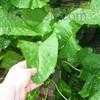
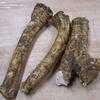
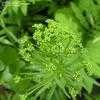

Horseradish (Armoracia rusticana) is a robust perennial grown for its large, pungent taproot, the source of the fiery condiment. Native to southeastern Europe and western Asia, it has been cultivated for millennia. The intact root has little odor; grating releases volatile isothiocyanates that clear sinuses instantly.
Clump-forming perennial 60–100 cm tall. Leaves are large, oblong, 30–60 cm long, toothed, dark green, on long petioles. Flowers are small, white, four-petaled, in terminal panicles, blooming late spring (often removed). The taproot is thick, cylindrical, 30–60 cm long, white inside.
| Family: | Brassicaceae (brass-ih-KAY-see-ee) |
| Genus: | Armoracia (ar-mor-AY-shee-uh) |
| Species: | rusticana (rus-tik-AH-nuh) |
| Synonyms: | Cochlearia armoracia, Nasturtium armoracia, Radicula armoracia, Rorippa armoracia, Armoracia lapathifolia |
Plant root cuttings (sets) 45 cm apart, at 45° angle, top 5 cm below surface. Harvest after first frost (best flavor) or in spring. Replant side roots for next crop. Can be invasive—site carefully or contain.
Culinary: Sauce for beef, seafood, Bloody Marys. Medicinal: Sinus congestion, urinary infections, topical rubefacient. Companion: Said to deter potato bugs.
Horseradish Heat and Harvest Timing
Octopus Agave (Agave vilmoriniana): The Soft, Recurving Agave with No Teeth
Pseudorhipsalis ramulosa: A Flattened, Epiphytic Cactus with Red-Suffused Stems
Coral Aloe (Aloe striata): Smooth Striped Winter Bloomer
Tasajillo (Cylindropuntia leptocaulis)
Austrocylindropuntia verschaffeltii: A Cylindrical, Jointed Cactus
Spineless Caper (Capparis spinosa var. inermis): Thornless Caper Bush for Easy Harvesting
Copyright © www.100flowers.win Botanic Garden All Rights Reserved