


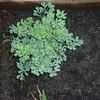
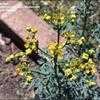
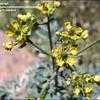
Common rue (Ruta graveolens), also called herb of grace or herbygrass, is a woody-based perennial subshrub with bluish-green, deeply divided leaves and small yellow flowers. Its strong, bitter aroma and acrid taste have made it a symbol of regret and a staple in traditional medicine, though modern use requires caution due to toxicity.
| Family: | Rutaceae (roo-TAY-see-ee) |
| Genus: | Ruta (ROO-tuh) |
| Species: | graveolens (grav-ee-OH-lens) |
Native to the Balkan Peninsula, rue grows 2–3 feet tall with a rounded habit. The leaves are covered in oil glands that release a pungent scent. The four-petaled yellow flowers bloom in early summer. All parts contain furanocoumarins, which can cause severe photodermatitis (skin blistering upon sun exposure).
Grow in full sun, poor to moderately fertile, well-drained soil. Drought tolerant once established. Handle with gloves and long sleeves; wash skin after contact. Not recommended for pregnant women or internal use without expert guidance. Hardy in USDA zones 4–9.
Salvia officinalis 'Rosea' – Pink Flowering Garden Sage
Common Bamboo (Bambusa vulgaris): The Classic Tropical Clumping Bamboo
Common Bamboo (Bambusa vulgaris): Giant Tropical Clumping Bamboo
English Thyme (Thymus vulgaris): The Classic Culinary Thyme for Every Herb Garden
Garden Loosestrife (Lysimachia vulgaris): Vigorous Wetland Perennial
Common Barberry (Berberis vulgaris): Thorny Shrub with Tart Berries
Stevia (Stevia rebaudiana): Natural Zero-Calorie Sweetener
Stinging Nettle (Urtica dioica): Nutritious Weed with a Sting
French Tarragon (Artemisia dracunculus): The Culinary King of Herbs
St. John's Wort (Hypericum perforatum): Famous Medicinal Herb with Perforated Leaves
Garden Sorrel (Rumex acetosa): Classic Perennial Lemon-Flavored Green
Northern Prickly Ash (Zanthoxylum americanum): Aromatic, Thorny Shrub for Wildlife and Numbing Spice
Copyright © www.100flowers.win Botanic Garden All Rights Reserved